

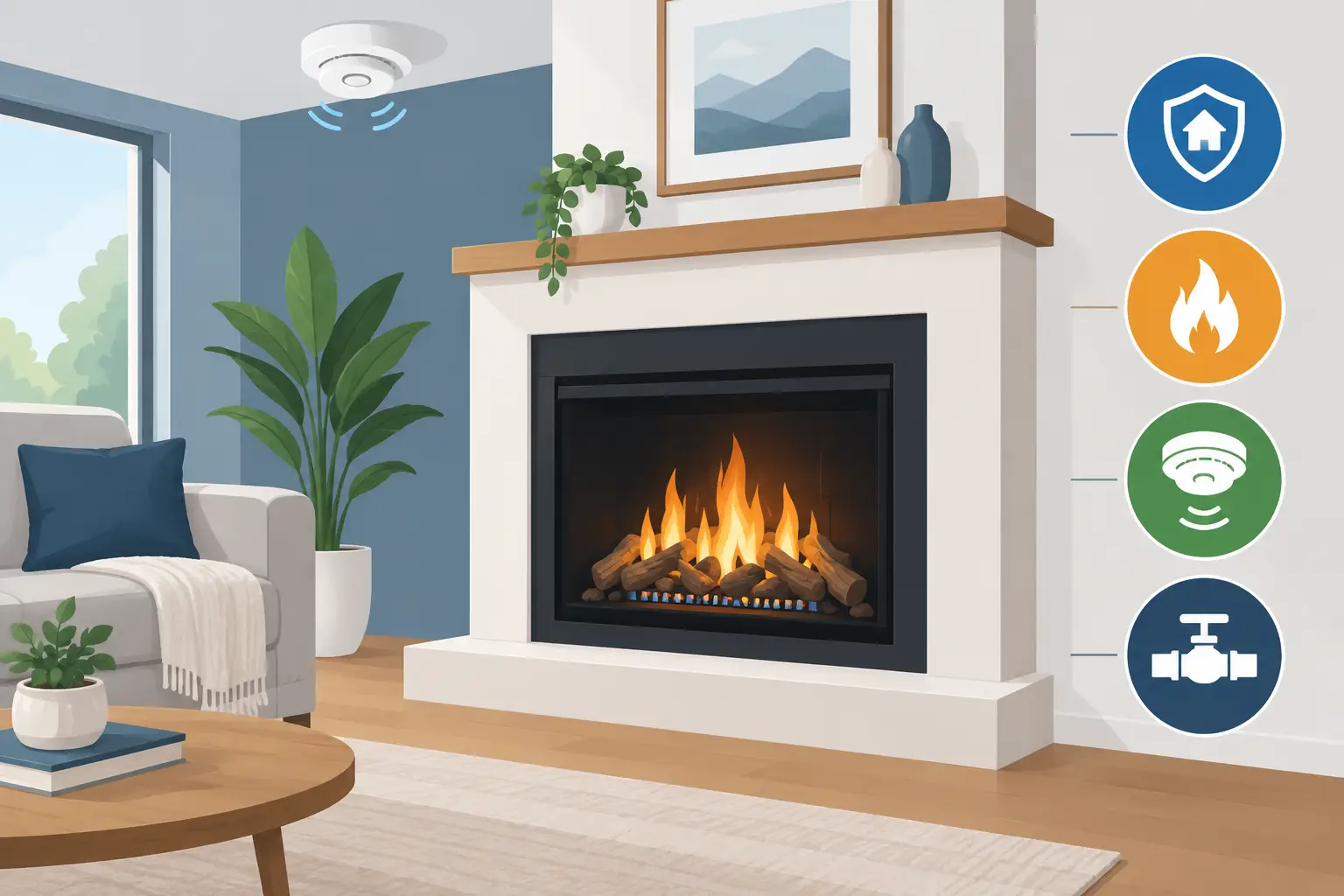
A gas fire should feel like the easy part of your evening: warmth at the press of a button, a welcoming focal point and no concern beyond choosing what to watch. That confidence starts with the top gas fire safety features, but it also depends on selecting the right appliance for the room and having it fitted properly.
Modern gas fires are designed with several layers of protection. Some are built into the appliance, while others rely on correct installation, adequate ventilation and sensible ongoing care. Knowing the difference helps you compare models with confidence and ask the right questions before making a decision.
Top gas fire safety features to look for
The most useful safety features are those that react if the fire is not operating as it should. They are not a replacement for professional installation or servicing, but they provide valuable protection when combined with both.
Flame failure devices
A flame failure device is one of the key protections to ask about. It monitors whether the pilot flame or main burner flame is present. If the flame goes out unexpectedly, perhaps because of a draught or temporary interruption to the gas supply, the device shuts off the gas supply to the fire.
Without this feature, unburned gas could continue to enter the room. Most modern gas fires include flame supervision, but it is still worth confirming when comparing appliances, particularly if you are replacing an older fire.
Oxygen depletion sensors
Many open-fronted gas fires and certain other models use an oxygen depletion sensor, often called an ODS. This monitors the oxygen level around the appliance. If oxygen falls below the safe operating level, the fire is designed to switch itself off.
This is particularly relevant where a fire takes combustion air from the room. The sensor is a safeguard, not permission to block vents or ignore the room requirements. Any purpose-provided ventilation must remain clear and open, even if it can feel inconvenient on a cold day.
A sealed glass front
Balanced flue and glass-fronted gas fires offer another important form of protection. Their combustion chamber is sealed from the room, with air for combustion and combustion products managed through the flue system. This can make them a good option for homes without a conventional chimney, subject to a suitable external wall and correct installation conditions.
The glass itself becomes extremely hot in use. A fireguard may still be appropriate where young children, pets or vulnerable adults are present. Safety is not only about gases and flames – it is also about preventing contact with hot surfaces.
Secure ignition and controls
Electronic ignition, clear control layouts and child-lock functions can help prevent accidental operation. Remote controls and apps can be convenient, especially for setting a comfortable heat level, but they should never encourage a fire to be left unattended for long periods.
If you choose a remote-controlled fire, keep the handset out of a child’s reach and make sure everyone in the household knows how to turn the appliance off. A control system is only helpful when it is understood and used correctly.
Built-in heat control
Some gas fires include thermostatic controls that reduce or increase the flame to maintain a chosen room temperature. This is mainly a comfort and efficiency feature, but it can also avoid the room becoming unnecessarily hot.
The best setting depends on your room size, insulation and how you use the space. A large open-plan room may need a different fire and heat output from a smaller, well-insulated lounge. Choosing a fire that is too powerful can make it tempting to run it at an unsuitable level or keep doors open simply to disperse heat.
The safety feature you cannot see: correct installation
Even the best-equipped gas fire must be installed to the manufacturer’s instructions and the specific conditions of the property. The flue route, chimney condition, hearth, clearances, ventilation and gas supply all need to be assessed before fitting begins.
A Gas Safe registered engineer is qualified to work on gas appliances. They will establish whether the proposed model is suitable for your home, carry out the necessary checks and commission the fire once installed. Commissioning is more than switching the fire on. It includes checking the appliance is operating correctly, that the flue is performing as required and that safety devices work as intended.
This is why a showroom conversation is valuable. A fire that looks right in a brochure may not be the correct fit for an existing chimney opening, a media wall or a room with limited ventilation. Bringing measurements, photographs and details of any current fireplace can make the advice more accurate from the outset.
At Wirral Fires, our no-pressure approach is built around helping homeowners find an appliance that suits both their room and their requirements, followed by professional fitting from experienced Gas Safe registered engineers.
Flues, chimneys and ventilation all matter
A gas fire needs a safe route for combustion products. Depending on the model, that may be an existing chimney, a purpose-made flue liner, a balanced flue through an external wall or, for certain appliances, another approved arrangement. It is never safe to assume an old chimney is ready to use simply because a previous fire was fitted there.
Chimneys can deteriorate, become blocked or be unsuitable for a modern appliance. A professional survey identifies what is needed before installation. In some cases, a different fire type may be the safer and more practical choice.
Ventilation is equally important. Some homes have become more airtight after new windows, insulation or draught-proofing work. That is good for retaining heat, but it can change how an open-flued gas appliance receives air. Do not cover air vents with furniture, tape, insulation or decorative covers. If a vent has been installed for the fire, it has a job to do.
Carbon monoxide alarms: essential backup, not a substitute
Carbon monoxide has no smell, colour or taste, which is why a suitable audible carbon monoxide alarm is an important part of gas-fire safety. Position it in line with the alarm manufacturer’s instructions and test it regularly. Replace batteries where applicable and replace the alarm at the end of its stated working life.
An alarm should be treated as a final warning system, not as evidence that everything is fine. It does not remove the need for a correctly fitted appliance, clear ventilation or annual professional maintenance. If an alarm sounds, turn off the appliance if it is safe to do so, open doors and windows, leave the property and seek appropriate urgent advice.
Symptoms such as headaches, dizziness, nausea, breathlessness or unusual tiredness should also be taken seriously, particularly if more than one person feels unwell or symptoms improve outside the house. Do not use a gas fire that you suspect may be unsafe until it has been checked by a Gas Safe registered engineer.
Simple habits that keep a gas fire safer
Day-to-day care is straightforward, but it makes a genuine difference. Keep furniture, curtains, rugs and decorative items outside the clearances stated for the appliance. Never dry clothes on or close to a gas fire, and do not place objects on top of it.
Check the flame appearance occasionally while the fire is running. A marked change from the usual flame pattern, difficulty lighting, soot marks, unusual smells or repeated shutdowns all justify a professional inspection. Do not try to dismantle the appliance, adjust the burner or clean internal components yourself.
Arrange servicing at the interval recommended for your appliance, commonly once a year. A proper service can include checking the burner, pilot, flue performance, seals, controls and safety devices, as well as cleaning components where required. It is also a sensible opportunity to ask questions about operation before the colder months arrive.
If your fire has been unused over summer, give it a visual check before the heating season begins. Make sure vents and the area around the appliance are clear, test your carbon monoxide alarm and book servicing if it is due. Small checks carried out early are far preferable to discovering an issue on the first cold evening.
Choosing safety alongside style
A gas fire can be a striking centrepiece, whether you prefer a traditional inset fire, a contemporary hole-in-the-wall design or a glass-fronted feature fire. Safety should shape the shortlist from the start rather than being treated as a final box to tick.
Ask how the appliance is flued, whether it needs additional ventilation, which safety devices it includes and what routine servicing involves. Then consider who uses the room, whether children or pets are likely to be nearby and how the heat output suits the space.
The right fire is one that looks at home in your living space and gives you confidence every time you use it. A careful survey, clear advice and qualified installation make that confidence far easier to achieve.