

A new gas fire can transform a room, but the appliance itself is only part of the decision. Whether you need a balanced flue or conventional flue will affect which fires are suitable, where they can be fitted and the preparation your home may need. The right answer usually starts with a simple question: do you have a sound, usable chimney?
For homeowners across the Wirral, Chester and West Cheshire, this can be especially relevant when updating an older fireplace, opening up a chimney breast or creating a new focal point on a flat wall. Both options can provide efficient, attractive gas heating, but they work in different ways and suit different properties.
Balanced flue or conventional flue: the key difference
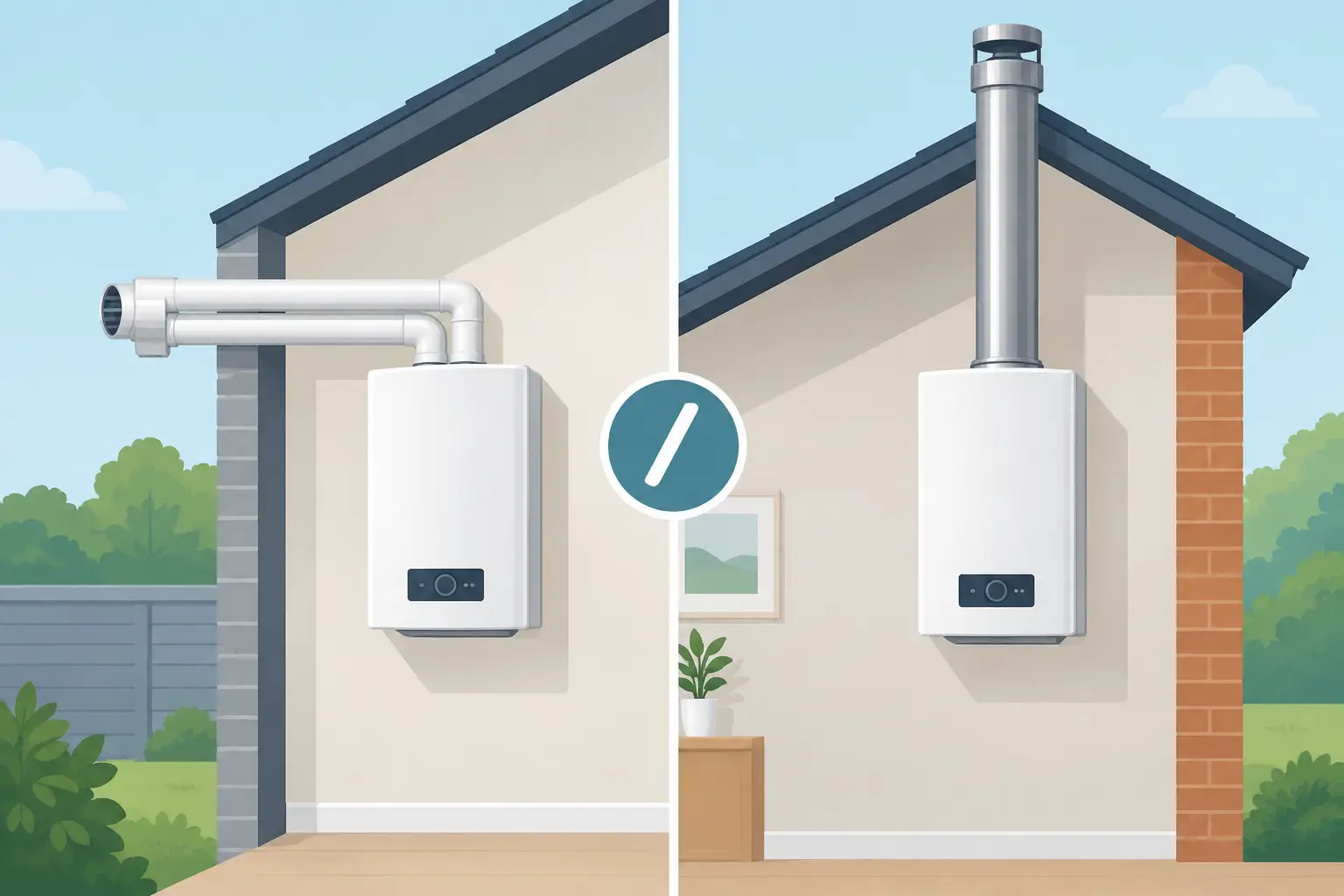
A conventional flue gas fire takes combustion air from the room and sends the products of combustion safely up a chimney or flue. It is sometimes called an open-flue fire because the appliance draws air from the room in which it is installed.
A balanced flue fire is a sealed appliance. It draws fresh air from outside and expels combustion gases outside through a dedicated flue system. The inner and outer sections of the flue work together, with air coming in one way and gases leaving the other. Because the fire is sealed from the room, it does not use your indoor air for combustion.
That difference has a practical effect on your choice. A conventional flue fire normally relies on an existing chimney or a suitable flue route, while a balanced flue fire can often be installed on an external wall without a chimney at all.
When a conventional flue fire makes sense
If your home has a chimney breast in good condition, a conventional flue fire may be the natural choice. It allows you to make the most of an existing fireplace opening and can suit a wide range of traditional and contemporary designs, from inset fires to larger statement installations.
Many period homes have a chimney that was built for a solid-fuel fire but is now unused or hidden behind a previous renovation. Before fitting a gas fire, the chimney must be inspected and assessed for its condition, route and suitability. In some cases, it may need lining or adapting to meet the requirements of the chosen appliance.
A conventional flue installation can create a very familiar fireplace arrangement, particularly where a surround, hearth and mantel are part of the room’s character. It can also be a good route when replacing an older gas fire, although it should never be assumed that a new model can simply go into the existing opening. Flue performance, ventilation, clearances and the fire’s individual installation instructions all need checking.
Room ventilation matters
As a conventional flue appliance uses air from the room, permanent ventilation may be required. This depends on the fire’s heat input, the property and the manufacturer’s instructions. Modern draught-proofing can make homes more airtight than they once were, so ventilation should not be blocked, covered or treated as an inconvenience.
The aim is straightforward: the appliance needs enough air to burn correctly and the chimney needs to draw reliably. A professional survey will identify what is needed before work begins, avoiding unwelcome changes after the fire has been selected.
Why balanced flue fires are popular
A balanced flue gas fire is often the answer when there is no chimney, or when you want to install a feature fire away from a traditional fireplace opening. Provided there is a suitable external wall and safe route for the flue terminal, it can open up more design possibilities.
This makes balanced flue models particularly useful in newer homes, extensions, converted spaces and living rooms where a chimney breast has been removed. They can be fitted as a hole-in-the-wall feature, within a purpose-built media wall or as part of a modern fireplace suite, subject to the appliance specification and site survey.
Because the combustion circuit is sealed from the room, balanced flue fires do not usually require the same room ventilation arrangement as an open-flue appliance. That can be appealing in a well-insulated home. However, it does not remove the need for careful planning. The outside terminal needs appropriate clearances from windows, doors, air vents, boundaries and other features of the building.
An external wall is not the only consideration
It is tempting to think a balanced flue fire simply needs a wall behind it. In reality, the flue route, wall construction, room layout and external space all matter. A conservatory, neighbouring boundary, low window or planned extension can affect whether a proposed position is suitable.
Some balanced flue systems can be routed horizontally through an outside wall, while others allow vertical or more complex arrangements. What is possible depends entirely on the fire and its approved flue components. Using the correct components and following the manufacturer’s specified route is essential for safety and performance.
Appearance, heat and running your fire
Neither flue type automatically gives a better-looking fire. There are realistic flame effects, traditional coal or log styles, contemporary landscape formats and fires designed to sit neatly within a surround in both categories. Your preferred look may narrow the choice, but there is often more than one suitable option once the flue arrangement is known.
Heat output should be considered separately from flame appearance. A large open-plan room, a well-insulated lounge and a small snug will have very different heating needs. Choosing too much heat can make a room uncomfortable; choosing too little may leave you relying on central heating when you expected the fire to take the chill off.
Efficiency figures also need context. A fire’s quoted efficiency is useful, but how you use the room, how much heat it requires and the type of appliance all influence real-life running costs. An experienced installer can help match the fire to the space rather than selecting solely on appearance or a headline figure.
What happens during a professional survey
A proper survey turns an initial preference into a safe, practical plan. For a conventional flue fire, this normally includes assessing the chimney, checking its route and condition, considering any required liner and confirming ventilation requirements. For a balanced flue model, the survey focuses on the proposed flue route, terminal position, wall construction and required clearances.
The installer will also check the gas supply, hearth or floor arrangement, combustible materials around the fire, room dimensions and the position of nearby electrics or services. If you are planning a surround, media wall or bespoke fireplace feature, these details are best agreed before construction begins.
At Wirral Fires, the aim is to give clear advice before you commit to an appliance that may not suit the property. A showroom visit can help you compare styles and flame effects, while a survey confirms the installation route and the work involved. It is a more reassuring approach than trying to make a fire fit after it has been chosen.
Safety and aftercare should not be an afterthought
Gas fires should always be fitted and commissioned by a Gas Safe registered engineer. Once installed, the appliance should be used in line with its instructions and serviced at the recommended intervals. The flue and terminal must be kept clear, and any signs of staining, unusual smells, pilot problems or changes in the flame should be checked promptly.
A carbon monoxide alarm should be provided and positioned in accordance with current requirements and the installer’s advice. It is an extra safeguard, not a substitute for correct fitting and regular servicing.
If you are deciding between a balanced flue and a conventional flue, start with the property rather than the brochure. A look at your chimney, external walls and the room you want to heat will quickly show which options are genuinely right for your home – and leave you free to focus on creating a fireplace you will enjoy for years.