

A gas fire can look and sound as though it is working perfectly while a developing fault sits out of sight. That is why the answer to do gas fires need servicing is yes: a regular professional service is one of the simplest ways to protect your home, your family and the reliable warmth you expect from your fire.
For most homeowners, an annual service by a Gas Safe registered engineer is the sensible approach. It gives the appliance, its gas supply and its flue or chimney a proper check before small issues become inconvenient or, more importantly, unsafe.
Do gas fires need servicing every year?
In most cases, yes. Annual servicing is widely recommended for gas fires, even if the fire is used only occasionally. A fire that is mainly switched on during cold spells can still collect dust, develop a blocked pilot assembly or have components that wear over time.
The manufacturer’s instructions for your particular model should always be followed, as service requirements can vary. Some modern balanced-flue and flueless models have specific maintenance guidance, while traditional inset fires may need closer attention to their chimney or flue. If you cannot find the handbook, a Gas Safe engineer can advise on the right maintenance interval for your appliance.
An annual appointment is also practical. Booking before autumn means your fire is checked and ready when you want to use it, rather than discovering a problem on the first chilly evening of the year.
What happens during a gas fire service?
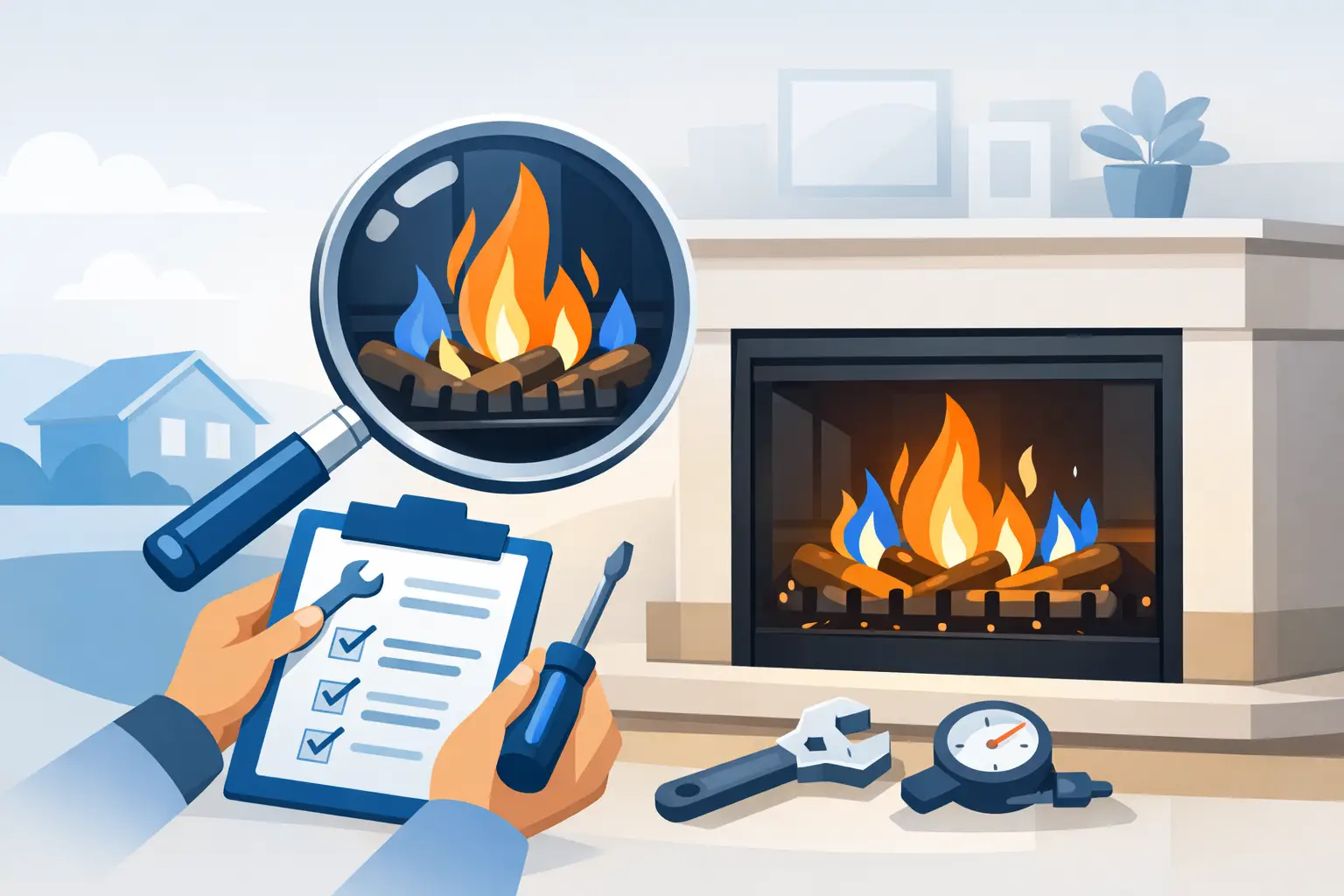
A proper service is more than a quick visual check. The engineer will inspect the fire’s condition, test that it is operating safely and clean relevant parts where needed. They will check the burner and pilot, ignition, flame picture, gas pressure and safety devices, along with the fire’s ventilation requirements.
Where the appliance uses a chimney or flue, the engineer will also assess that combustion products can leave the property correctly. This may include checking the flue flow and looking for signs that the chimney, terminal or surrounding opening could be affecting safe operation.
The precise work depends on the type and make of fire. A hole-in-the-wall gas fire, for example, may have different access arrangements from a traditional inset fire in a fireplace surround. The key point is that servicing should be tailored to the appliance rather than treated as a one-size-fits-all job.
After the work, the engineer should explain any findings in plain language. If a part is worn, the fire needs further investigation or the flue has a concern, you should know what has been found and what needs to happen next.
Why servicing matters, even when the fire still works
Gas appliances burn fuel to produce heat, so they need the right gas supply, air flow and route for fumes to leave safely. If any of these elements is compromised, the fire may burn less efficiently or produce unsafe combustion products, including carbon monoxide.
Carbon monoxide has no smell, colour or taste. Symptoms of exposure can include headaches, dizziness, nausea, tiredness and confusion, which is why it should never be left to guesswork. A service helps identify faults that may not be obvious during everyday use.
There is a comfort benefit too. A clean, correctly adjusted gas fire is more likely to light reliably, produce an even flame and deliver the heat it was designed to provide. Servicing can also help preserve the appearance of the fire, particularly where dust or debris has built up around the coals, pebbles or logs.
Signs your gas fire needs attention sooner
Do not wait for the next annual service if something changes. Turn the appliance off and arrange for a Gas Safe registered engineer to inspect it if you notice persistent issues such as:
- a weak, yellow or irregular flame where the manufacturer’s normal flame pattern is different
- soot or dark staining around the fire, fireplace opening or nearby walls
- difficulty lighting the fire, a pilot that will not stay lit or repeated cutting out
- unusual smells, noises or a noticeable drop in heat output
- damage to the glass, casing, control knob, burner area, flue terminal or surrounding hearth
A yellow flame is not automatically a fault on every decorative gas fire, as some models are designed to create a more natural-looking flame effect. However, a change from the fire’s usual appearance is worth checking. It is always better to ask than to carry on using an appliance that does not seem right.
If you suspect a gas leak, smell gas or believe carbon monoxide may be present, stop using the appliance, open doors and windows if safe to do so, and follow the emergency guidance provided by your gas supplier. Do not try to diagnose or repair the fault yourself.
A service is not the same as a landlord gas safety check
This distinction can cause confusion. Landlords have legal duties to arrange an annual gas safety check for relevant gas appliances and flues in rented homes. Homeowners do not have the same legal requirement for their own property, but annual servicing remains strongly advisable.
A gas safety check confirms whether an appliance is safe at the time of inspection. A service generally goes further by cleaning, maintaining and checking the appliance’s performance in line with the manufacturer’s requirements. In practice, both safety and maintenance matter, especially for a fire you rely on through the colder months.
If you have recently moved into a property with an existing gas fire, arranging a service before using it is a sensible precaution. You may not know when it was last maintained, whether it was installed correctly or whether changes to the room, chimney or ventilation have affected it.
Can you look after a gas fire between services?
There are a few straightforward checks homeowners can make, but these do not replace professional servicing. Keep the air vents in the room clear, avoid storing items against the fire and make sure furniture, curtains and soft furnishings are positioned at the distances stated in the appliance instructions.
You can gently dust the exterior when the fire is cold and inspect the visible condition of the hearth, surround and glass. Do not remove the fire front, disturb the burner, alter the fuel-effect arrangement or attempt to clean internal components unless the manufacturer’s instructions specifically say it is safe for you to do so.
It is also wise to have a working audible carbon monoxide alarm in the room, positioned according to the alarm manufacturer’s instructions. Test it regularly. An alarm is an essential extra layer of protection, but it does not make servicing unnecessary.
Choosing the right person to service your fire
Any work on a gas fire should be carried out by a Gas Safe registered engineer who is qualified for the type of appliance involved. This is especially relevant for fires connected to chimneys, balanced flues or specialist installations, where safe operation relies on more than the fire unit alone.
When booking, tell the engineer the make and model if you have it, the type of fire and whether you have noticed any changes in performance. This helps ensure the visit is properly prepared. Keep service paperwork somewhere safe too, as it provides a useful record for future maintenance and can be helpful when selling a property.
At Wirral Fires, we believe good aftercare should feel clear and straightforward. If you are unsure whether an existing gas fire is due a service, needs repair or may be ready for replacement, getting professional advice early can save worry later.
A warm living room should be a place to relax, not a source of uncertainty. Booking a regular service means you can enjoy your gas fire with greater confidence when the colder weather returns.