

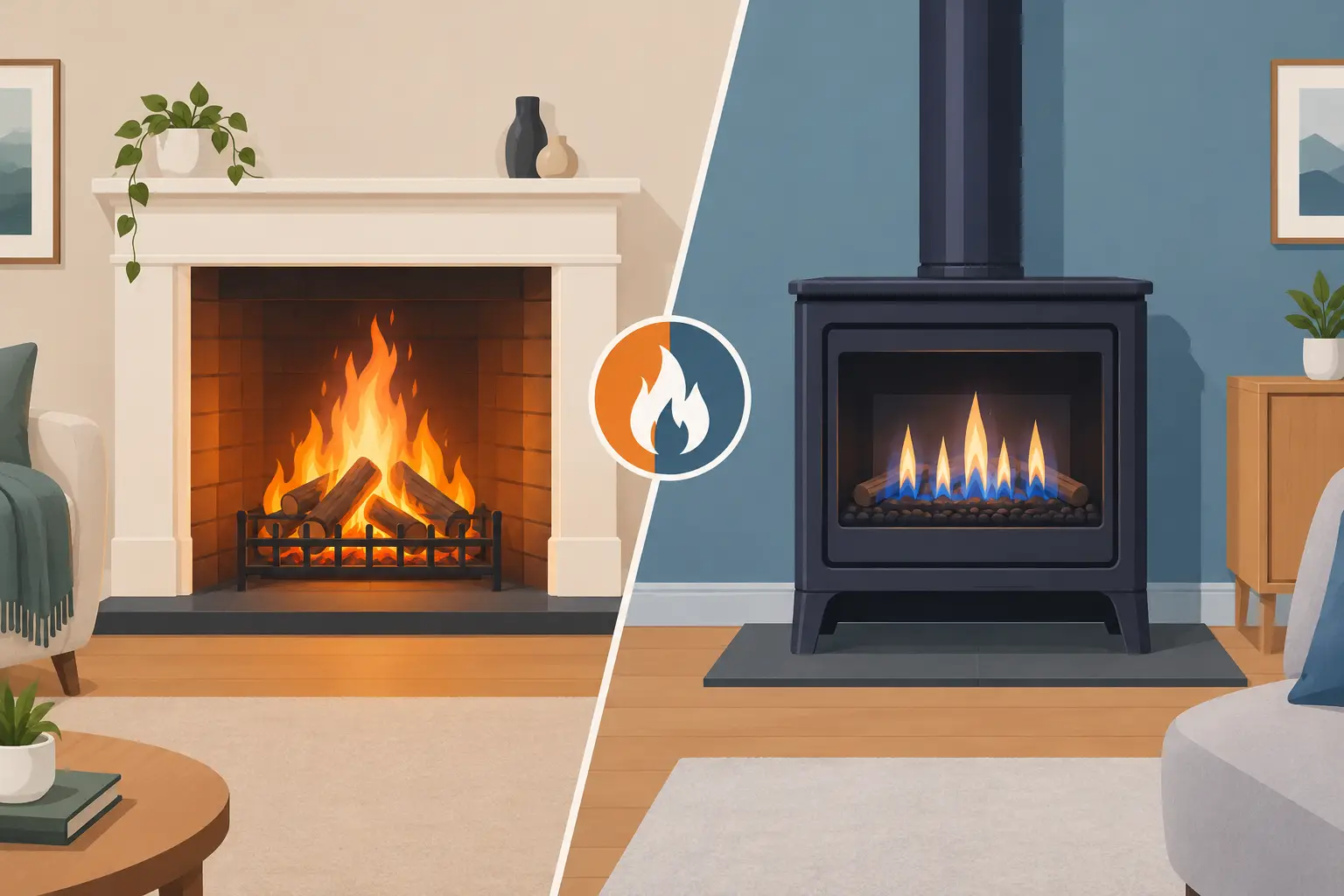
A fireplace can change the feel of a room long before it is lit. It becomes the natural focal point for family evenings, quiet weekends and the colder months of the year. When comparing open fires versus gas stoves, the right choice is rarely about looks alone. It comes down to how you use your home, the condition of your chimney, the level of maintenance you are happy with and the type of warmth you want.
An open fire has a character that is hard to copy: the crackle of fuel, the visible flame and the traditional look of a real hearth. A gas stove, meanwhile, offers controlled heat and a stove-style centrepiece without the regular work associated with solid fuel. Both can be excellent additions to a Wirral or Cheshire home, but they suit different households.
Open fires versus gas stoves: the key differences
The biggest difference is how heat is produced and managed. An open fire burns solid fuel in an open fireplace. It needs a suitable chimney, a correctly sized hearth and adequate ventilation. Some of the heat is felt directly in front of the fire, which can be wonderfully cosy, but a considerable amount can also travel up the chimney.
A gas stove produces a real flame behind glass, with the burner and airflow designed to provide more controlled performance. Many models are operated by a simple control, remote handset or wall switch, depending on the appliance. You can enjoy the look of a stove and a lively flame without carrying fuel through the house, clearing ash or waiting for kindling to catch.
Neither option is automatically better. The sensible question is which one works best for your room, routine and property.
The appeal of a real open fire
For period properties and homeowners who enjoy a traditional fireplace, an open fire can be a genuine feature. There is a ritual to lighting it, tending it and settling down in front of it. A well-designed surround, hearth and grate can give an older room the authentic finish it deserves.
Open fires also offer flexibility in appearance. They can suit a formal Victorian-style fireplace, a rustic cottage setting or a more understated renovation, depending on the materials chosen. Natural stone, cast iron and timber-effect surrounds all create very different results.
However, an open fire is a hands-on choice. Fuel must be stored somewhere dry, ash needs removing safely once cold, and the chimney should be swept regularly. The fire also needs to be used responsibly, with suitable fuel and proper ventilation. If your property is within a smoke control area, it is particularly important to understand the local requirements before selecting fuel and an appliance.
There is also the question of heat retention. An open fire creates a pleasant radiant warmth close to the hearth, but it may not be the most practical way to heat a larger living space. The open chimney can draw warm air from the room, especially when the fire is not in use. For some households, that trade-off is worthwhile for the atmosphere. For others, it soon becomes a reason to consider a stove.
Why homeowners choose gas stoves
Gas stoves are often chosen by people who want warmth at the press of a button and a traditional focal point with less daily upkeep. They can provide a convincing flame picture, from classic coal-effect styling to more contemporary logs or pebbles, while allowing you to adjust the heat more easily than with an open fire.
This level of control is valuable in a family lounge or open-plan space. You can take the chill off a room on a cool spring evening without committing to lighting and maintaining a solid-fuel fire. When you are finished, the appliance can be turned off cleanly, with no ash pan to empty the following morning.
Many gas stoves are also designed for effective room heating. Actual efficiency and heat output vary by model and flue arrangement, so it is important not to choose solely by appearance. A stove that is too powerful can make a modest room uncomfortably warm, while one with insufficient output may disappoint on a cold winter night.
Gas stoves still require care. They should be installed by a Gas Safe registered engineer and serviced regularly in line with the manufacturer’s guidance. A professional installation includes checking the gas supply, ventilation, flue route and the suitability of the location, rather than simply fitting a stove where an old fireplace used to be.
Your chimney and flue can shape the decision
A chimney breast does not always mean that every type of fire can be fitted without further work. Older chimneys can need inspection, sweeping, repair or lining before they are ready for use. The condition, height and route of the flue all matter, as do the hearth dimensions and nearby combustible materials.
An open fire generally relies on a sound, open chimney and enough airflow to allow it to burn safely. A gas stove may use a conventional flue through an existing chimney, although some gas stove options use a balanced flue system and do not rely on a traditional chimney in the same way. The best route depends on the appliance, the property layout and external access.
This is where a proper survey is more useful than a guess based on photographs or measurements taken from a fireplace opening. A qualified installer can assess what is present, explain what preparation may be needed and help avoid choosing a fire that is unsuitable for the room.
Consider the room, not just the fireplace
A large, draughty lounge, a compact modern sitting room and an open-plan kitchen-diner all place different demands on a fire. Think about when the room is used, whether doors are normally open, how well insulated it is and whether the fireplace will be your main source of heat or an occasional comfort feature.
If the fire will be lit only at weekends or when guests visit, the theatre of an open fire may be the point. If you want dependable, easily controlled warmth on most evenings, a gas stove is often the more convenient fit. Households with busy routines frequently appreciate being able to enjoy a flame without the preparation, cleaning and fuel storage of an open fire.
Style should follow the same practical thinking. A compact cast-style gas stove can look at home in a traditional chimney opening, while a freestanding model can make a stronger statement on a hearth. An open fire can be equally striking, but its final appearance depends heavily on the condition and proportions of the existing fireplace.
Maintenance, safety and everyday living
Every live-flame fire deserves respect. With an open fire, use an appropriate fireguard where children or pets are present, keep combustible items well away from the hearth and arrange regular chimney sweeping. Ash should be fully cold before disposal, and a carbon monoxide alarm is a sensible safety measure where solid-fuel appliances are used.
For gas stoves, annual servicing helps keep the appliance operating safely and efficiently. The glass, burner and controls should be checked by a suitably qualified engineer, and any concerns such as unusual smells, changes to the flame or soot marks should be addressed promptly. Never block ventilation intended for a gas appliance.
The day-to-day difference remains clear. An open fire asks more of you, but rewards you with a traditional experience. A gas stove asks less, while giving you reliable warmth and a polished stove appearance.
Making a confident choice
It helps to visit a showroom before making a final decision. Seeing fires and stoves in person makes it easier to judge flame effects, proportions, finishes and the difference between an open hearth and a glass-fronted appliance. It also gives you the chance to talk through your chimney, room size and preferred style without pressure.
At Wirral Fires, homeowners can explore a broad choice of fireplace and stove options and receive straightforward advice on what will genuinely suit their property. The right answer may be a characterful open fire, a practical gas stove or another type of appliance altogether.
Choose the fire that will still feel right on an ordinary Tuesday evening in January – not only the one that looks best in the first five minutes.