

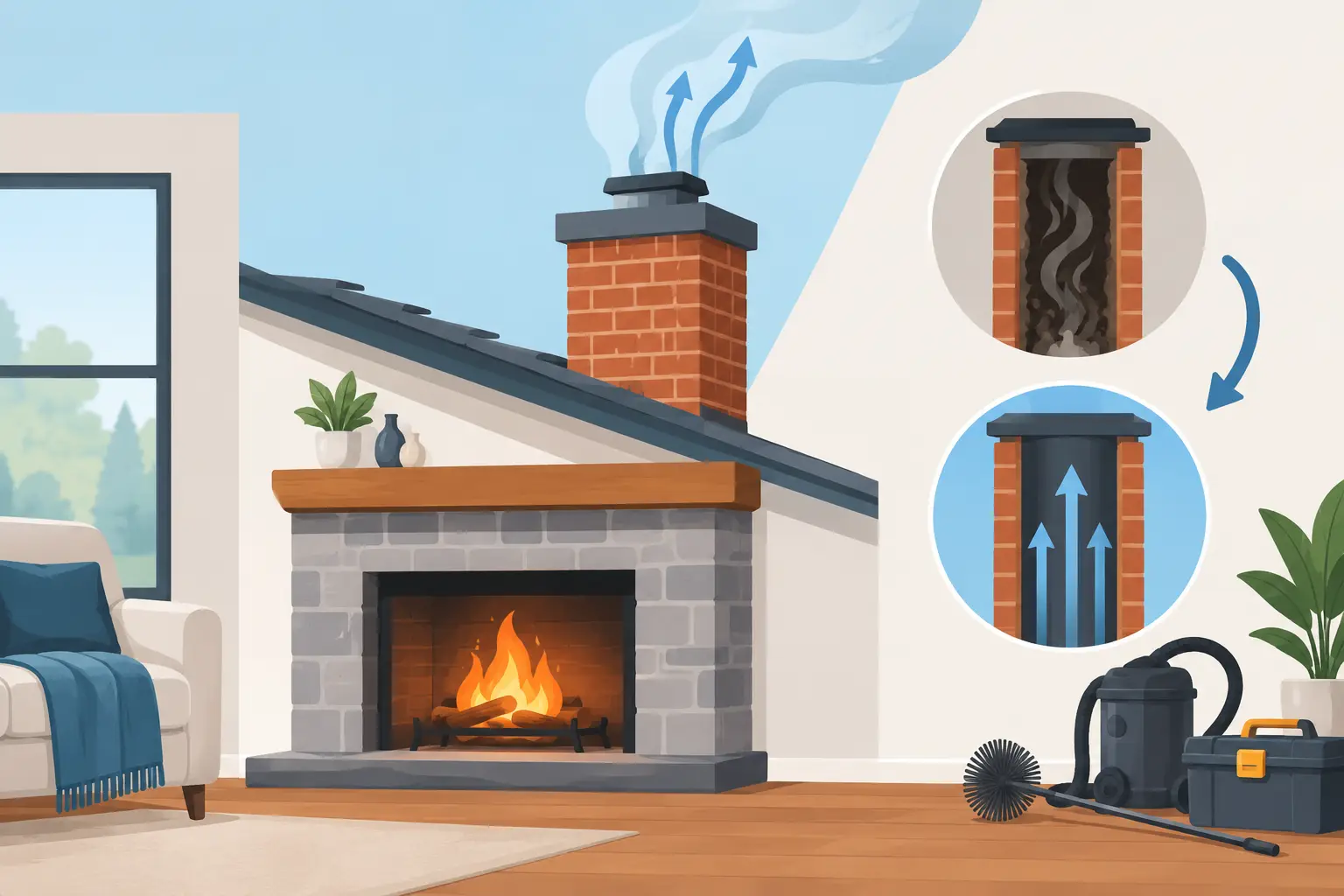
A fire that sends smoke into the room, struggles to stay alight or gives off very little heat is not simply frustrating. Chimney draught problems can affect comfort, efficiency and, more importantly, safety. The good news is that many causes can be identified with a careful inspection, whether you have a wood burner, multi-fuel stove, open fire or gas fire.
A chimney is designed to carry combustion gases safely outside. For that to happen, warm air needs to rise through the flue and draw fresh air into the appliance. When that natural movement is interrupted, the fire cannot perform as it should. The right solution depends on the property, chimney condition, appliance and ventilation, which is why a proper assessment is always better than guessing.
What does a poor chimney draught look like?
Poor draught is often first noticed when lighting a fire. Smoke may spill into the room before the flue has warmed up, or a stove may be difficult to establish even with dry fuel and the air controls open. An open fire might appear lazy, with flames rolling forward rather than pulling upwards into the chimney.
Other signs include blackened glass on a stove, excessive soot, a fire that goes out unexpectedly, fumes in the room or a persistent smoky smell. Gas appliances can also be affected by flue issues, although the symptoms may be less obvious. Any concern about fumes, unusual smells, staining around an appliance or a carbon monoxide alarm must be taken seriously. Stop using the fire and arrange for it to be checked by a suitably qualified professional.
A little smoke when first lighting a cold appliance can happen, particularly in very cold or damp weather. It should clear quickly once the flue is warm. Regular smoke spillage, however, is not something to accept as normal.
Common causes of chimney draught problems
A cold or damp flue
Cold air can sit inside a chimney, especially if the fireplace has not been used for a while. Until the column of air in the flue begins to warm, it may resist the upward pull needed for a clean burn. This is more noticeable in taller chimneys, external chimney breasts and properties exposed to strong winds.
Starting with a small, hot kindling fire can help warm the flue gradually. For solid-fuel appliances, use suitable dry kindling and fuel, follow the manufacturer’s lighting guidance, and make sure any air controls are set correctly. Avoid using large logs too early, as they can smoulder rather than create the heat needed to establish draught.
A blocked or restricted chimney
Soot, tar deposits, bird nests, fallen masonry and debris can all reduce the effective size of a flue. Even a partly restricted chimney can lead to poor performance and smoke entering the room. A flue liner may also be damaged, incorrectly sized or deteriorated over time.
Regular sweeping is essential for chimneys serving wood, multi-fuel and open fires. How often it is needed varies according to the fuel used and how regularly the appliance is lit, but sweeping should form part of responsible ownership rather than being left until a problem develops. A chimney inspection can also reveal issues that sweeping alone cannot resolve.
Insufficient air coming into the room
A fire needs oxygen to burn. Modern replacement windows, draught-proofing and insulated homes are excellent for warmth, but they can reduce the background airflow an older fireplace once relied on. If opening a window slightly improves the fire’s behaviour, a lack of permanent ventilation may be part of the issue.
This does not mean leaving a window open every time you use the fire. Depending on the appliance, room and installation, a correctly sized dedicated air vent may be required. Ventilation should never be blocked or covered, even if it feels cool in winter. It has a direct role in safe combustion and proper chimney operation.
Extractor fans and negative pressure
Kitchen extractor hoods, bathroom fans, tumble dryers and some whole-house ventilation systems can pull air from the home. In some properties, this creates negative pressure, which encourages smoke or combustion gases to come down the chimney rather than travel up it.
The effect may only happen when an extractor is running, so it can be easy to miss. If your fire smokes when the kitchen fan is switched on, turn the appliance off and seek advice before using both together. The answer may involve ventilation changes, an appliance-specific solution or adjustments to how the room is used. It is not sensible to assume that a chimney cowl alone will solve every pressure issue.
Fuel that is too wet or unsuitable
Wet wood burns cooler and produces more smoke, soot and tar. It can make a sound chimney appear faulty because the fire never reaches a clean, stable burn. For wood-burning appliances, only use properly seasoned or kiln-dried logs with a moisture content of 20% or less. Store logs under cover with good airflow, rather than directly on the ground or wrapped in an airtight cover.
Household waste, treated timber and unsuitable fuels should never be burned. They can damage the appliance and flue, create harmful emissions and leave deposits that restrict draught. A quality fire starts with the correct fuel as well as the correct installation.
Chimney height, location and wind conditions
The chimney’s position above the roofline affects how well it draws. Nearby buildings, taller trees, roof shapes and exposed locations can all create turbulence. In certain wind directions, air can be forced down the flue, causing a downdraught.
A suitable chimney cowl can sometimes improve resistance to rain, nesting birds and wind-related downdraughts. However, cowls are not a universal fix. The wrong type can restrict flow, and fitting one without understanding the underlying cause can leave the real problem unresolved. In some cases, the flue height, terminal position or the whole chimney system needs professional consideration.
Safe checks you can make before booking help
There are a few sensible observations homeowners can make without dismantling anything. Check whether the problem happens only in certain weather conditions, only when an extractor fan is running, or every time the appliance is used. Notice whether opening an internal door or window changes the way the fire burns.
For a stove, make sure the air controls are open as recommended for lighting and that ash has not built up where it could interfere with airflow. Check that any throat plate or baffle is sitting in its intended position, but only when the appliance is completely cold and in line with the manufacturer’s instructions.
Do not attempt to inspect a chimney from the roof, remove a liner, alter ventilation or make changes to a gas fire yourself. Avoid repeatedly trying to light a fire that is smoking into the room. A carbon monoxide alarm should be fitted in the same room as a solid-fuel or gas appliance, positioned and maintained in accordance with its instructions, but it is an alert device rather than a substitute for servicing and sound installation.
When professional advice is the right next step
Book an inspection if smoke enters the room regularly, you suspect a blockage, the chimney has not been swept recently, or the appliance has changed since the flue was last assessed. It is also wise to seek advice after a house renovation, new windows, an extension or a new extractor fan installation, as these changes can alter the airflow within a home.
The assessment should consider the appliance, flue route, chimney condition, room ventilation and the way the property is used. For gas fires, work must be undertaken by a Gas Safe registered engineer. For solid-fuel appliances and flue systems, use an appropriately qualified installer who understands the relevant requirements and can advise on the most suitable route forward.
At Wirral Fires, our experienced team can help homeowners across the Wirral, Chester and West Cheshire look at the whole picture, not just the appliance. A fire, stove and chimney must work together if you are to enjoy dependable warmth and peace of mind.
A well-drawing chimney should fade into the background: the fire lights cleanly, the room stays comfortable and you can simply enjoy it. If yours is doing the opposite, treating the signs early can protect your home, improve performance and make every fireside evening far more enjoyable.