

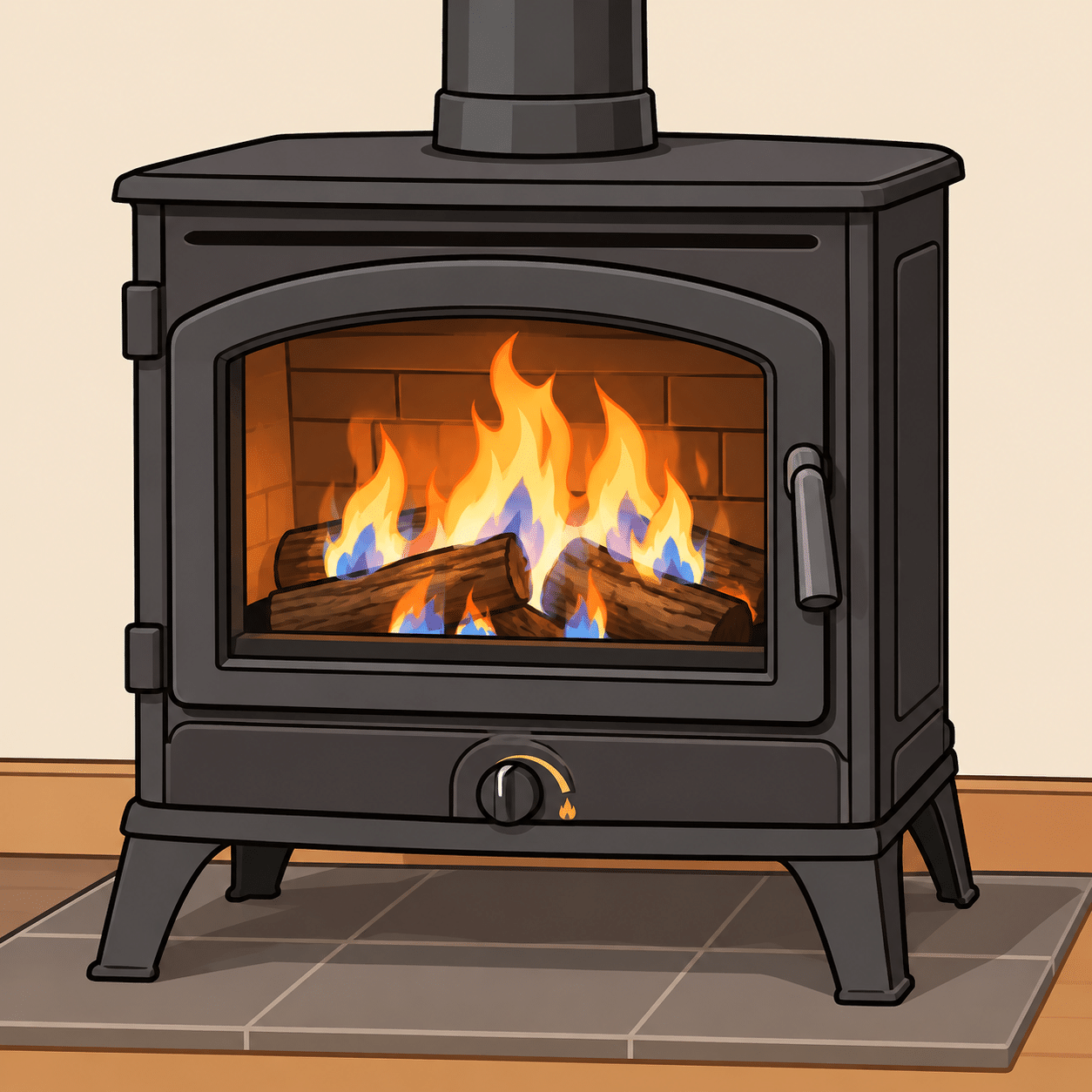
A gas stove can make a living room feel warm remarkably quickly, particularly on a cold Wirral evening when the central heating has not quite caught up. But can gas stoves heat homes rather than simply make one room more comfortable? The honest answer is: sometimes, but it depends on the size, layout and insulation of the property, as well as the appliance chosen.
A properly specified gas stove is an excellent source of dependable heat for a main room or open-plan space. It may also reduce how much you rely on central heating in the rooms you use most. It should not, however, be confused with a replacement for a whole-house heating system in every property.
Can gas stoves heat homes or just one room?
Gas stoves are primarily designed as room heaters. They produce direct, radiant warmth, meaning you feel the benefit close to the fire as well as from the warm air circulating around the room. Unlike a boiler, which sends heat through radiators around the house, a stove delivers most of its output where it is installed.
In a compact, well-insulated home with an open layout, heat can travel beyond the lounge into adjoining areas. Leaving internal doors open can help warmth move naturally through a hallway, dining area or kitchen. In a larger home, or one with separate rooms, stairwells and draughty spots, the effect will be more limited. Bedrooms upstairs are unlikely to receive enough consistent heat from a downstairs stove alone.
For many households, that is not a drawback. The living room is often the space used most in the evening, so heating it efficiently and comfortably can make good sense. A gas stove can work alongside central heating, allowing you to keep the rest of the home at a lower background temperature while enjoying a cosy focal point where the family gathers.
Heat output needs to suit the room
Choosing the highest-output stove is not automatically the best decision. Too little heat and the room will never feel properly comfortable. Too much, and you may find yourself turning the fire down or opening a window, which is hardly an efficient result.
The right heat output is influenced by more than floor area. Ceiling height, the number and type of windows, wall insulation, whether the room is open to other spaces and how exposed the property is all matter. An older house with single glazing or an uninsulated extension will lose heat more quickly than a newer, well-insulated room of the same size.
This is where professional guidance is valuable. A sensible assessment considers the room itself, not just a simple measurement. At Wirral Fires, the aim is to help homeowners choose an appliance that feels right for everyday use, rather than pushing a stove that is larger than the space requires.
Open-plan rooms need extra thought
Open-plan kitchens and living areas can be particularly appealing places for a gas stove, but they are also easy to underestimate. The stove may be fitted in the lounge end of the room while heat is escaping into a dining area, kitchen and hallway. Large glazed doors and high ceilings can add further heat loss.
A stove can still be a very effective choice in this setting, but the output and position need careful consideration. The fire should be able to warm the seating area comfortably without making the immediate area uncomfortably hot while the far end remains cool.
Efficiency is not the same as heating the whole property
Modern gas stoves can be highly efficient, especially balanced-flue and glass-fronted models. A more efficient appliance puts a greater proportion of the gas it uses into useful heat in the room, rather than losing it through the chimney or flue.
That efficiency is worth considering, but it does not alter the basic role of the appliance. A very efficient stove will heat its intended room well; it will not magically distribute that warmth through every closed room in a three-bedroom house.
The most practical way to think about a gas stove is as zonal heating. You heat the areas you are using, when you are using them. This can be particularly useful in spring and autumn, when lighting the full central-heating system for a few hours may feel unnecessary, or on evenings when everyone is settled in one room.
The type of gas stove makes a difference
There are several installation options, and the right one depends on the property as much as personal taste.
A conventional-flue gas stove uses a chimney or flue to carry combustion gases safely outside. It can be an excellent choice where there is a suitable chimney breast, and it offers the familiar look of a stove set within a fireplace opening.
Balanced-flue gas stoves are sealed from the room. They draw air from outside and send combustion gases back outside through a dedicated flue system. This makes them a useful option for homes without a traditional chimney, including some newer properties and extensions. Because the appliance is room-sealed, they can also offer reassurance where ventilation and draughts are a concern.
Flueless gas stoves have different requirements and are not suitable for every home or every homeowner. They require adequate permanent ventilation and must be installed in an appropriately sized room. A clear explanation of the ventilation requirements is essential before considering this type of appliance.
Whichever style appeals, the stove, flue arrangement and room must be considered together. The appearance of the fire matters, but safe operation and suitable heat performance come first.
Never use a cooking gas stove to heat a home
There is one important distinction that should never be overlooked. A purpose-built gas stove or gas fire is not the same as a gas cooker or hob. Cooking appliances must never be used to heat a room or home.
A cooker is not designed for space heating, and using it this way can create serious safety risks, including carbon monoxide exposure and excess moisture in the home. If you need additional warmth, use a properly installed heating appliance designed for the purpose.
Every gas stove should be fitted by a Gas Safe registered engineer, in line with the manufacturer’s instructions and current regulations. A carbon monoxide alarm should also be installed in the appropriate location. These are straightforward steps that protect your household and help ensure the stove performs as intended.
Installation affects warmth, safety and appearance
A good stove can only work as well as its installation allows. The condition of an existing chimney, the route for a new flue, the size of the hearth, clearances from combustible materials and ventilation all need to be checked before fitting begins.
In some homes, a chimney liner may be required. In others, a balanced-flue model may provide a more practical route. If a fireplace opening is being altered, the surround, chamber and hearth should be planned as part of the same project, so the finished result looks considered rather than pieced together.
Professional installation also means the appliance can be tested and commissioned properly. You should be shown how the controls work, understand any maintenance requirements and know who to contact if you have a question after fitting. That aftercare is particularly valuable with a purchase intended to serve your home for many years.
Can a gas stove help reduce central-heating use?
It can, particularly when used thoughtfully. If your household spends most evenings in one living space, a gas stove may allow you to turn down the thermostat slightly or avoid heating unused rooms to the same level. The potential benefit depends on your usual heating habits, the performance of your boiler and the heat loss from the property.
It is not a one-size-fits-all answer. A well-insulated bungalow may feel comfortable with a stove doing much of the daytime work in its main areas. A large, multi-storey family home will generally still need central heating to maintain an even temperature throughout. The best approach is usually a combination: reliable whole-home heating from your main system, with a gas stove providing fast, focused warmth and a welcoming centrepiece.
Choosing with confidence
Before settling on a model, think about the room you want to heat, when you will use it and whether the stove is intended as the main source of warmth in that space or a supplementary one. Bring a few room measurements, photographs and details of any existing chimney or fireplace to a showroom appointment. This gives an experienced team a useful starting point for practical, no-pressure advice.
A gas stove should feel like a natural part of your home: warm when you need it, suited to the room and fitted with care. Taking the time to match the appliance to the property is what turns a beautiful fire into a genuinely useful source of comfort.