

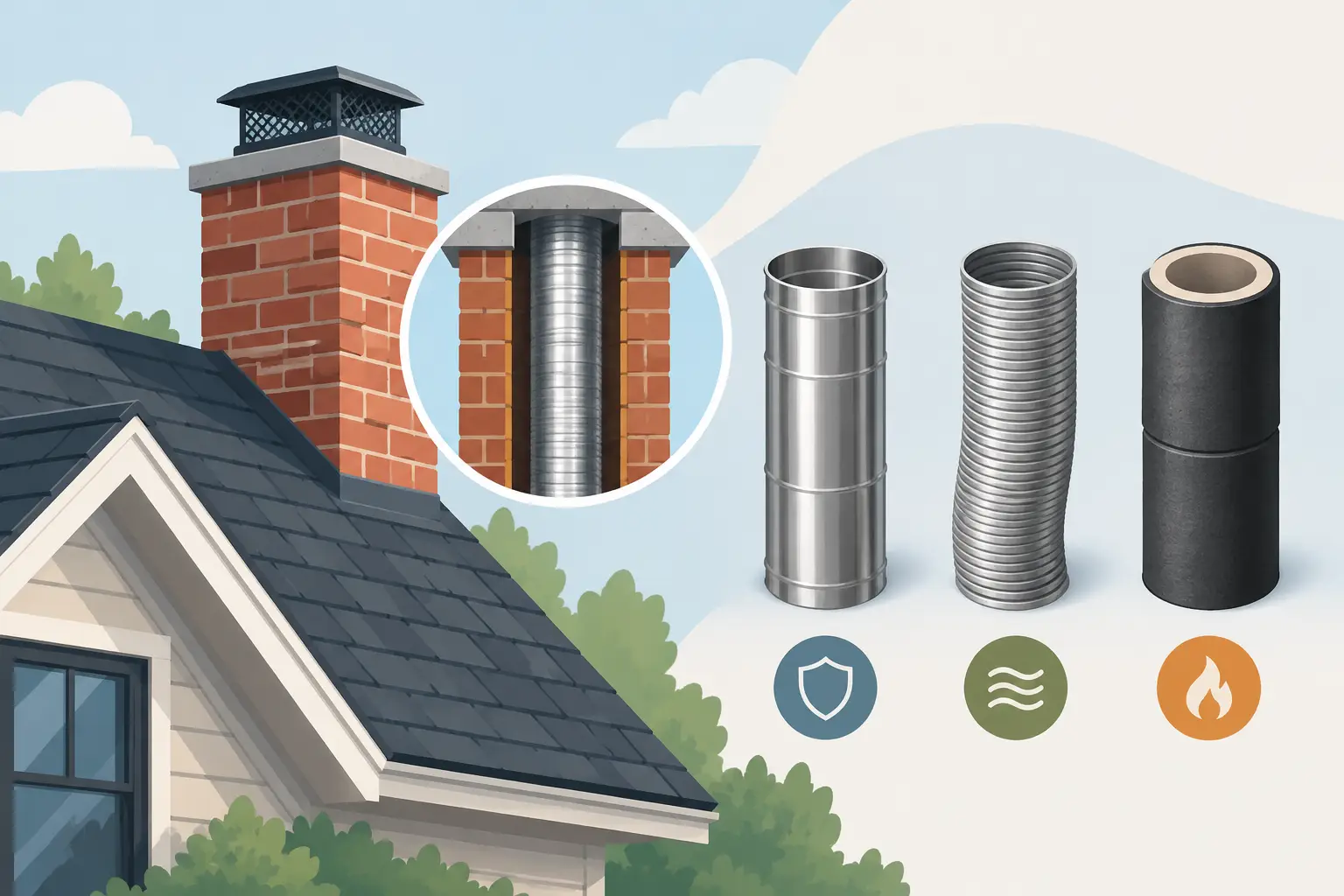
A new stove or fire can transform a living room, but the part you cannot see is often what determines whether it performs safely and efficiently. This guide to chimney liner options explains the main choices in straightforward terms, so you can understand what may be needed before choosing your appliance and arranging installation.
Your chimney is not simply a route for smoke to leave the house. It must create enough draw for the appliance, contain combustion products safely and protect the surrounding chimney structure. Older properties across the Wirral, Cheshire and Chester can have chimneys in very different conditions, even where they look sound from the outside. That is why a proper assessment should always come before assumptions.
Why a chimney liner may be needed
A chimney liner is a protective flue installed inside an existing chimney. Its job is to provide a correctly sized, continuous passage for flue gases to travel safely from the appliance to the top of the chimney.
Many traditional chimneys were built with brick or clay-lined flues that may have deteriorated over time. Mortar joints can fail, deposits can build up, and the flue may be oversized for a modern stove. An unsuitable flue can lead to poor draw, smoke entering the room, excessive tar deposits or carbon monoxide risks. It can also make an otherwise excellent appliance feel difficult to live with.
Not every chimney needs relining. If a chimney is structurally sound, correctly sized and passes the relevant checks, it may be suitable as it is. However, the decision should be based on a survey, not on the age or appearance of the property alone.
Guide to chimney liner options
The right liner depends on the fuel you intend to burn, the type of appliance, the chimney’s condition and its route through the property. A professional installer will also consider the height of the flue, any bends, access at roof level and current building requirements.
Flexible stainless steel liners
Flexible stainless steel is a common choice when fitting a wood-burning or multi-fuel stove into an existing chimney. It is supplied in a continuous coil and fed down through the chimney, allowing it to follow gentle changes in direction that are often found in older flues.
For solid-fuel appliances, a suitable grade of stainless steel is essential because wood and smokeless fuels produce hot gases and potentially corrosive deposits. The liner is normally insulated by the chimney itself or with an appropriate material where required, helping flue gases stay warmer as they rise. A warmer flue usually draws better and is less likely to suffer from condensation and tar build-up.
Flexible liners are practical, but they are not a universal answer. They are designed for specific fuels and temperatures, and should be connected using compatible components at both the appliance and chimney pot. A liner also needs to be the right diameter. Making a flue too narrow can restrict the appliance, while an oversized flue may cool gases too quickly and reduce draw.
Rigid stainless steel flue systems
Rigid stainless steel sections are generally used where there is no usable chimney, where a new flue route is needed, or where the flue can be installed visibly within a room before it passes through the roof or wall. You may see this arrangement with a freestanding stove in a property without a traditional chimney breast.
The sections fit together to form a purpose-made flue system. They can be single-wall within an appropriate internal setting, then change to insulated twin-wall flue where it passes through floors, lofts or external areas. The exact arrangement depends on clearances, the appliance instructions and the building itself.
This option can be a good solution for extensions, open-plan rooms and homes where a fireplace is being created from scratch. It does need careful planning, as the route, support brackets, roof penetration and terminal position all matter. A well-designed external flue can work very well, but an internal route often provides stronger draw because the flue gases remain warmer.
Pumice and concrete chimney systems
Pumice chimney systems are lightweight, insulated flue blocks that are built into the property as part of a new chimney structure. They are commonly used in new-build homes or major renovation projects where a permanent chimney is being formed. Their insulating properties help support good flue performance and make them suitable for certain solid-fuel, gas or other approved applications when specified correctly.
Pre-cast concrete flue systems are also found in some homes, particularly where a gas fire was originally installed. These are usually formed from narrow concrete flue blocks within the wall. They may be suitable for particular gas fires, but they are not automatically suitable for a wood burner or a larger solid-fuel appliance.
This is an area where appliance choice and flue type must be considered together. A fire that looks ideal in a showroom may not be appropriate for an existing pre-cast flue without a different installation solution. Clear advice at the outset avoids choosing a product that does not suit the home.
Clay liners
Clay liners are traditionally used within masonry chimneys and can be a durable option when installed properly. In some older properties, clay liners may already be present. Their condition needs checking carefully, as cracks, displaced sections and failed joints can affect safety and performance.
Installing new clay liners is generally more involved than fitting a flexible liner, so it is more likely to be considered during the construction of a new chimney or a substantial rebuild. For an existing chimney being refurbished for a stove, a correctly specified stainless steel liner is often the more practical route. The best option always depends on the individual chimney rather than a one-size-fits-all rule.
Matching the liner to your appliance
Fuel type is one of the biggest factors. A liner suitable for a gas fire may not be suitable for a wood burner, and a system designed for a particular electric fire installation may not need a chimney at all. Modern electric fires offer considerable design freedom because they do not produce combustion gases, whereas gas and solid-fuel appliances need carefully planned flue arrangements.
For wood-burning and multi-fuel stoves, the appliance manufacturer will state the required flue diameter and installation conditions. Reducing this without approval can affect operation and may invalidate the installation requirements. The same applies to gas fires and gas stoves, which must be installed by a Gas Safe registered engineer using the correct flue method for that model.
It is also worth considering how you intend to use the appliance. A stove that will be used regularly through winter has different demands from a decorative gas fire used occasionally for atmosphere. Good flue design supports reliable lighting, cleaner combustion and a more enjoyable fire.
The survey matters as much as the liner
Before work begins, the chimney should be inspected and tested. This may involve checking its route, height, condition and suitability for the intended appliance. A smoke test can help identify leakage, while a camera survey may be useful when the chimney’s internal condition is unclear.
The installer should also assess the hearth, fireplace opening, ventilation and the chimney pot or terminal. Homes are often more airtight after new windows, insulation or renovation work, which can affect the air available to a solid-fuel appliance. These details are not extras – they are part of making the installation safe and compliant.
At Wirral Fires, advice starts with the property and your preferred style of fire, rather than trying to make one appliance fit every situation. With experienced guidance and certified installation, homeowners can make an informed choice without unnecessary pressure.
Looking after a lined chimney
A new liner does not remove the need for maintenance. Wood-burning and multi-fuel stoves should be swept at suitable intervals based on how often they are used and the fuel burned. Burning dry, properly seasoned wood helps reduce soot and tar, while avoiding treated timber, household waste and damp logs protects both the appliance and flue.
Gas flues should also be checked as part of regular appliance servicing. Any change in performance, unusual smells, staining around the fireplace, smoke entering the room or a carbon monoxide alarm sounding should be treated seriously. Stop using the appliance and seek qualified advice straight away.
A chimney liner is not the most visible part of a fireplace project, but it is one of the most valuable. Start with a proper survey, choose an appliance that suits the available flue, and ask questions until you are comfortable with the proposed installation. That careful approach helps your new fire deliver the warmth, appearance and reassurance you want for years to come.