

A fireplace should feel like a welcome addition to your home, not a source of uncertainty. The certified fireplace installation process is designed to make sure your chosen fire or stove looks right, performs properly and, most importantly, is fitted safely for your property.
Whether you are replacing an existing fire, opening up a chimney breast or planning a new feature wall, the best starting point is not simply choosing the style you like. Your room, chimney, fuel choice and ventilation all need to work together. With the right advice from the outset, the installation becomes a far more straightforward experience.
Start with the room, not just the fire
It is easy to be drawn to a particular fireplace suite, stove or hole-in-the-wall fire, especially when you can see it in a showroom setting. However, what works beautifully in one room may not be the best option for another. A professional installer will first consider the space you are heating, the position of the fireplace and the construction of the property.
The size of the room helps determine the appropriate heat output. Too little heat and the fire may not provide the comfort you expect. Too much heat can make a living room uncomfortably warm, particularly in well-insulated modern homes. The aim is a fire that complements your central heating and suits the way you use the room.
Your preferred fuel also shapes the conversation. Gas fires offer controllable heat and a traditional focal point, while electric fires can be an excellent choice where there is no usable chimney or where simplicity is a priority. Wood and multi-fuel stoves bring character and radiant warmth, but need suitable flue arrangements, a compliant hearth and proper consideration of fuel storage and maintenance.
A home survey identifies what is possible
A survey is one of the most valuable parts of the process. It replaces assumptions with a clear plan for your home. During a visit, the installer can assess the chimney breast, fireplace opening, hearth area, flue route and any practical access requirements.
For a chimney installation, this may include checking the condition and size of the existing flue. Older properties can have chimneys that need lining, repair work or sweeping before a new appliance is fitted. In some cases, a chimney that looks suitable from the outside is not suitable for the fire you had in mind. Finding this out before installation day avoids unnecessary disruption and helps you choose the right solution.
Where there is no chimney, there are still plenty of options. Electric fires may be fitted within a media wall, fireplace suite or purpose-built opening. Certain gas appliances can use a balanced flue through an external wall, subject to the property layout and manufacturer requirements. A stove may also be possible with a new flue system, provided it can be routed and terminated correctly.
The survey is also the time to discuss the finish. A surround, hearth and back panel need to suit both the appliance and the room. This is particularly helpful during a renovation, when plastering, decorating, flooring and joinery may need to be planned around the fireplace fitting.
Choosing an appliance that suits your home
Once the survey has established the options, you can focus on the enjoyable part: selecting a fire that fits your style and everyday needs. A traditional cast-effect gas fire, a modern electric suite, a compact stove or a wide flame-effect feature fire can each create a very different look.
Appearance matters, but so does practicality. Think about who will use the fire, how often you want it on, whether you want a real flame, and how much control you would like over heat and flame effect. Some homeowners want a main source of warmth in the lounge. Others want a striking focal point that adds atmosphere on cooler evenings.
A good showroom conversation should feel helpful rather than pressured. Bring photographs and rough room measurements if you can. It is also useful to mention any building work planned, such as removing an old surround or creating a false chimney breast. Clear information at this stage helps avoid choosing an appliance that later requires compromises.
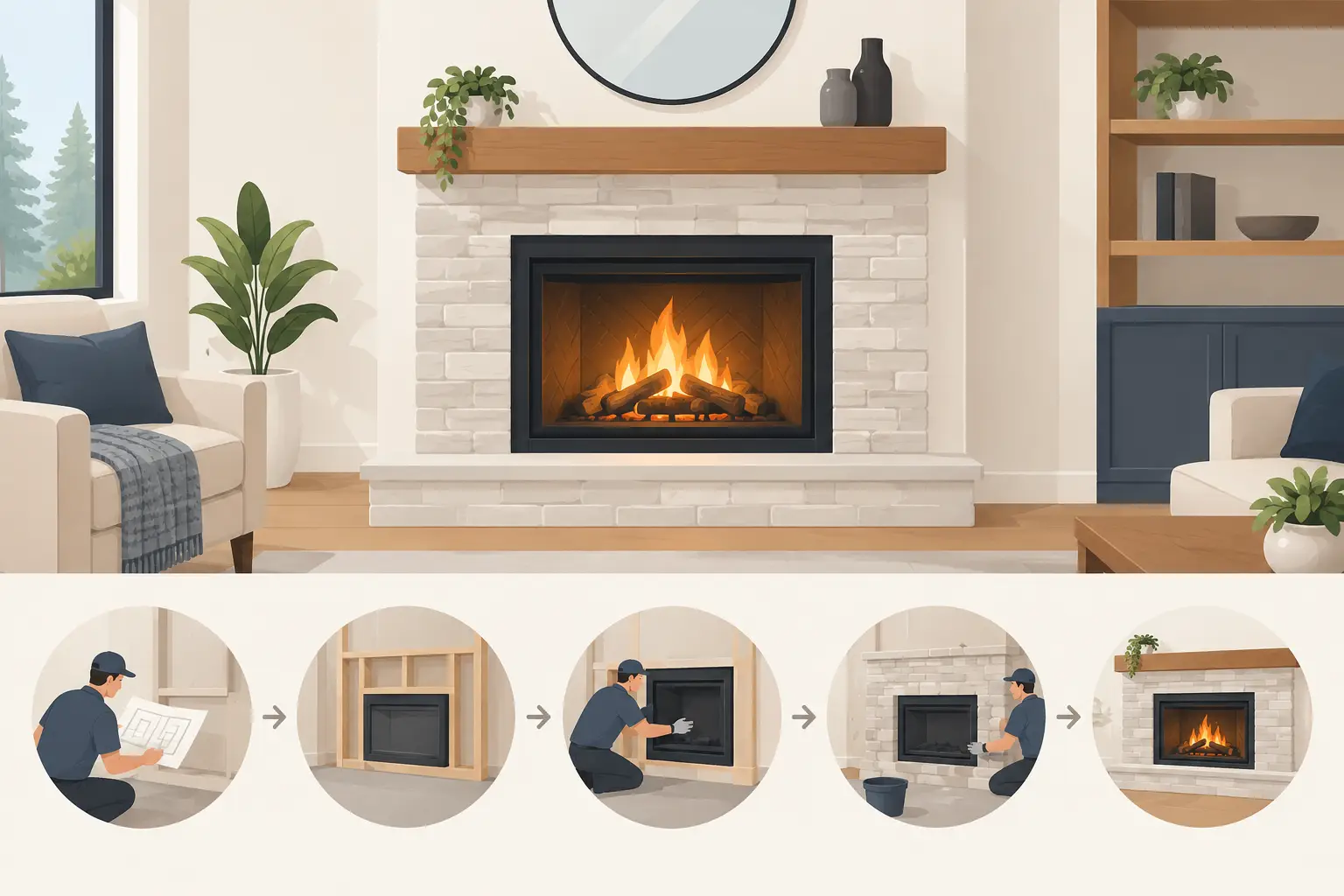
The certified fireplace installation process, step by step
Once your appliance and installation plan are agreed, the fitting can be arranged with the correct preparation in place. The precise work varies by fuel type and property, but a certified installation generally follows a careful sequence.
First, the work area is protected and the existing fire, surround or hearth is removed where required. Installers should take care around flooring, furniture and nearby finishes, although some dust is unavoidable when opening up an older fireplace or carrying out building work. If there are any unexpected findings behind an old fire, such as damaged brickwork, these should be discussed clearly before moving forward.
Next comes the essential preparation. This might involve fitting a flue liner, preparing the chimney opening, installing a new hearth, creating a suitable recess or constructing a frame for an electric fire. Gas installations require the correct gas supply and safe connection arrangements. Stove installations need an appropriate flue system, clearances from combustible materials and the right ventilation provisions where necessary.
The appliance is then fitted in line with the manufacturer’s instructions. This is not a detail to overlook. Every fire and stove has specific requirements for clearance, flueing, ventilation and installation materials. A fireplace may look complete long before these technical details are finished, which is why professional fitting matters.
Finally, the installer carries out the relevant safety checks and commissioning. For a gas fire, this includes checking the gas connection, burner operation, flame picture and flue performance where applicable. For a stove, the flue and appliance must be checked to confirm safe operation. An electric fire is tested to ensure it is functioning correctly and fitted securely.
Certification, notification and handover
The paperwork is not an afterthought. It is part of the reassurance that your installation has been completed by a competent professional. Gas work should be carried out by a Gas Safe registered engineer with the appropriate qualifications for the appliance being installed. Solid fuel and biomass work should be completed by a competent installer, with certification and notification handled as required.
At handover, you should be shown how to operate your new fire safely. This includes controls, lighting procedures where relevant, basic cleaning, recommended servicing and any specific care for the surround, glass or stove body. Keep the appliance instructions and installation documents somewhere safe. They can be useful for servicing, home insurance and any future property sale.
If you have chosen a wood or multi-fuel stove, ask about suitable fuels and the importance of regular chimney sweeping. Burning the wrong fuel or using damp logs can reduce performance, blacken the glass and create unnecessary deposits in the flue. For gas fires, regular servicing helps maintain safe and efficient operation. Electric fires are generally lower maintenance, but still benefit from occasional cleaning and checks.
Why certification and experience matter
A fireplace installation involves more than connecting an appliance. It brings together heat, combustion, ventilation, building materials and the individual quirks of your home. A poor installation can affect performance, spoil the finished appearance and, more seriously, create safety risks.
Choosing an experienced local team gives you a clearer route from first idea to final handover. At Wirral Fires, homeowners can view a wide range of options in person, discuss what is realistic for their property and arrange fitting through qualified professionals. That joined-up approach is particularly useful when you are making a considered change to a main living space.
The right answer is not always the largest fire, the latest style or the appliance you first had in mind. Sometimes an electric fire is the most practical option. Sometimes a properly sized stove is the better choice. Honest advice should help you make that decision with confidence.
A well-planned fireplace fitting gives you more than a warm room. It creates a feature you can enjoy for years, with the reassurance that every part of the work has been considered carefully. If you are weighing up your options, a showroom visit and a professional survey are a sensible next step.