

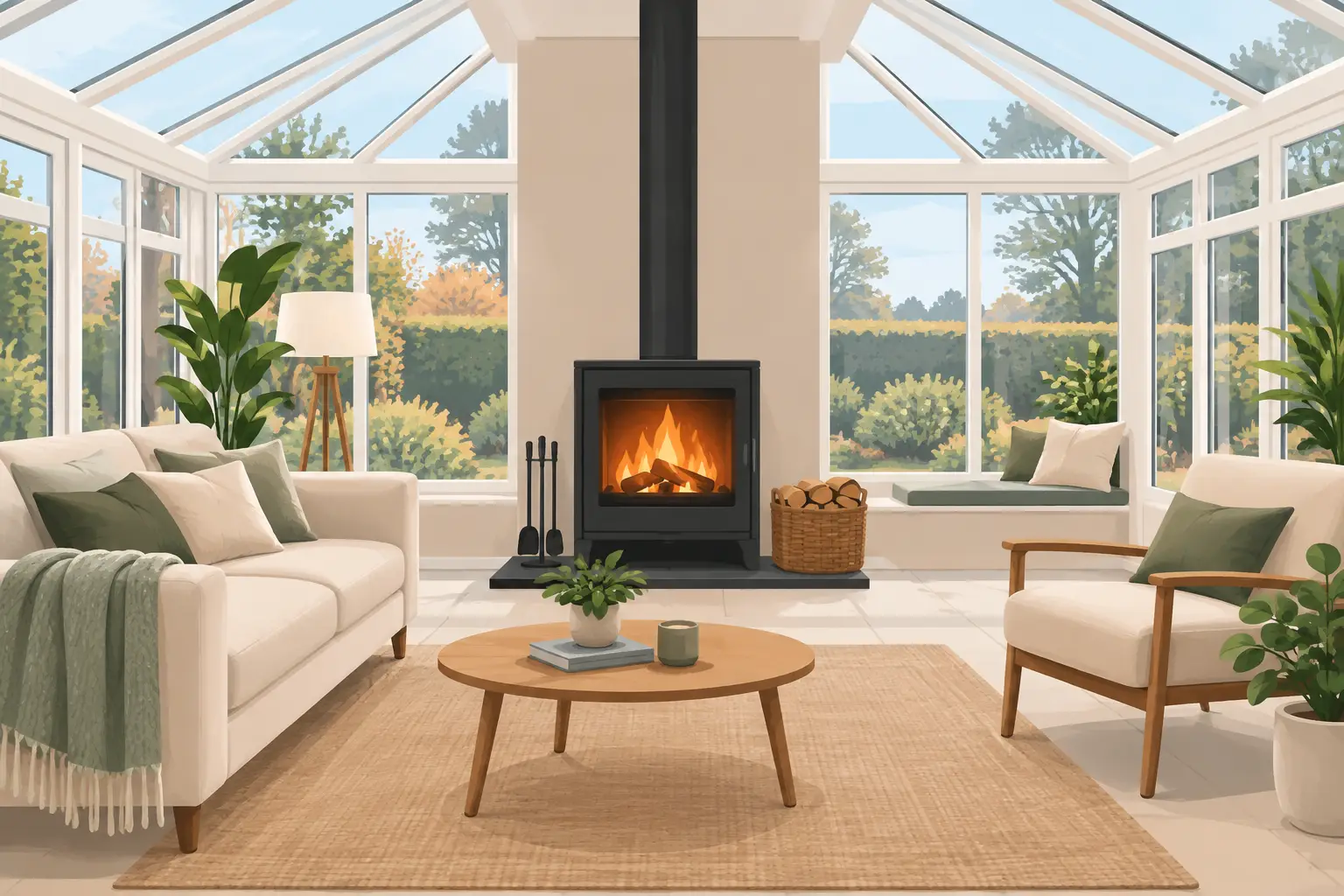
A conservatory can be the brightest room in the house and, without the right heat source, the first one abandoned when the temperature drops. The best fireplace options for conservatories need to do more than look attractive. They must suit the room’s insulation, available space, ventilation and the way you want to use it, whether that is a peaceful reading room, dining area or everyday extension of the living space.
For many homes across the Wirral and Cheshire, an electric fire is the straightforward answer. But a gas fire or stove may be the better fit where the room is built for it and a suitable flue route is available. The right choice is always led by the conservatory itself, rather than a one-size-fits-all recommendation.
The best fireplace options for conservatories
Electric fires: the most flexible choice
Electric fires are often the best place to start, particularly in an existing conservatory with a glazed roof, limited wall space or no chimney. They offer flame effects without combustion, so there is no flue to install and no fuel to store. That keeps the fitting process comparatively simple and gives homeowners far more freedom over where the fire can sit.
A freestanding electric stove creates a cosy focal point with the look of a traditional burner, while a wall-mounted or hole-in-the-wall electric fire brings a cleaner, more contemporary finish. An electric suite can also work well where you want a complete fireplace look without building a chimney breast.
The main advantage is control. Most models provide a flame-only setting, letting you enjoy the visual warmth on mild evenings, with heat available when needed. Electric fires are also a sensible choice for conservatories used occasionally, as you are not heating a room unnecessarily throughout the day.
There is a trade-off. Electric fires are generally best for taking the chill off or providing supplementary warmth, rather than heating a large, poorly insulated conservatory through the coldest winter weather. If the room loses heat quickly, improving roof insulation, glazing or draught sealing may make as much difference as the fire you choose.
Gas fires and gas stoves: effective heat with a permanent feel
A gas fire or gas stove can deliver more substantial, responsive warmth and a convincing real-flame effect. It can be an excellent option for a conservatory that is used every day and forms a genuine part of the home’s living area.
However, gas is not simply a matter of choosing a design you like. The appliance must be suitable for the room, and the installation needs an appropriate route for the flue or balanced flue system. Ventilation, clearances from glazing and surrounding materials, and access to the gas supply all need careful consideration.
A balanced-flue gas fire or stove can be particularly useful where there is no existing chimney, as it takes air from outside and expels combustion gases safely outdoors through an approved flue arrangement. Whether this is practical depends on the conservatory’s construction and the available external wall or roof route.
Gas appliances should always be specified and fitted by a Gas Safe registered engineer. A professional survey avoids the common mistake of choosing a fire based on appearance alone, only to find that the room or flue arrangement is unsuitable.
Wood-burning and multi-fuel stoves: beautiful, but not always practical
A real stove brings character that is difficult to replicate. The gentle glow of solid fuel and the distinctive focal point of a stove can make a conservatory feel far more like a year-round room. For a conservatory attached to an older property, especially one with a suitable chimney nearby, it may be possible to create a striking and effective heating feature.
That said, solid-fuel appliances demand more planning than electric or gas alternatives. A compliant flue system is essential, as are proper hearth dimensions, safe distances from combustible materials and suitable protection around the appliance. Conservatories often include uPVC, timber, blinds, lightweight roof structures and large areas of glass, so clearances are especially important.
An external twin-wall flue may be an option where no chimney exists, but its route, height and position need professional assessment. Building Regulations and, in some cases, planning considerations may apply. You will also need to consider fuel storage, ash removal and the practicalities of carrying logs through the house.
For these reasons, a wood-burning or multi-fuel stove is often best suited to a solid-roof conservatory, orangery or extension designed for all-season use. It can be a superb choice, but it is rarely the easiest retrofit for a light, fully glazed conservatory.
What about bioethanol fires?
Bioethanol fires appeal because they do not need a chimney or fixed gas supply, and they can look very stylish. They do, however, produce real heat and real combustion, which means ventilation and safe positioning still matter. They also add moisture to the air, something worth bearing in mind in a room with lots of glazing where condensation may already be a concern.
For most conservatories, an electric fire provides a more predictable, lower-maintenance alternative with a wider choice of heat settings and flame styles. Bioethanol may suit a carefully planned decorative installation, but it should not be treated as a fit-anywhere solution.
Match heat output to the conservatory, not just its size
Choosing the right heat output is about more than floor area. A small conservatory with an older polycarbonate roof can lose considerably more heat than a larger room with a solid insulated roof and modern glazing. The direction the room faces also matters. A south-facing conservatory may become warm quickly in sunshine yet feel cold after dark, while a north-facing room may need more regular heating support.
Think about how you use the space. If it is somewhere you sit for an hour in the evening, a well-positioned electric fire may be all that is needed. If it is used for family meals, working from home or relaxing every day, a more powerful and permanent heating solution could be justified.
It is also worth considering the rest of the heating system. A conservatory may have radiators, underfloor heating or opening doors to a heated kitchen or lounge. Your new fire should complement those heat sources rather than work against them. An oversized appliance can make a compact room uncomfortable, while an undersized one may look lovely but never provide the comfort you hoped for.
Plan the position before choosing the fire
In a conservatory, the best wall is not always the obvious one. A fire should be visible from the main seating area, but it must also have safe clearance from furniture, curtains, blinds and doors. Avoid placing it where direct sunlight will make the flame effect difficult to see during the day, or where it blocks a frequently used route to the garden.
For electric fires, consider where cables can be concealed neatly and whether the wall construction will support a fitted appliance. For gas and solid fuel, the flue route and clearances will usually dictate the sensible position from the outset.
Style matters too. A contemporary inset electric fire can tie in beautifully with modern bifold doors and sleek furniture. A traditional electric or gas stove can soften a conservatory with timber flooring and natural textures. If you want the fireplace to feel like part of the original home rather than an add-on, a surround, hearth and carefully chosen finish can make a real difference.
Professional advice makes the decision simpler
Conservatories are individual spaces, and the right fireplace choice often becomes clear once someone has looked at the room properly. A showroom visit lets you compare flame effects, stove proportions and finishes in person, while a survey can confirm what is safely achievable in your home.
At Wirral Fires, the aim is to give straightforward, no-pressure advice based on your room, your preferred style and the installation requirements. Gas Safe registered engineers and experienced installers can help ensure that a chosen fire is not only attractive, but suitable, compliant and fitted to a high standard.
A conservatory should not be a room reserved for the warmest months. With an appropriately chosen fire and thoughtful installation, it can become one of the most welcoming places in the house when the evenings draw in.