

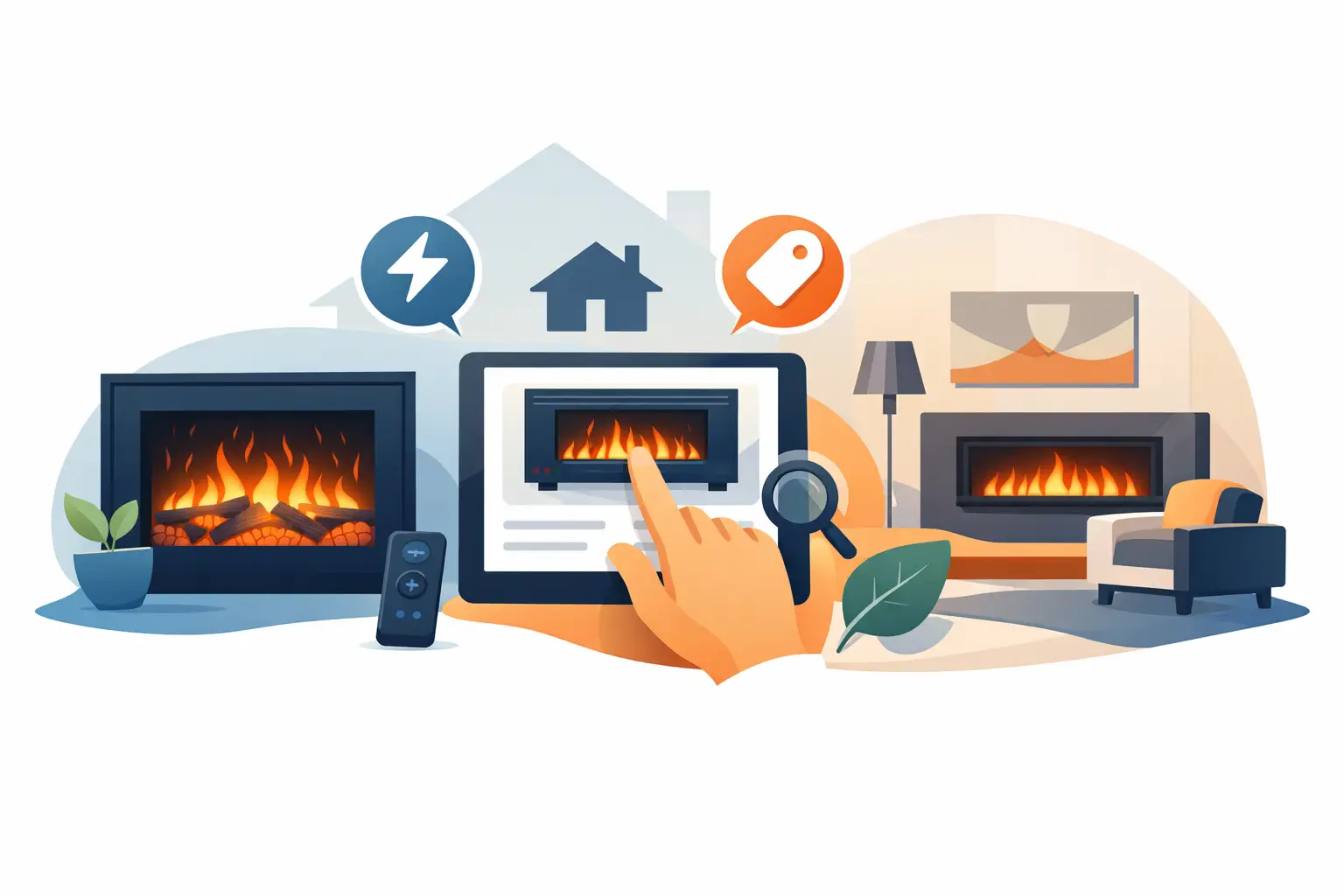
A good electric fire can change the feel of a living room in seconds, whether it is the focal point of a newly decorated space or a straightforward replacement for an older fire. This electric fire buying guide explains the decisions worth making before you choose, so you can find a fire that looks right, provides useful warmth and suits the way your home is set up.
Electric fires are especially popular where a chimney is unavailable, unwanted or no longer in use. They offer impressive flame effects without ash, soot or a flue, but the best choice is not always the biggest model or the most dramatic display. The size of the room, the wall or fireplace opening, the style of the property and your expectations for heat all matter.
Start with the job your electric fire needs to do
First, decide whether the fire is primarily for atmosphere, additional warmth or both. Most electric fires offer a flame-only setting, allowing you to enjoy the visual effect without switching on the heater. This is ideal for spring evenings or for rooms that are already comfortably heated.
Many models provide heat settings of around 1kW and 2kW. A 2kW electric fire can take the chill off a small to medium-sized room, but it should usually be viewed as a secondary heat source rather than the main heating for a large, poorly insulated space. If you are replacing a gas fire that has been doing most of the heating in your lounge, it is sensible to discuss whether an electric alternative will meet your expectations.
Running costs depend on your electricity tariff, the heat setting selected and how long the heater is used. Electric fires are efficient at the point of use because the electricity is turned into heat in the room, but electricity can cost more per unit than gas. The flame-only setting gives you flexibility, while a thermostat and timer can help avoid heating the room for longer than necessary.
Choose the right electric fire style
The style of fire should work with the room as well as the fireplace. An electric fire can be subtle and traditional, or it can become a striking modern feature wall. Seeing different formats in person is often the quickest way to work out what feels proportionate in your own home.
Inset electric fires
Inset fires fit into a fireplace opening or a purpose-made recess, making them a familiar choice for homes with an existing surround and hearth. They are available in both traditional and contemporary designs, including models with coal, log or crystal-effect fuel beds.
Before choosing an inset model, measure the opening carefully and check the required recess depth. A standard opening does not automatically mean every fire will fit. Some models need a deeper cavity than others, and the space behind the fire must remain suitable for safe ventilation and cable routing.
Wall-mounted and hole-in-the-wall fires
Wall-mounted fires are a practical option where there is no chimney breast or where you want a clean, contemporary look. Some sit proud of the wall, while others are built into a false chimney breast or media wall for a more integrated finish.
A wide landscape fire can look excellent beneath a television, but the layout needs planning. Heat outlets, clearances and the manufacturer’s guidance for a TV above the fire should all be considered before the wall is built. The fire should not be an afterthought once joinery, plastering and electrics are complete.
Electric stove fires
Electric stoves bring the character of a traditional stove without the need for a chimney, fuel storage or regular cleaning. They work particularly well in an unused fireplace opening, a conservatory, a dining room or a period-style room where a freestanding fire suits the décor.
They are not only for older properties. A simple black electric stove can also add warmth and texture to a modern room, especially when paired with a clean-lined hearth or a simple surround.
Fireplace suites
A complete electric fireplace suite combines the fire, surround, back panel and hearth in one coordinated design. This can make the buying process easier, particularly when replacing a dated fireplace or creating a feature where no original fireplace remains.
Suites are available in a range of finishes, from painted timber and stone-effect materials to sleek, modern designs. Consider the width of the wall and the furniture around it. A suite that looks generous in a showroom can feel oversized in a narrow lounge, while a small suite may get lost on a large feature wall.
Look beyond the flame effect
Flame visuals are one of the main reasons people choose an electric fire, and quality varies between models. Look at the fire when it is switched on, ideally from the usual seating position rather than only standing directly in front of it. The depth of the flame picture, movement of the flames, brightness controls and fuel bed all affect how convincing and relaxing it feels.
Some fires offer changeable flame colours, adjustable brightness and separate lighting for the fuel bed. These options can be enjoyable, but simpler effects are often the better fit for a classic interior. It depends on whether you want the fire to quietly complement the room or become a more contemporary statement piece.
The sound of the heater is another sensible consideration. Like many fan heaters, electric fires can make some noise when delivering heat. This may not matter in a busy family room, but it is worth checking if the fire will be used in a quiet snug, bedroom or reading area.
Measure the space and plan the installation
Taking a few measurements before visiting a showroom saves time and prevents disappointment. Measure the width and height of any existing opening, the depth available behind it, the wall width and the distance to nearby furniture. A photograph of the room is also useful when comparing finishes and proportions.
Electric fires do not need a chimney or flue, which makes them more flexible than gas or solid-fuel options. However, they still need to be installed in line with the manufacturer’s instructions. The position of the electrical supply, the condition of an existing fireplace opening and the construction of the wall all influence what is possible.
Many electric fires use a standard 13-amp plug, but the cable should not be trapped, stretched or routed unsafely. Built-in fires and media-wall installations may benefit from electrical work planned by a qualified professional. If a fire is being fitted into an old chimney opening, it may also be necessary to consider how the opening is finished, insulated or boarded for a neat result.
Controls, safety and everyday convenience
Remote controls are common, but functions vary. Check whether the remote controls the flame effect, heat level, thermostat, timer and colour settings, or whether some adjustments are made on the appliance itself. App control can be useful for some households, but clear, straightforward controls are often more valuable day to day.
For families, choose a model with suitable overheat protection and follow the stated clearances around the heater outlet. Keep soft furnishings, rugs and ornaments away from areas where heat is expelled. An electric fire should be switched off before cleaning, and the air inlet and outlet should be kept free from dust so it can operate properly.
Why seeing an electric fire in a showroom helps
Photographs can give a good first impression, but they cannot show the real scale of a fire, the finish of a surround or how a flame effect looks in a normal room. A showroom visit lets you compare flame effects side by side, assess colours in person and talk through practical details without pressure.
Bring your measurements, room photographs and any ideas you have saved. An experienced adviser can help narrow down the options, whether you are looking for a simple inset replacement, a complete fireplace package or an electric fire for a new media wall. At Wirral Fires, the aim is to help you choose a solution that suits your property, your budget and the finish you have in mind.
The right electric fire should feel like part of the room rather than an appliance added at the end. Take time over the proportions, the heat you genuinely need and the installation plan, and you will have a feature that is easy to enjoy throughout the year.