

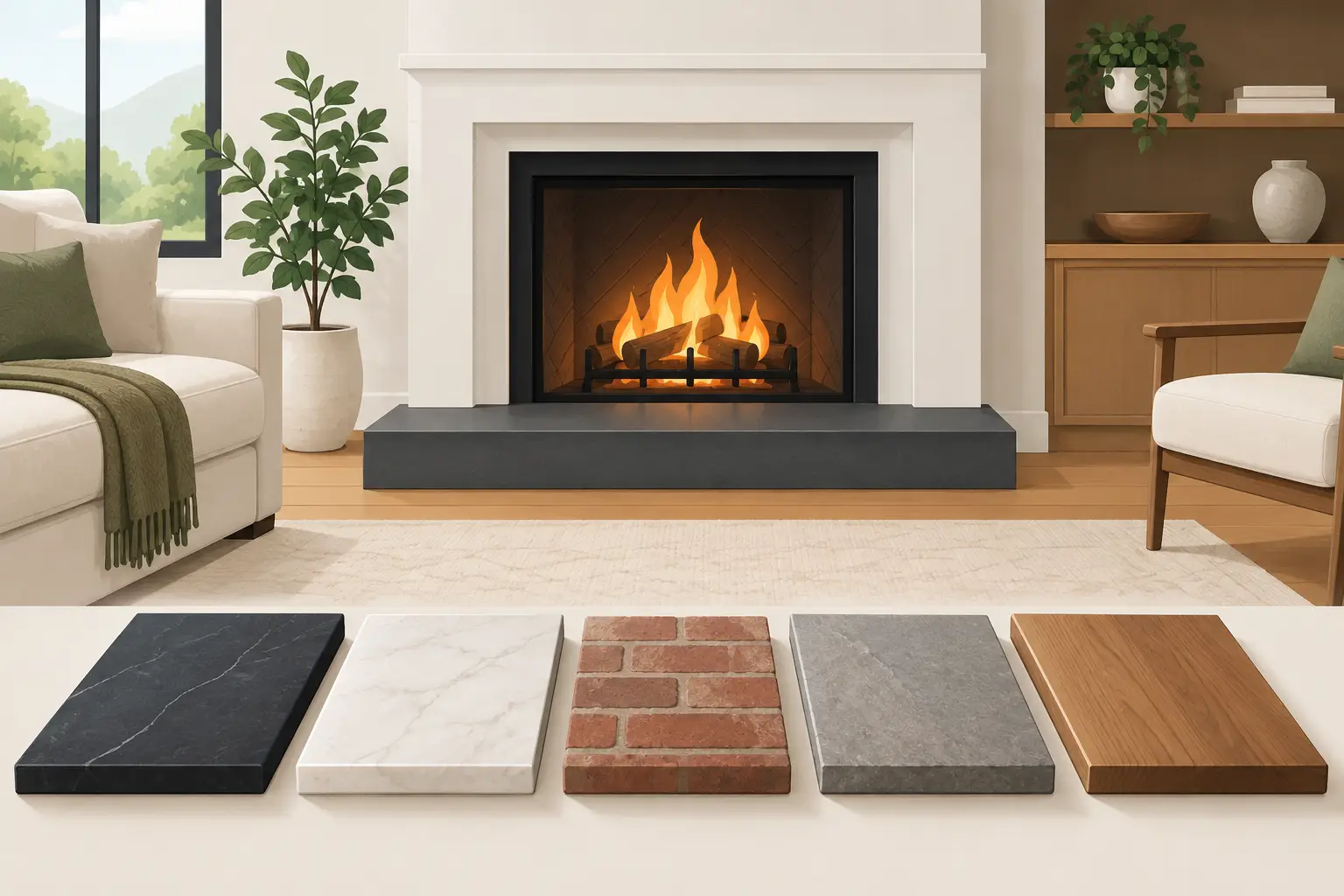
A hearth is often the detail that makes a fireplace look properly finished rather than simply fitted into a wall. It frames the fire, protects the floor and has a major effect on the overall style of the room. Knowing how to select a fireplace hearth means balancing the look you want with the practical requirements of your chosen fire, stove and home.
Whether you are replacing an existing fireplace or planning a completely new feature, it pays to make this decision early. A hearth is not just a decorative slab. For many gas and solid-fuel appliances, it is an essential safety component that must be correctly specified and installed.
How to Select a Fireplace Hearth: Start With the Fire
The appliance should lead the decision, not the other way around. A wood burner, multi-fuel stove, gas fire and electric fire all have different installation requirements, including the type of hearth needed beneath and in front of them.
For a wood-burning or multi-fuel stove, the hearth needs to be non-combustible and suitable for the heat produced by the appliance. The stove manufacturer’s instructions and current building regulations will determine the necessary dimensions, thickness and clearances. This is particularly important where a stove is fitted into an existing chimney breast or stands forward on a hearth in the room.
Gas fires can have very different hearth requirements depending on their design. Some conventional gas fires are installed with a hearth, while certain wall-mounted or hole-in-the-wall models have a more streamlined appearance and may not need a traditional projecting hearth. The correct arrangement still depends on the specific model, the fireplace opening and the surrounding materials.
With an electric fire, your choices are usually wider because there is no real flame or combustion heat at floor level. You may choose a hearth purely to create the appearance of a traditional fireplace, or leave it out for a clean, contemporary wall feature. Even then, it is worth considering how the fire, surround and floor will sit together as one design.
Safety and Suitability Come Before Style
A hearth must protect nearby flooring and furnishings from heat, sparks and ash where relevant. It also creates a clearly defined safe area around the appliance. This is why a hearth for a solid-fuel stove should never be selected solely because it matches the wallpaper or flooring.
The final specification may be affected by the appliance’s heat output, whether the fire has doors, the position of the opening, the construction of the chimney breast and the type of floor beneath it. Timber floors, carpets and luxury vinyl flooring all need particular consideration because they are combustible or heat-sensitive.
There is no single hearth size that suits every installation. Requirements vary, and apparently small changes in stove position can alter the amount of hearth needed to the front and sides. An experienced installer can assess the room and explain what will work safely without leaving you with a hearth that feels unnecessarily large or awkward in the space.
If you are retaining an older hearth, do not assume it is suitable for a new appliance. Older fireplaces were often designed for an open fire, and their condition, dimensions or level may not suit a modern stove or gas fire. A proper survey is the sensible starting point.
Choose a Material That Suits Everyday Life
Natural stone remains a popular hearth choice because it is hard-wearing, heat-resistant and timeless. Slate has a smart, understated finish that works especially well with contemporary stoves, black glass fires and darker furniture. It can also provide a practical contrast against pale carpets or wood-effect flooring.
Granite offers a polished, more formal look and can suit both traditional surrounds and modern fireplace suites. Its reflective surface brings a little extra light to a room, although it will show dust and smudges more readily than a textured finish. Honed stone gives a softer, matt appearance and is often a good middle ground for busy family homes.
Marble hearths can look elegant with a classic surround, particularly in period properties, but they require a little more care to keep their appearance. As a natural material, marble can vary in colour and veining, which is part of its character but worth viewing in person before making a final choice.
For a very contemporary fireplace, a tiled hearth may also work well. Tiles allow more freedom with colour and pattern, but the grout lines and finish need to be chosen carefully around a working stove. A simple, durable surface is generally easier to live with than a highly textured or delicate design.
Think About Proportion, Not Just Measurements
A hearth can look too small even when it meets the technical minimum, especially beneath a large stove or wide fireplace opening. Equally, an oversized hearth may dominate a compact lounge and interrupt the flow of the room.
Look at the fireplace as a complete composition. The width of the opening, the size of the stove, the mantel or surround, and the scale of the wall all matter. A wide, low hearth can make a room feel grounded and contemporary, while a smaller raised hearth often suits a more traditional fireplace setting.
The height of the hearth also changes the feel and function of the space. A flush hearth creates a neat transition from the floor and can be ideal for modern interiors, provided the floor construction allows for it. A raised hearth gives the fireplace more presence and can create a useful ledge, but it needs to be positioned carefully so it does not become a trip hazard in a busy route through the room.
If you are replacing flooring as part of a renovation, decide on the hearth before the new floor is laid. This helps avoid narrow cuts, untidy junctions and the common problem of discovering that the old hearth was hiding unfinished flooring beneath it.
Match the Hearth to Your Interior, Not Every Trend
A good hearth should continue to suit your room long after a particular interior trend has passed. Start with the fixed features you are keeping, such as flooring, wall colour, original brickwork or a timber beam. Then consider whether you want the hearth to blend in or provide contrast.
A dark slate hearth against a pale oak floor creates a clear focal point and can make a stove feel purposeful. A pale stone hearth can soften a traditional surround and keep a smaller room feeling open. In homes with patterned tiles, feature wallpaper or colourful furnishings, a quiet, neutral hearth often gives the room a place to rest.
Do not rely on a small sample alone. Natural materials can have variation, and finishes can look different under showroom lighting, daylight and warm evening lamps. Viewing larger displays is useful because it lets you judge colour, texture and proportions properly alongside real fires and surrounds.
Consider the Practical Details Around the Hearth
Before settling on a finish, think about how the fireplace will be used. A household that plans to burn logs regularly may appreciate a darker, matt hearth that is forgiving of ash and everyday marks. A purely decorative electric fire may allow for a lighter finish that would be less practical around a solid-fuel stove.
Cleaning is another consideration. A smooth stone or glass surface is straightforward to wipe down, while riven slate and textured tile can hold dust in their surface. This does not make them a poor choice, but it is better to select them knowing what routine care they need.
You should also consider access for installation. Larger, heavier hearths may need careful handling, particularly in properties with narrow hallways, steps or limited parking. A professional survey identifies these details before fitting day and helps the installation run cleanly and efficiently.
Get Advice Before Ordering a Hearth
The best hearth is one that looks right, fits the room and meets the exact requirements of the appliance. Trying to choose these elements separately can lead to compromises later, especially when a chimney, flue, combustible flooring or existing fireplace opening is involved.
At Wirral Fires, we encourage customers to view fireplaces, stoves, surrounds and hearths together wherever possible. Seeing the full combination makes it easier to compare materials and proportions, while experienced advice can confirm what is suitable for your installation. For gas and solid-fuel appliances, correct specification and fitting are just as important as the finished appearance.
A hearth may sit quietly at the base of your fireplace, but it does a great deal of the work. Choose one that meets the needs of your fire, feels at home in the room and will still make you pleased to light the fire on a cold evening years from now.