

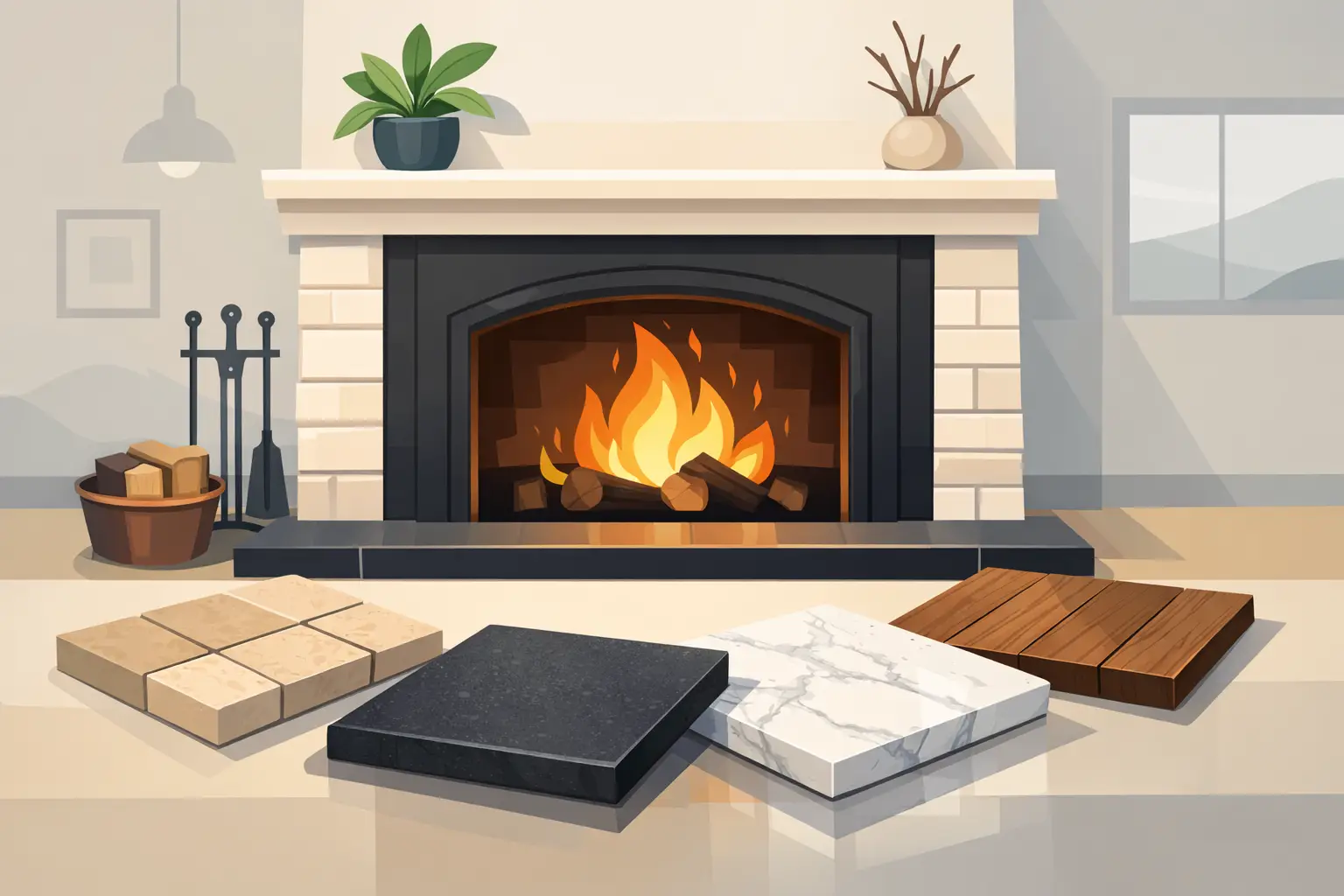
A hearth has a harder job than most parts of a fireplace. It needs to look right with your surround and fire, cope with day-to-day use, and meet the safety requirements of the appliance being fitted. That is why choosing the best hearth materials for fireplaces is about more than picking a colour from a sample board.
For many homes across the Wirral and Cheshire, the hearth is the element that brings a whole fireplace scheme together. A dark slate hearth can make a traditional stove feel grounded and authentic, while a pale limestone option can soften a classic living room. The right choice depends on your fire type, your room, the level of maintenance you are comfortable with and, above all, the installation requirements.
What a fireplace hearth needs to do
A hearth is the non-combustible surface at the base of a fireplace. Depending on the appliance, it may sit in front of the opening, underneath a stove, or form part of a complete fireplace suite. Its primary role is safety: it protects flooring and nearby materials from heat, sparks and hot debris where applicable.
The required hearth construction and dimensions vary considerably. A wood-burning or multi-fuel stove will have different requirements from an electric fire, while an inset gas fire may need a different arrangement again. Some appliances can be fitted on a superimposed hearth, whereas others need a constructional hearth or a specific thickness of non-combustible material.
This is not an area for guesswork. The appliance instructions, the fireplace design and current building requirements all matter. Before choosing a finish, establish what the fire needs. A professional survey is the sensible starting point, particularly where a chimney, flue, combustible flooring or an existing fireplace opening is involved.
The best hearth materials for fireplaces
Slate: a dependable all-round choice
Slate remains one of the most popular hearth materials, and for good reason. It has a naturally textured, understated appearance that works especially well with stoves, cast-iron fires and both traditional and contemporary surrounds. Black, charcoal and riven finishes provide useful contrast against lighter carpets, wood flooring and painted walls.
It is also practical. Slate is dense, heat-resistant and generally forgiving in a busy family home. Small marks and everyday dust tend not to show as readily as they do on a very pale polished stone. A riven slate hearth has natural variation and texture, so it can look characterful rather than overly formal.
The trade-off is that riven slate is not completely smooth, which may make it slightly less straightforward to wipe down than a honed surface. As with all natural stone, sealing and suitable cleaning products will help maintain its finish.
Granite: polished, durable and easy to live with
Granite is a strong choice where a more refined finish is wanted. It is extremely hard-wearing and is often available in a polished black finish that suits modern gas fires, electric fires and sleek fireplace suites. Its smooth surface reflects light subtly and makes cleaning simple.
A granite hearth can create a crisp, formal look, particularly when paired with a simple white, cream or grey surround. It is also a sensible option for households that want low-maintenance practicality without losing the feel of natural stone.
However, highly polished black granite can show dust, pet hair and fingerprints more easily than textured slate. It can also feel visually dominant in a smaller room if combined with a large dark fire surround. A showroom visit can be useful here, as a full hearth sample gives a far better sense of the finish than a photograph does.
Limestone: warm, classic and full of character
Limestone has a softer, warmer appearance than slate or granite. Its natural cream, beige and pale grey tones make it a popular choice for traditional fireplace surrounds and country-style interiors. It can make a fireplace feel less stark, especially in rooms with neutral paint colours, oak furniture or soft furnishings.
No two pieces of limestone are identical. Small fossils, veins and tonal changes are part of its appeal, giving the hearth a more individual character. A honed limestone hearth often works beautifully with a gas fire or electric suite where the hearth is as much a design feature as a protective surface.
Limestone is softer and more porous than granite, so it deserves a little more care. It should be sealed appropriately, and spills should be dealt with promptly. It may not be the first choice for a heavily used solid-fuel installation where ash, logs and regular cleaning are part of everyday life, but it can be an excellent fit when matched to the right appliance and household.
Marble: elegant for formal fireplace suites
Marble brings a classic, polished finish to a fireplace. Its veining and gentle variation suit period homes, formal lounges and fireplace suites where a more decorative appearance is wanted. White, cream and pale grey marble can brighten a darker alcove and complement traditional mantels particularly well.
Like limestone, marble needs considered care. It is a natural material, and acidic cleaning products can damage its surface. Dark soot marks, ash and stains can also be more noticeable on pale polished stone. For that reason, marble is often best suited to gas and electric fireplaces, or to settings where the fire is used less heavily and the hearth can be maintained carefully.
Porcelain and tiled hearths: flexible for a made-to-measure look
Porcelain offers a practical alternative when you want the appearance of stone, concrete or even wood-effect finishes with excellent durability. It is available in a wide choice of colours, sizes and textures, which makes it useful for creating a hearth that ties in with floor tiles or a contemporary interior scheme.
A tiled hearth can be designed to fit an awkward recess or a larger feature wall, and porcelain is generally resistant to staining and easy to clean. The key is using suitable materials and ensuring the installation is designed correctly for the appliance. Not every tile or adhesive is appropriate for every fireplace application, particularly where significant heat is involved.
Grout lines are the main consideration. They can collect dust and require occasional cleaning, while a large-format tile layout creates a cleaner, more minimal look. The result can be very effective, but careful preparation and fitting make all the difference.
Glass hearths: clean-lined and contemporary
Toughened glass hearths are often chosen for modern electric fires, gas fires and certain stove installations. They have a light visual footprint, allowing a feature fire or wood floor to remain the focus. Clear glass can be particularly useful in a compact room where a heavy stone slab might make the fireplace area feel enclosed.
Glass is easy to wipe clean, but it will show smudges and dust more readily than textured stone. It also needs to be the correct type, thickness and size for the intended appliance. A standard sheet of glass is never a substitute for a purpose-made fireplace hearth.
Match the material to the fire and the room
There is no single best material for every fireplace. For a wood-burning or multi-fuel stove, slate and granite are often dependable options because they are durable, heat-resistant and well suited to the practical realities of logs, ash and regular use. A lighter limestone or marble hearth may be better suited to a decorative gas or electric fireplace where visual warmth is the priority.
Think about the room as well as the fire. Dark hearths can add definition to pale, open-plan spaces, but may feel too heavy in a small room with limited natural light. Pale stone can lift a compact lounge, though it may need more regular care. If you have children, pets or a busy household, a more forgiving finish is usually the sensible choice.
The hearth should also relate to the surround, flooring and fire frame. Matching every finish exactly is rarely necessary. In fact, a little contrast often looks better: a charcoal slate hearth below a soft cream surround, for example, or a pale stone hearth with a black inset fire.
Safety and fitting come before the final finish
A beautiful hearth that is unsuitable for the appliance is not a good investment. The correct projection, thickness, ventilation arrangements and clearances must be considered alongside the material itself. This is especially important when replacing an old fire, as historic hearths do not always meet the requirements of a new appliance.
At Wirral Fires, the most useful advice starts with how you intend to use the fire, not simply what looks best in isolation. Seeing hearths, surrounds and fires together in a showroom can make the decision much clearer, while a proper survey helps ensure the finished installation is safe, compliant and suited to your home.
Choose a hearth you will be happy to see every day, but let the appliance requirements lead the decision. The right material should give you lasting confidence as well as a fireplace that feels at home in the room.