

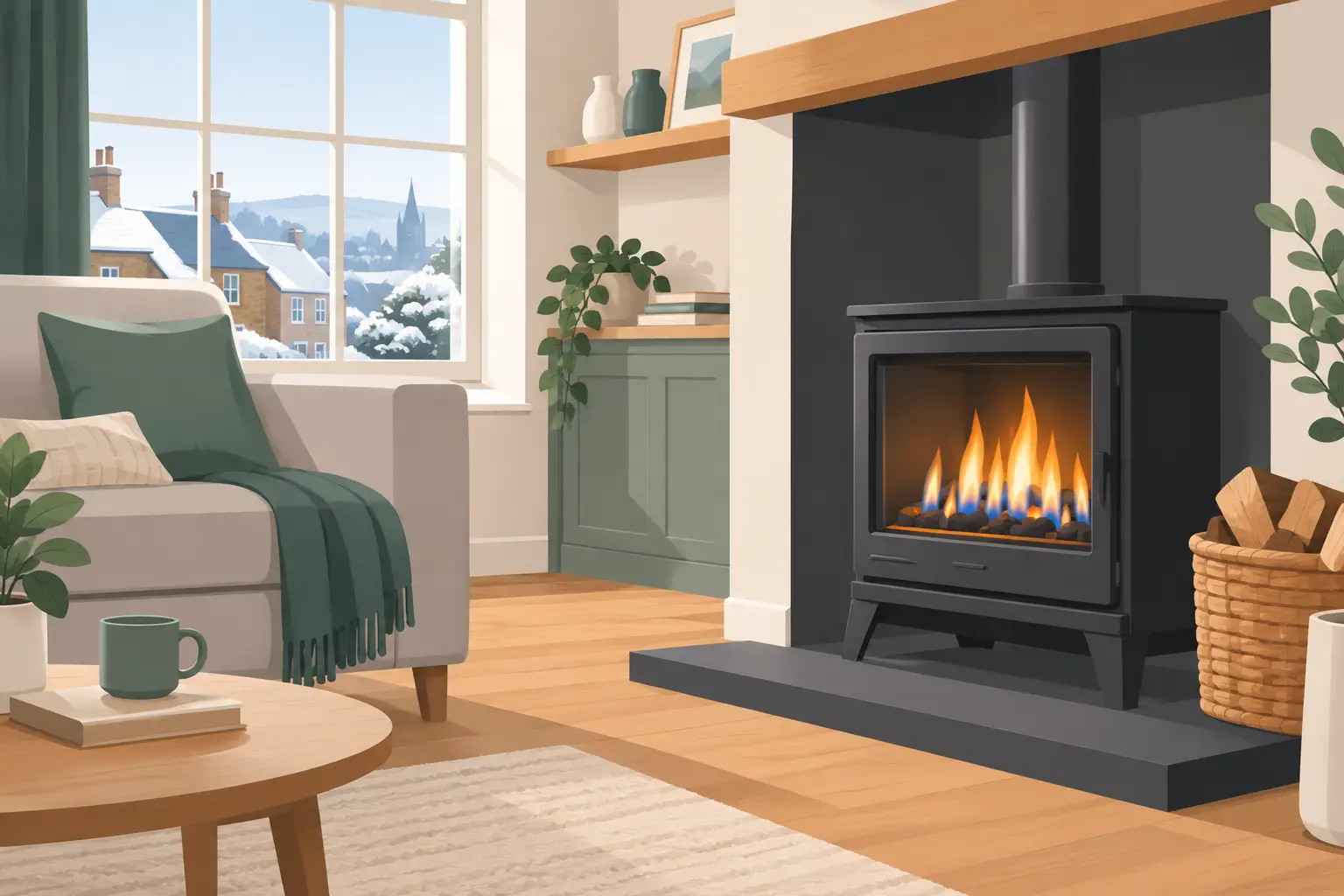
A gas stove can make a living room feel properly lived in on a cold evening, with a real flame, instant heat and none of the fuel handling associated with a solid-fuel appliance. But the best gas stoves for warmth are not simply the biggest models available. The right choice depends on the size and insulation of your room, the type of chimney or flue you have, and how you plan to use the stove day to day.
For many homes across the Wirral, Chester and West Cheshire, a gas stove is a practical way to bring dependable warmth and a traditional focal point into a room. The key is choosing an appliance that suits the property rather than trying to make one stove fit every situation.
Start with the heat your room actually needs
Heat output is usually measured in kilowatts, or kW. It is tempting to assume that more kW means a warmer, better stove, but an oversized appliance can be just as frustrating as one that is too small. If the stove produces too much heat for the room, you may need to keep it on a low setting, which can reduce the enjoyment of the flame and leave the room uncomfortably hot.
A smaller, well-insulated lounge may only require a modest output, while a large open-plan room, an older property with draughts, or a space with high ceilings may need more. Room volume matters, not just floor area. A room with a vaulted ceiling contains far more air to heat than one with a standard ceiling height.
Windows, external walls, insulation, adjoining rooms and how often doors are opened all affect the calculation. This is why a proper discussion before buying is worthwhile. A showroom team can help narrow down suitable outputs, but a home visit is often the best way to confirm that the stove will be comfortable in the space once installed.
What makes the best gas stoves for warmth?
The most effective gas stove is one that delivers usable heat efficiently and places it where you need it. Flame picture, styling and controls matter too, but they should follow the practical basics rather than replace them.
High efficiency helps your gas go further
An efficient gas stove turns more of the gas it uses into heat for the room. Modern high-efficiency models are a significant improvement on older decorative gas fires, particularly when they are correctly specified and installed.
Efficiency figures should be read alongside the heat output. A highly efficient stove with insufficient output will still struggle in a large, cold room. Equally, a powerful appliance may be more than a snug sitting room requires. The best balance is a stove with a suitable output range that can be adjusted comfortably as conditions change.
Many homeowners use a gas stove as a quick heat source during cooler spring and autumn days, as well as through winter. In that case, responsive controls and a useful low setting can be every bit as valuable as maximum output. You want warmth when you want it, without having to heat the whole house unnecessarily.
A sealed system can suit modern homes
Gas stoves are available with different flue arrangements. Conventional flue models use a chimney or suitable flue system to take combustion gases safely outside. They are often an excellent option where a sound chimney is already present, although the chimney may need checking, lining or adapting before installation.
Balanced flue gas stoves are sealed from the room and draw air from outside, expelling combustion gases through a dedicated flue. This makes them particularly useful where there is no existing chimney. They can work well in newer homes and renovated spaces, subject to the appliance requirements and a suitable external wall or roof route.
The right flue type is not a styling decision. It affects where the stove can go, what preparation is needed and which models are appropriate. An on-site assessment by a qualified installer removes guesswork early in the process.
Realistic flames add more than appearance
For a focal-point stove, the flame picture is part of the experience. Modern gas stoves can create a remarkably convincing effect using ceramic logs, pebbles or other fuel-bed designs. Viewing area also makes a difference: wide glass gives a more contemporary feel, while a smaller window can suit a compact or traditional room.
However, the largest flame display is not automatically the warmest choice. Glass, firebox design and control systems all contribute to performance. It is sensible to see working displays where possible, so you can judge flame depth, heat feel and finish in person rather than choosing from a photograph alone.
Choosing a stove style that belongs in the room
A gas stove should earn its place all year round. When it is not lit, it remains a prominent feature, so proportion and finish deserve careful thought.
A traditionally styled stove with cast detailing can look at home in a period property, cottage-style interior or room with a timber mantel. A cleaner-lined model in matt black, graphite or a lighter enamel finish may be better suited to a modern extension or a simple, contemporary fireplace opening.
Freestanding stoves are popular because they create a strong focal point and can work on a hearth or within a recess. Inset or cassette-style gas fires may suit a different look, but they do not give quite the same stove presence. If you are replacing an existing fireplace, consider the opening size, hearth depth and mantel arrangement before falling in love with a particular design.
A stove can also be paired with a beam, stone-effect chamber or carefully chosen surround to create a complete fireplace feature. The details should work together: a large stove in a narrow opening can feel cramped, while a small appliance may look lost in an oversized chimney breast.
Controls and everyday comfort
Gas stoves are valued for convenience, and the control method has a real effect on how easy the appliance is to live with. Depending on the model, options may include manual controls, remote handsets, thermostatic functions and programmable settings.
A thermostat can help maintain a chosen room temperature by adjusting the flame automatically. This is useful if the stove is regularly used as a supplementary heat source. A simple remote control may be all that is needed for homeowners who prefer straightforward on-and-off operation with manual flame adjustment.
Think about who will use the stove and how. If you want a quick boost of warmth after work, easy ignition and clear controls are likely to matter. If the room is used for long evenings or regular family time, thermostatic control can offer a more consistent level of comfort.
Installation is part of choosing the right stove
A gas stove is only as good as its installation. Before a model is confirmed, the installer needs to assess the proposed location, the flue route, ventilation requirements, gas supply, hearth construction and clearances from combustible materials. These points are essential for safety, but they also protect the stove’s performance and appearance.
Older chimneys can present particular considerations. They may need to be swept, smoke-tested or fitted with a suitable liner. A chimney that looks fine from the fireplace opening is not necessarily ready for a new gas appliance. Likewise, a balanced flue installation needs careful planning around external walls, terminal positions and the manufacturer’s stated clearances.
Always use a Gas Safe registered engineer for gas work. You should receive the appropriate commissioning information and be shown how to operate the appliance safely. Annual servicing is also recommended to keep the stove working efficiently, check the flue and maintain the manufacturer’s requirements.
See the difference before deciding
A gas stove is a considered purchase, and a visit to a showroom can make the choice much clearer. You can compare sizes, finishes and flame effects, ask practical questions about your chimney or room, and see whether a style feels right alongside your existing décor.
At Wirral Fires, the aim is to offer straightforward, no-pressure advice from first ideas through to professional installation. Bringing a few room measurements and photographs of the existing fireplace can help make that first conversation more useful.
The best choice is rarely the stove with the highest output or the most elaborate flame effect. It is the one that warms your room comfortably, suits the character of your home and has been fitted properly for years of reliable use.