

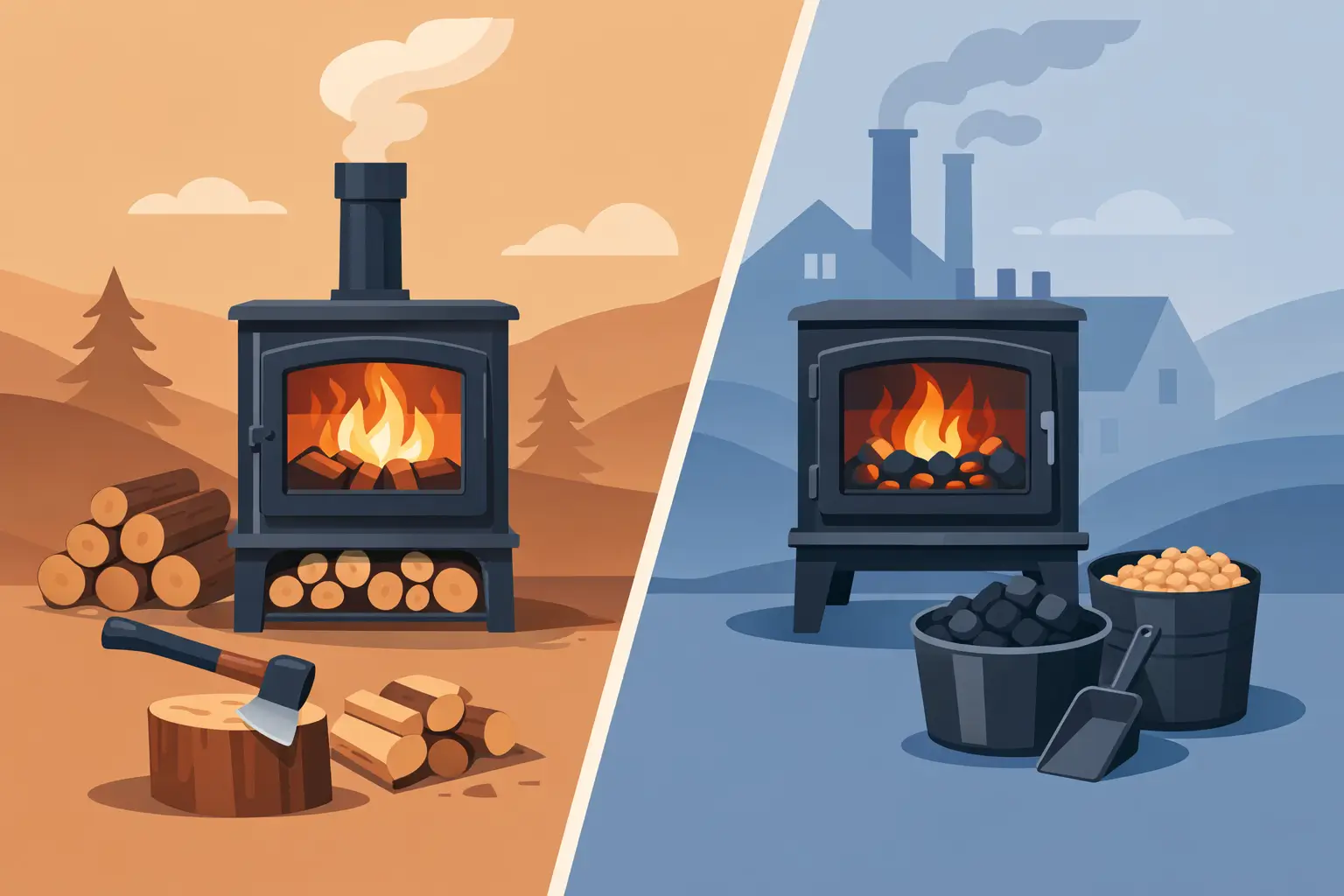
You usually notice the difference between a wood burner and a multi fuel stove when real life gets involved. It might be the first cold evening when the logs are a bit damp, or when you realise you want more flexibility over what you burn. That is where the wood burning stove vs multi fuel question becomes less about labels and more about what will actually suit your home, routine and heating habits.
Both stove types can look very similar from the front. Both can create a lovely focal point and a strong, comforting heat. But they are not identical, and choosing the right one at the start can save hassle later on.
Wood burning stove vs multi fuel – the main difference
The simplest way to look at it is this: a wood burning stove is designed specifically to burn logs, while a multi fuel stove is built to burn logs as well as other approved solid fuels. That difference affects the way the stove is constructed, how air moves through it and how the fuel burns.
A dedicated wood burner typically burns best on a bed of ash. Logs like air flowing around them, particularly from above, and the stove design reflects that. A multi fuel stove usually includes a raised grate and an ashpan underneath, because smokeless fuels need airflow from below to burn efficiently.
That does not mean one is automatically better than the other. It means each is better suited to certain preferences and households.
How the stove design affects performance
Inside a wood burning stove, the base is often flat or lined so the logs can sit on a bed of ash. This helps the fire burn steadily and efficiently. The controls are generally geared towards log burning, with air wash and secondary air playing an important role in keeping the glass clearer and improving combustion.
In a multi fuel stove, the grate is a key feature. Fuels such as smokeless coal or manufactured briquettes need oxygen from beneath, so the grate allows ash to fall away and air to circulate. This makes the stove more adaptable, but it also changes the way it behaves during day-to-day use.
For some homeowners, that flexibility is a real advantage. For others, if the plan is to burn seasoned logs and nothing else, a proper wood burner can be the more natural fit.
Which gives the best heat?
This is one of the most common questions, and the honest answer is that it depends on the stove model, the fuel quality and the room itself.
A good wood burning stove can produce excellent heat and a very attractive flame picture when used with dry, well-seasoned or kiln-dried logs. If you enjoy the look, sound and character of a real log fire, that experience is hard to beat.
A multi fuel stove can also give strong heat output, and some people like the fact that approved smokeless fuels can burn for longer and more steadily than logs alone. That can be useful if you want a more consistent output over time rather than the livelier burn pattern you often get from wood.
So if your priority is the traditional feel of a log fire, a wood burner often wins. If your priority is flexibility or a longer, steadier burn from alternative fuels, multi fuel may suit you better.
Fuel choice and convenience
Fuel choice is where the gap between the two becomes more obvious.
With a wood burning stove, you are committing to logs. For many households that is exactly the appeal. If you have a reliable local log supplier, enough dry storage space and you enjoy the ritual of lighting and refuelling the stove, it can be a very satisfying option.
With a multi fuel stove, you have more choice. You can burn logs, but you also have the option of approved smokeless fuels where suitable. That can be helpful if log supply is inconsistent, if you want fuel that stores differently, or if you prefer not to rely on one source alone.
That said, flexibility is only useful if you plan to use it. If you know you only want to burn wood, there is little point choosing a stove feature set built around fuels you will never use.
Running costs and value over time
When comparing running costs, there is no single answer that applies to every home. Local fuel prices, the size of the room, how often the stove is used and the efficiency of the appliance all matter.
Logs can be cost-effective if bought well and stored properly, but poor-quality wood quickly reduces performance. Wet or unseasoned logs produce less heat, more smoke and more deposits in the flue. That means the cheapest wood is not always the best value.
Smokeless fuels can offer longer burn times, which some homeowners find economical in practice, especially if they want to maintain heat for extended periods. However, the price per bag can be higher, and not everyone prefers the look or handling of those fuels compared with logs.
It is usually better to think in terms of lifestyle value as well as cost per fuel load. The right stove is the one that you can run efficiently, comfortably and consistently.
Maintenance and cleaning
All stoves need looking after properly, but the day-to-day cleaning routine can vary.
A wood burning stove often leaves a bed of ash that helps with burning, so you do not necessarily clear everything out after each use. You still need regular cleaning, glass care and chimney sweeping, but many homeowners find the routine straightforward once they get used to it.
A multi fuel stove, because it uses a grate and ashpan system, may need more regular ash removal depending on what is being burned. Grates and internal components also experience wear over time, particularly with heavier use of mineral-based fuels.
Neither option is high maintenance when installed correctly and used as intended, but there are practical differences. If you want the simplest setup for burning logs only, a wood burner can feel more straightforward. If you are happy with a little extra upkeep in exchange for fuel flexibility, multi fuel remains a strong option.
Wood burning stove vs multi fuel in smoke control areas
This is an area where clear advice matters. Depending on where you live, there may be rules around what you can burn and the type of appliance you need. In smoke control areas, you must use the correct stove and the correct authorised fuel.
That means the decision is not only about preference. It is also about compliance. A stove may be marketed as wood burning or multi fuel, but what matters is whether it is suitable for your location and how you plan to use it.
This is one reason many homeowners prefer to visit a showroom and speak to someone who can explain the practical implications properly. A stove is not just a style choice. It needs to work with your property, your flue arrangement and current regulations.
What suits your home and routine?
If you like the idea of a classic log fire, have access to good-quality wood and want a stove designed specifically around log burning, a wood burning stove is often the right answer. It gives a traditional experience and can be beautifully simple when matched with the right fuel and installation.
If you want more flexibility, prefer the option of approved smokeless fuels, or like the idea of adapting your fuel choice over time, a multi fuel stove may be the better long-term fit. It can be especially useful for households that want more than one way to heat the room.
The room itself also plays a part. Heat output should be matched properly to the space. Too little, and the room never feels quite warm enough. Too much, and the stove becomes uncomfortable to use. The fireplace opening, chimney condition, hearth and ventilation all need to be considered too.
Choosing with confidence
For most people, this is not a purchase they make often, so a bit of guidance goes a long way. Looking at brochures online can help, but seeing stoves in person usually makes the differences much clearer. You get a better feel for size, finish, proportions and how each model might sit within your room.
It also gives you the chance to ask the practical questions that really matter. What fuel do you realistically want to use? How often will the stove be lit? Does your chimney need work? What output is suitable for the room? Is there a package that includes the parts and installation you need?
At Wirral Fires, that is often where customers find the process becomes much easier. A no-pressure conversation and the chance to view options properly can turn a confusing choice into a sensible one.
If you are weighing up wood burning stove vs multi fuel, the best choice is usually the one that fits your home, your fuel preference and the way you actually live day to day. A stove should not only look right on installation day. It should still feel right after the first winter, when it is part of your routine rather than just part of the room.