

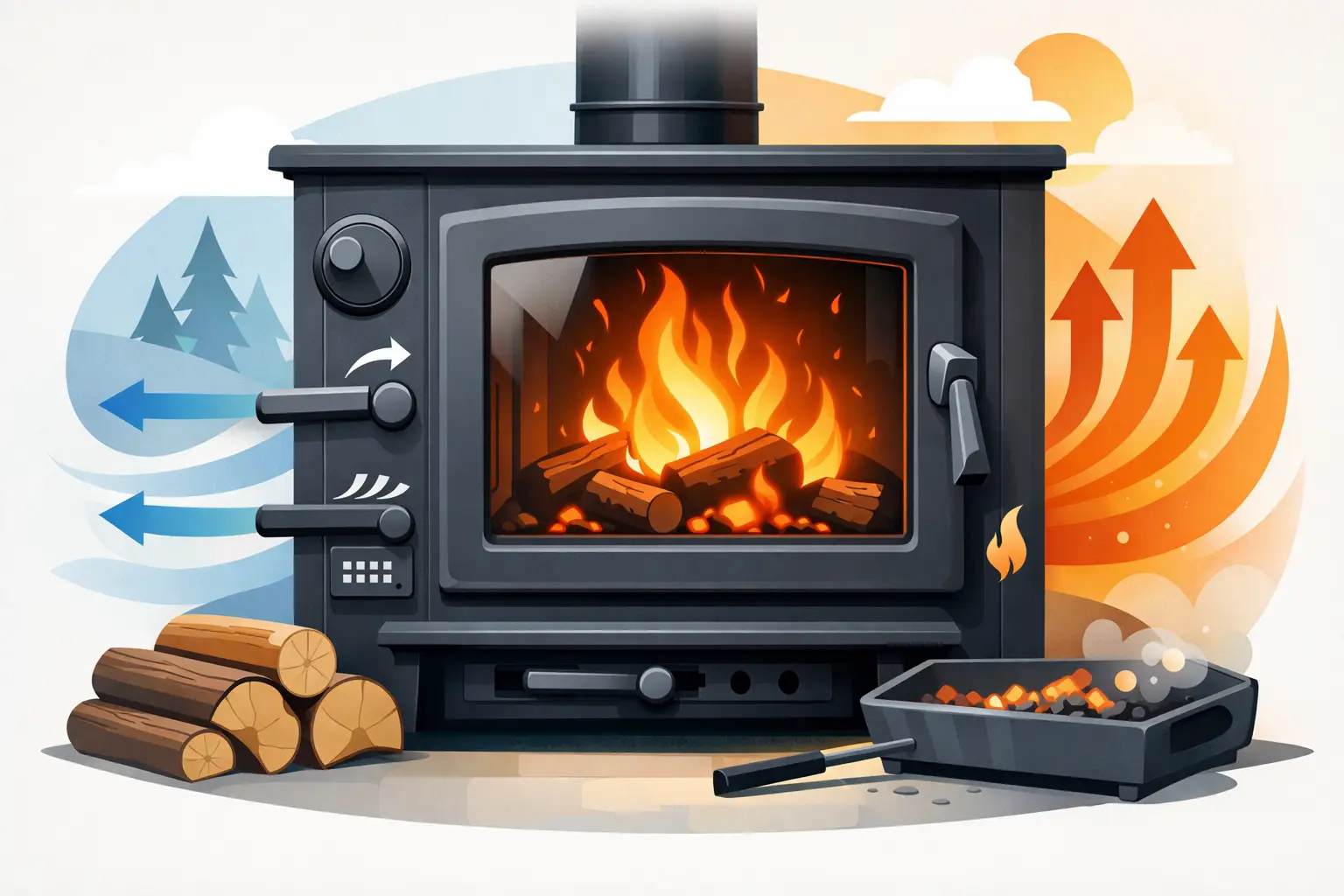
If you have ever found yourself staring at the sliders or levers on your stove and wondering what do the air controls do on a wood-burning stove, you are not alone. It is one of the most common questions from homeowners, especially when they want better heat, cleaner glass and a fire that is easier to manage.
The short answer is that the air controls regulate how much oxygen reaches the fire. That affects how quickly the logs burn, how much heat the stove produces, how cleanly the fuel burns and how much soot ends up on the glass and inside the flue. Small adjustments can make a noticeable difference, which is why understanding the controls properly is worth it.
What do the air controls do on a wood-burning stove in practice?
On most wood-burning stoves, the controls are there to manage combustion. Fire needs oxygen to burn, but more air is not always better. Too much can make the fire race through fuel and send heat up the chimney. Too little can leave you with smoky flames, blackened glass and poor efficiency.
In practice, the air controls help you do three jobs. First, they help you light the fire. Second, they help you bring the stove up to temperature. Third, they help you keep it burning steadily without wasting fuel. If the stove is running well, the flames should look lively but controlled, the glass should stay fairly clear and the logs should burn evenly rather than smoulder.
The exact layout varies by manufacturer, so it always helps to check the manual for your model. That said, most stoves use some combination of primary air, secondary air and airwash.
Understanding the main stove air controls
Primary air
Primary air usually feeds the fire from below the grate or from the lower part of the stove. On multi-fuel appliances, this control is especially useful when burning smokeless fuel, because that type of fuel often needs air coming from underneath.
On a dedicated wood-burning stove, primary air tends to matter most when first lighting the fire. It gives the kindling and smaller pieces of wood a good supply of oxygen to get going quickly. Once the fire is established, many wood-only stoves need little or no primary air left open.
If you keep primary air wide open for too long when burning logs, the fire can burn too fiercely. That means faster fuel use, less control and sometimes less effective heat into the room.
Secondary air
Secondary air is often the main control used for burning wood once the fire is established. It feeds oxygen higher up in the firebox, helping the gases released by the wood to burn more completely.
This matters more than many people realise. A lot of the energy in wood comes from those gases and vapours, not just from the solid log itself. When secondary air is set correctly, you get a cleaner, brighter burn and better use of the fuel.
This is also why modern stoves are more efficient than older open fires or outdated appliances. They are designed to burn off more of those gases rather than letting them disappear unused up the flue.
Airwash
Airwash is a feature that directs a flow of air down across the inside of the glass. Its main job is to help keep the glass cleaner by reducing the build-up of soot and tar.
It is not magic, and even a good airwash system will struggle if the stove is being slumbered too low or fed with damp logs. But when used properly, it can make a real difference to how the stove looks and performs. On many modern stoves, the secondary air and airwash functions are linked through the same control.
Why air control settings affect more than just flame size
A lot of people assume the controls simply make the fire bigger or smaller. That is part of it, but there is more going on.
When the stove gets the right amount of air, combustion is hotter and cleaner. That can mean better heat output, reduced smoke, less residue in the flue and a more attractive flame picture. It can also help reduce the chance of tar and creosote forming in the chimney, which is one reason proper operation matters for safety as well as comfort.
If the stove is starved of air, the logs tend to smoulder rather than burn properly. You may notice dark smoke, lazy flames and quickly blackened glass. The room may feel less warm even though the fuel is disappearing. That is because inefficient burning wastes energy.
If too much air is left open, especially after the fire is established, the stove can overfire. In simple terms, that means it is burning harder than it should. Over time, that can put unnecessary stress on stove components and reduce fuel economy.
How to use the air controls when lighting a stove
When you first light the stove, you usually want more air rather than less. Open the relevant controls fully or mostly fully, depending on the manufacturer instructions. This helps the kindling catch quickly and gets the flue warming up so the stove starts drawing well.
Once the flames are established and the initial logs are burning properly, begin reducing the controls gradually. This is the part that takes a little judgement. Close them too soon and the fire may struggle. Leave them fully open for too long and the fuel can burn too quickly.
The aim is to move from start-up mode into a steady burn. On many wood-burning stoves, that means reducing primary air and using the secondary air as your main control. You are looking for active flames, a bright firebox and steady heat rather than a roaring blaze.
What do the air controls do on a wood-burning stove during normal use?
During normal use, the air controls help you match the burn rate to the room and the fuel load. On a mild evening, you may only want a modest fire and a slower burn. On a colder night, you may want a fuller load of logs and a slightly more open setting.
The best setting is not always the lowest one. Many homeowners think turning the stove right down will make the logs last much longer and save money. In reality, if you close the air too far, the fire can become smoky and inefficient. You may use less wood per hour, but you also get less useful heat and more mess.
A healthy stove burn usually has visible flames for much of the cycle. While every model behaves differently, a fire that is constantly dull, smoky and barely alight often needs more air, not less.
Common signs the air controls need adjusting
Your stove usually tells you when the settings are not quite right. Blackened glass is a common clue. So are logs that take ages to catch, weak heat output, thick smoke when refuelling or fuel that vanishes much faster than expected.
The quality of the wood matters as well. Even perfect air settings cannot compensate for wet logs. Wood should be properly seasoned or kiln-dried, with a low moisture content. If the fuel is damp, the stove wastes energy driving off water before it can burn cleanly.
Draft also plays a part. Chimney height, flue condition and outside weather can all affect how the stove responds. That is why there is no single setting that suits every home or every day.
A quick word on wood-burning stoves and air control confusion
Some newer stoves have very simple controls, while others have separate levers that can seem less obvious at first. If you are unsure which control does what, it is always best to check the handbook rather than guess. Closing the wrong vent or using the stove in a way it was not designed for can affect performance.
This is often where expert advice helps. At Wirral Fires, we regularly speak to homeowners who thought their stove had a fault when it was really a case of fuel quality, air settings or appliance suitability.
Getting the best from your stove
A well-run stove should not feel complicated. Once you understand what the controls are doing, everyday use becomes much more straightforward. Open the air more for lighting and reviving the fire, reduce it gradually once the stove is hot, and avoid shutting it down so far that the logs only smoulder.
If you are still struggling to get clean burning, clear glass or reliable heat, it may not just be user technique. Stove design, flue setup, chimney condition and the quality of installation all make a difference. The right appliance, fitted correctly, is far easier to live with than one that is poorly matched to the room or the chimney.
A stove should add comfort to your home, not guesswork, and a little understanding of the air controls goes a long way towards making that happen.