

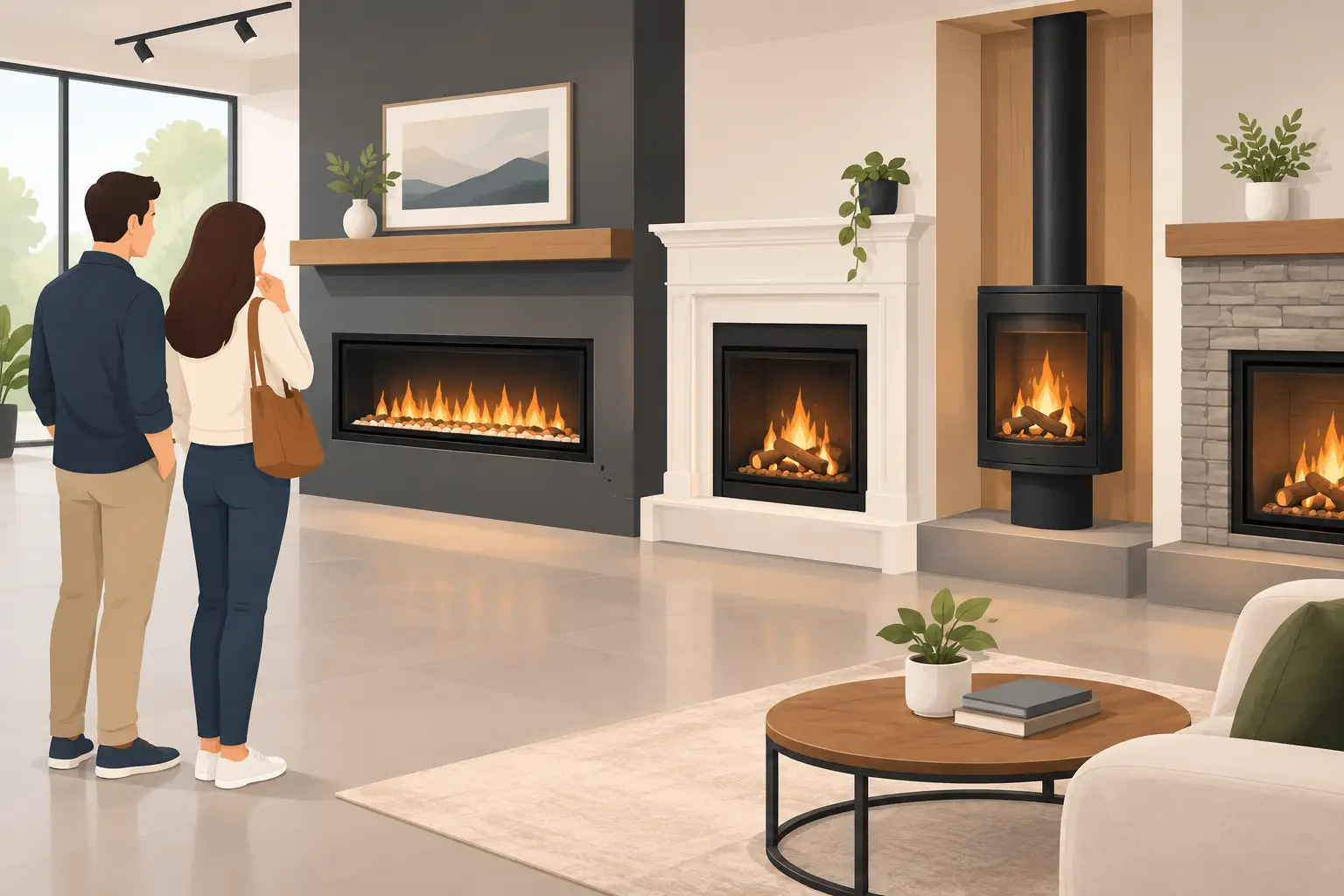
A fireplace can change the feel of a room in a way few other home improvements can. It becomes a focal point, adds dependable warmth and gives a living space real character. That is why good showroom fireplace buying tips start with more than choosing the design you like most. The right fire needs to suit your room, your heating needs and the practical requirements of your property.
Seeing fires in person makes those decisions much easier. A photograph can give an impression of style, but it cannot show the scale of a fireplace, the quality of its finish or the effect of a realistic electric flame. A showroom visit gives you the chance to compare options properly, ask questions and make a considered choice without pressure.
Start with the room, not the fireplace
It is tempting to begin with a particular look: perhaps a traditional stove, a sleek inset electric fire or a media wall feature. Style matters, but the room should lead the decision. Consider its size, layout, level of insulation and how you want to use the fire.
A fire intended to take the chill off a well-insulated lounge has different requirements from one that will provide meaningful supplementary heat in a larger, older room. The location of furniture also matters. A fireplace should feel like part of the room rather than forcing you to arrange everything around it awkwardly.
Take a few basic measurements with you to the showroom, including the width and height of the chimney breast or available wall space. If you are replacing an existing fireplace, photographs are useful too. They help an adviser understand the opening, hearth and surrounding finishes before discussing suitable options.
Compare heat output with how you live
Heat output is one of the most important areas to get right. Too little heat and the fire may look attractive but not deliver the comfort you expected. Too much heat can make a smaller lounge uncomfortable, meaning you use the fire less often than planned.
The right output depends on more than floor area. Ceiling height, glazing, draughts, insulation and whether the room is open plan all affect heat loss. A house with modern windows and good insulation may need far less heat than a similar-sized room in an older property.
This is where talking through your home with an experienced showroom team is valuable. Be clear about whether the fire is primarily for atmosphere, occasional warmth or regular heating support. A lower-output electric fire may be ideal for a room used mainly in the evening, while a gas fire or stove could be more appropriate where stronger, controllable heat is required.
Understand what your property can accommodate
Not every appliance will be suitable for every home, and this is best established early. If you have a chimney, its condition and flue arrangement will influence which gas fires, wood burners or multi-fuel stoves can be installed. A chimney that has not been used for some time may need inspection or preparation before a new appliance is fitted.
If there is no usable chimney, you still have plenty of possibilities. Electric fires offer flexible installation options and are particularly popular for feature walls and media wall designs. Certain gas fire options may also work without a conventional chimney, depending on the property and ventilation requirements.
For a stove, it is sensible to ask about flue routing, hearth requirements, clearances from combustible materials and access for installation. These details do not need to take the enjoyment out of choosing a fire. They simply ensure the design you fall in love with is practical and safe for your home.
See materials and flame effects in real life
A showroom is especially useful when choosing finishes. Stone, marble, timber-effect beams, cast iron, glass and painted surrounds can appear quite different under normal room lighting than they do online. Looking closely lets you judge texture, colour and build quality alongside your existing flooring, furniture and décor.
The same applies to flame effects. Modern electric fires can create a remarkably convincing focal point, but designs vary in flame pattern, fuel bed, brightness settings and viewing area. Some people prefer a traditional log effect, while others want a cleaner contemporary look with crystals or pebbles.
For gas fires and stoves, viewing a live display can help you understand the flame picture and controls. You can also compare inset models with more prominent hole-in-the-wall designs, or decide whether a freestanding stove better suits the character of your room. There is no universal best choice – it depends on the property and the atmosphere you want to create.
Think beyond the fire itself
A complete fireplace is made up of several elements, and each one affects the finished appearance. The appliance may be the main attraction, but the surround, hearth, chamber and mantel can make the difference between a good installation and one that feels truly at home in the room.
For a period property, a traditional surround and stove may complement original features without looking overly formal. In a newer home, a simple slabbed chamber, clean-lined surround or wall-mounted electric fire can create a more contemporary focal point. If you are renovating, it is worth bringing samples or photographs of planned flooring, paint colours and cabinetry so the overall scheme can be considered together.
Also think about everyday maintenance. Pale hearths may show ash or marks more readily around a solid-fuel appliance. A highly polished finish can look striking but may need more frequent cleaning. A practical choice should still be one you enjoy living with years after installation.
Ask the questions that protect your decision
A helpful showroom conversation should leave you clearer, not overwhelmed. Ask what preparation your room may need, who carries out the installation and what happens if unexpected work is identified. It is also sensible to ask about ventilation, controls, servicing and the care needed to keep your chosen appliance working well.
For gas appliances, installation should be completed by a Gas Safe registered engineer. For wood-burning and multi-fuel appliances, correct fitting is equally essential for safety, performance and compliance. Choosing a retailer that can advise, supply and arrange professional installation reduces the risk of mixed messages between separate suppliers and trades.
At Wirral Fires, homeowners can view a wide choice of styles while speaking to people who understand both the product and the fitting process. That joined-up advice is particularly reassuring when a project involves a new flue, an altered chimney opening or a complete fireplace package.
Take your time with showroom fireplace buying tips
A showroom visit is not only about narrowing down products. It is a chance to test your assumptions. You may arrive convinced that you want a large stove, then find an inset gas fire suits the room better. Or you may discover that an electric suite gives you the visual impact you wanted without the building work you expected.
Before visiting, bring room measurements, photographs of the existing fireplace or intended wall, and a note of any must-haves. These could include a remote control, a particular finish, low-maintenance use or the ability to heat the room effectively. If you are considering a stove, mention whether you already have a chimney and when it was last used or inspected.
Try not to rush because a model looks impressive on display. Stand back and imagine it at home, taking account of its proportions and how it will work with your furniture. Ask to see alternatives in a similar style, as small differences in frame width, flame bed or surround material can have a big impact.
The best fireplace choice is one that feels right when you see it, makes sense for your property and comes with clear advice about installation and aftercare. A relaxed visit to a knowledgeable local showroom gives you the space to make that decision with confidence.