

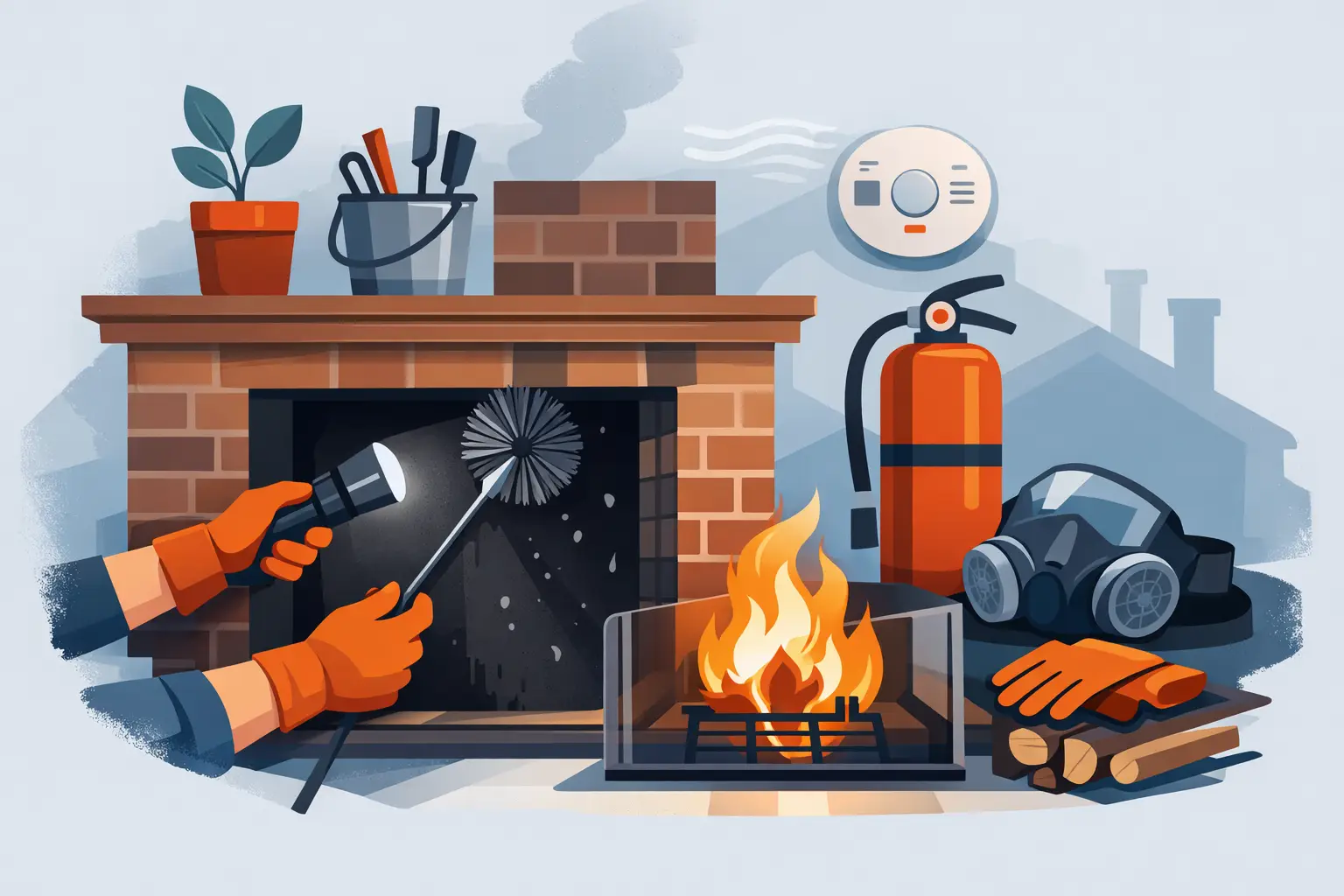
A chimney breast can be one of the best features in a room, but it should never be treated as just a decorative recess. Preparing chimney breasts for fires properly means checking what is behind the plaster, whether the flue is suitable and how the chosen appliance will safely work in the space. Getting these details right before installation avoids unnecessary disruption later and gives you a fireplace that looks as good as it performs.
For homeowners updating an existing fireplace or opening up a boarded-over chimney, the starting point is always the same: assess the chimney breast before choosing the final fire, stove, surround or hearth.
Start with a proper chimney and flue survey
Older properties across the Wirral, Cheshire and Chester often have chimney breasts that have been covered, altered or left unused for years. An opening may look straightforward from the outside, but its condition cannot be judged by appearance alone. Behind the wall there could be loose soot, damaged brickwork, an unsupported opening or a flue that is blocked, leaking or shared with another appliance.
A professional survey establishes the practical limits of the project. It identifies the chimney’s construction, the likely route and condition of the flue, the size of the available opening and whether there are any signs of damp. It also helps determine whether the chimney is suitable for the type of fire you have in mind.
This matters because different fires have different requirements. A wood-burning or multi-fuel stove needs an appropriate flue system and clearances around the appliance. A gas fire needs a suitable flue arrangement where it is not a flueless model, while an electric fire may not need a working chimney at all. That flexibility can make electric fires a sensible choice where a chimney has been removed, capped or is no longer practical to use.
Opening up a chimney breast safely
If a chimney has been bricked up or boarded over, opening it requires more than removing the covering. The structure above the fireplace opening must be supported correctly. In many cases, this involves fitting a suitable lintel before brickwork is taken out or reshaped.
The lintel supports the weight of the chimney breast above, so it is not a part of the job to guess at or rush. Its size, position and installation depend on the opening, the brickwork and the load it needs to carry. A fireplace recess that is too tall, too wide or poorly supported can create both safety concerns and an expensive repair.
There may also be surprises inside an old opening. Builders’ rubble, old back boilers, redundant gas pipework and damaged firebacks are not unusual. Any old gas supply must be dealt with by a Gas Safe registered engineer, rather than simply capped off behind a new surround. The opening should then be made sound, level and ready for the intended appliance and finish.
Allow for the right opening size
It is tempting to create the largest opening possible, particularly when fitting a stove. However, bigger is not always better. The recess needs to suit the appliance, allow for required clearance to combustible materials and provide enough room for safe connection to the flue.
A smaller stove in a well-proportioned opening can look far more considered than an oversized appliance squeezed into a narrow recess. Equally, a hole-in-the-wall gas or electric fire may need specific dimensions, ventilation space or construction materials set out by its manufacturer. Choosing the product before making irreversible structural changes helps keep the finished design practical and balanced.
Check the flue before lighting any solid-fuel or gas fire
A chimney flue is designed to carry combustion gases safely out of the home. For a solid-fuel stove, that means it needs to be the correct size, in good condition and able to produce a reliable draw. For a conventional gas fire, the flue must also be suitable for that appliance and tested as part of the installation process.
A sweep and inspection can reveal bird nests, soot build-up, fallen debris and blockages. However, a clean flue is not necessarily a sound flue. Older chimneys can have deteriorated mortar joints, cracks or rough internal surfaces that make them unsuitable without further work. Smoke testing and camera inspections can help identify issues that are hidden from view.
In many stove installations, a new flue liner is fitted within the existing chimney. This creates a correctly sized route for the stove’s gases and can improve performance and safety. The type and diameter of liner must be matched to the appliance and installation, rather than selected as a one-size-fits-all solution.
If a chimney is not suitable for use, there may still be excellent alternatives. A balanced-flue gas fire can vent directly through an external wall in appropriate circumstances, while an electric fire offers considerable design freedom with no chimney required. The best route depends on the room, property layout, desired heat output and the look you want to achieve.
Ventilation is part of safe preparation
Modern homes are often better insulated and less draughty than older properties. That is good news for comfort, but it can mean a fire or stove has less natural air available for combustion. Where permanent ventilation is required, it should be planned into the installation rather than treated as an afterthought.
An air vent may be needed depending on the appliance type, output and the property. It should be correctly sized and positioned so that it provides the necessary airflow without spoiling the room unnecessarily. Blocking or covering a required vent after installation is unsafe, even if it feels chilly during colder weather.
Extractor fans, particularly in kitchens or utility areas, can also affect how a flue performs. A competent installer will consider the wider property, not just the chimney breast itself, before confirming that a fire is suitable.
Prepare the hearth, walls and surrounding finishes
The hearth does more than frame a fire visually. For solid-fuel appliances, it protects the floor from heat and stray embers, and it must meet the relevant requirements for size, thickness and projection. The correct hearth will depend on the stove, whether it can raise the temperature beneath it to a safe level, and the manufacturer’s instructions.
Walls around a fire also need the right treatment. Plaster, paint, timber beams and decorative finishes may all have limitations where heat is involved. A non-combustible chamber lining, such as suitable boards or brickwork, may be needed inside a fireplace recess. Timber surrounds can be used in many designs, but only where their position and clearance from the appliance comply with the fire’s requirements.
This is where planning the full fireplace matters. The fire, flue, chamber, hearth and surround should work together, rather than being chosen as separate items. It produces a safer installation and usually a cleaner, more finished appearance.
Do not overlook damp and unused chimneys
A cold, unused chimney breast can develop damp patches because moisture enters through a damaged chimney pot, flashing, mortar or capping. It can also occur when a chimney is sealed too tightly, preventing it from ventilating properly. Painting over the stain may hide it temporarily, but it will not solve the cause.
Before fitting a new fire, investigate damp, crumbling plaster or a musty smell around the chimney breast. External repairs or suitable ventilation may be needed first. If a flue is no longer in use, it should be capped in a way that keeps rain out while still allowing airflow.
Preparing chimney breasts for fires with the right team
The safest and least stressful projects begin with clear advice before any opening is made. A visit to a showroom can help you compare the proportions and finishes of different fires, but an on-site survey is what confirms what your home can accommodate.
At Wirral Fires, the focus is on helping homeowners choose an appliance and installation approach that suits their property, heating needs and style. Gas Safe registered engineers and experienced installers can identify the practical details early, from flue condition to hearth requirements, so there are fewer surprises on fitting day.
A well-prepared chimney breast gives you choices. Whether you picture a traditional stove in a restored inglenook, a clean-lined gas fire or an electric feature fire in a previously unused recess, taking the time to assess the structure first lets the finished fireplace feel like it has always belonged in the room.