

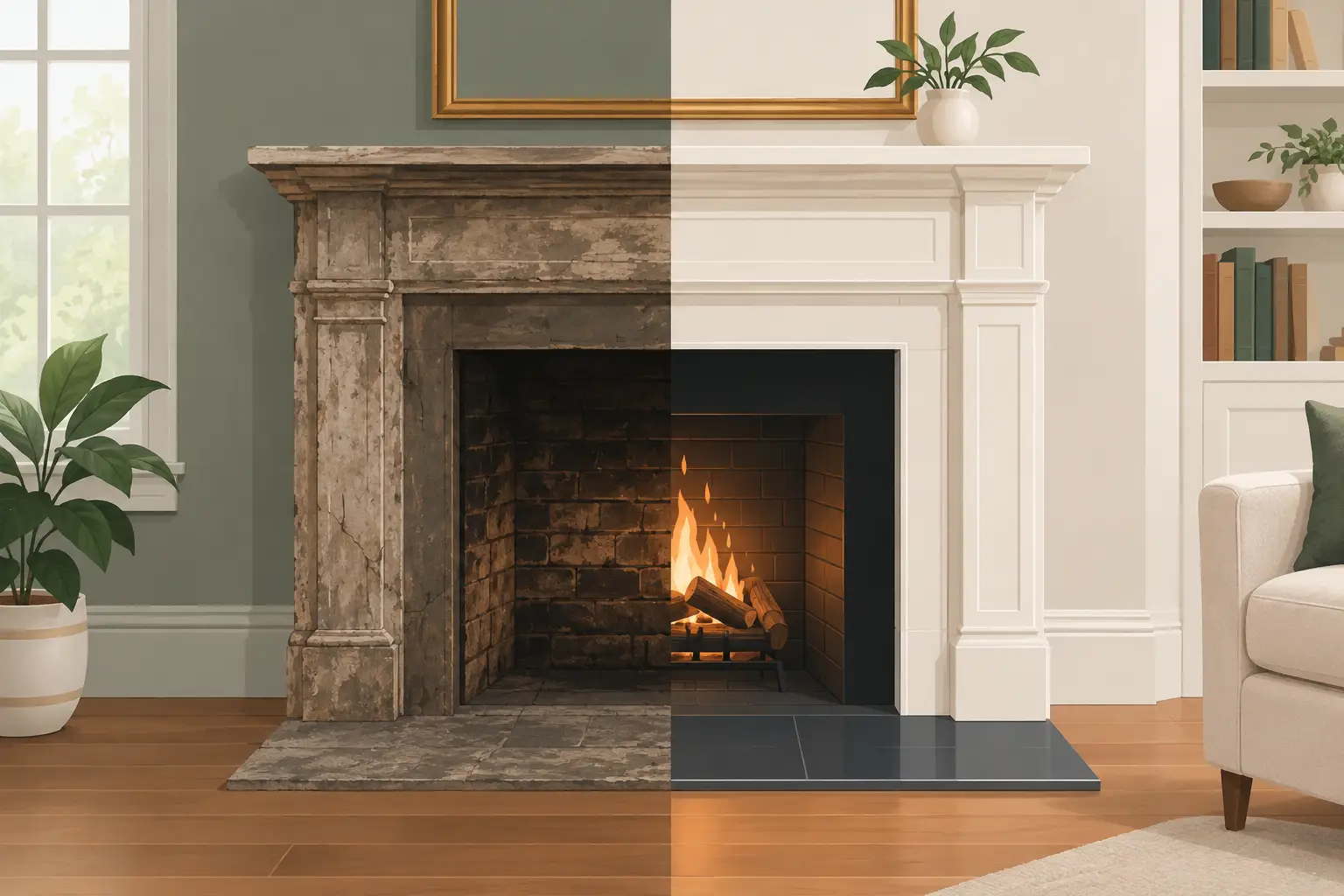
A blocked-up chimney breast, a tiled opening hidden behind a modern surround, or an original cast-iron insert stored in a garage can all be promising starting points. Period fireplace restoration is about bringing back the character that suits an older home, without overlooking the safety, efficiency and practical requirements of how you live now.
Done well, a restored fireplace becomes more than a decorative feature. It gives a living room a natural focal point, complements original joinery and plasterwork, and can provide useful warmth when paired with the right appliance. The best approach is never to assume that an old fireplace can simply be uncovered and used. Careful assessment comes first.
Start with the Fireplace You Have
Many period properties across the Wirral, Chester and West Cheshire have seen several rounds of alteration. An original Victorian or Edwardian opening may have been boarded over, reduced in size, fitted with a later gas fire or converted into a purely decorative recess. What appears to be an intact chimney can also conceal loose brickwork, an unsuitable flue or previous building work that needs attention.
Before choosing a fire, surround or stove, establish what is original and what is structurally sound. Removing modern coverings can reveal attractive tiles, a cast insert or a stone hearth, but it can also expose damaged lintels, cracked render and unsupported openings. This is why an initial inspection is far more valuable than selecting a product from photographs alone.
If the property is listed or within a conservation area, there may be additional considerations. The character of the fireplace, chimney stack and external flue position can all matter. In these cases, check what permissions may be needed before work begins rather than trying to resolve issues partway through the project.
Period Fireplace Restoration Should Respect Proportion
A period fireplace looks right when its individual parts work together. The opening, hearth, surround and insert were generally designed as a complete composition, even where the room itself was modest. Installing an oversized stove in a narrow Victorian opening, for example, can make a feature feel crowded and may produce more heat than the room needs.
Take measurements early, including the chimney breast, recess depth, hearth projection and ceiling height. These dimensions affect what can be fitted safely, but they also guide the visual balance of the finished fireplace. A simple cast insert with geometric tiles may suit an Edwardian terrace, while a more detailed combination fireplace can be a better fit for a Victorian room. In a cottage, a restrained timber beam and a compact stove may feel more natural than an ornate surround.
Authenticity is worth considering, but it does not have to mean creating a museum piece. A well-chosen reproduction can be more practical than a fragile original, particularly where an existing surround is incomplete or badly damaged. The aim is a result that feels at home in the property and remains enjoyable to use.
Decide Whether the Fireplace Is for Heat, Looks or Both
This decision shapes almost every part of the restoration. Some homeowners want to preserve an original opening as a decorative focal point, perhaps with a non-working insert or an electric fire. Others want dependable supplementary heating for evenings and colder months. Both are valid, but they require different preparation.
An electric fire can offer a realistic flame effect with straightforward day-to-day use and no need for a working chimney. It can be a good choice where the original flue is no longer usable, or where the room needs the appearance of a fire without the maintenance of solid fuel.
A gas fire can deliver controllable heat and a traditional look, but it must be matched to the room, chimney arrangement and ventilation requirements. A suitably qualified Gas Safe registered engineer should assess the installation and carry out the work.
For those considering a wood-burning or multi-fuel stove, the condition and size of the flue are particularly important. In many older chimneys, lining is required to support safe and effective operation. A stove also needs a correctly sized hearth, appropriate clearances from combustible materials and enough air supply. The visual appeal of a real flame is undeniable, but the appliance must be chosen for the space rather than simply for its appearance.
Check the Chimney Before Choosing an Appliance
The chimney is often the least visible part of a fireplace restoration, yet it has the greatest bearing on what can safely be installed. A chimney that has been unused for years may contain debris, old closures, damp patches or mortar that has deteriorated. It may have more than one flue, and it is not always clear which one serves the fireplace below.
A professional survey can identify the condition of the opening and flue, whether a liner is needed, and whether the chimney is suitable for the fuel you have in mind. It also helps avoid expensive changes later, such as discovering that a chosen stove cannot be accommodated correctly.
Do not be tempted to use an old chimney without proper checks simply because it once served an open fire. Modern appliances operate differently, and safe performance depends on the entire system working together. A clean-looking fireplace at room level says very little about the condition of the flue above it.
Preserve Original Details Where They Are Sound
Original tiles, cast iron and stone are often the details that give a period fireplace its value. Gentle cleaning and careful repair can retain far more character than replacing every component with something new. Avoid aggressive sanding, harsh chemicals or coatings that can permanently alter old materials.
Cast-iron inserts may need rust treatment, blacking or specialist repair. Cracked tiles can sometimes be retained if they are stable, while missing tiles may be matched closely enough to keep the overall design coherent. Natural stone surrounds need sympathetic cleaning, as over-cleaning can remove their soft, aged finish.
There are occasions when replacement is the sensible option. A fractured hearth, severely corroded insert or unstable surround should not be retained purely for the sake of originality. The right decision depends on condition, safety and how the room will be used. An experienced installer can help separate details worth saving from parts that have reached the end of their working life.
Plan the Surrounding Room as Well as the Fireplace
A restored fireplace has a strong influence on the room around it. Once an original opening is revealed, wall colours, flooring and furniture positions often need reconsidering. This is particularly true where the hearth projects into the room or where a stove needs clear space around it.
Choose finishes that support the age and style of the property rather than competing with them. Warm neutral walls can allow patterned tiles or cast iron to stand out, while a simple painted surround may be enough in a smaller room. If you are introducing a new hearth, think about the practical side too. It should meet the required specifications for the appliance while coping with everyday use, muddy shoes and fire maintenance.
It is also sensible to plan for access. Fires and stoves need servicing, and chimneys may need sweeping depending on the appliance and fuel. A beautiful installation should not make routine care difficult.
Why Professional Installation Makes a Difference
Restoration work can involve several trades, from opening up brickwork and repairing plaster to lining a chimney and fitting the appliance. Coordinating those elements properly makes the difference between a fireplace that merely looks finished and one that is safe, tidy and ready to enjoy.
At Wirral Fires, advice starts with suitability: the style of your home, the condition of the chimney, the heat you need and the finish you have in mind. A visit to a showroom can be especially useful for period properties, as seeing surrounds, stoves and fires in person makes it easier to judge scale, texture and flame effect.
For gas and solid-fuel installations, use appropriately qualified professionals and make sure you understand the maintenance the finished fireplace will require. Good workmanship should include clear guidance, careful fitting and respect for the rest of the room, not just the appliance itself.
A period fireplace does not need to remain a hidden relic or become a compromise between style and safety. With a considered survey, sympathetic choices and professional fitting, it can once again be the part of the home people naturally gather around.