

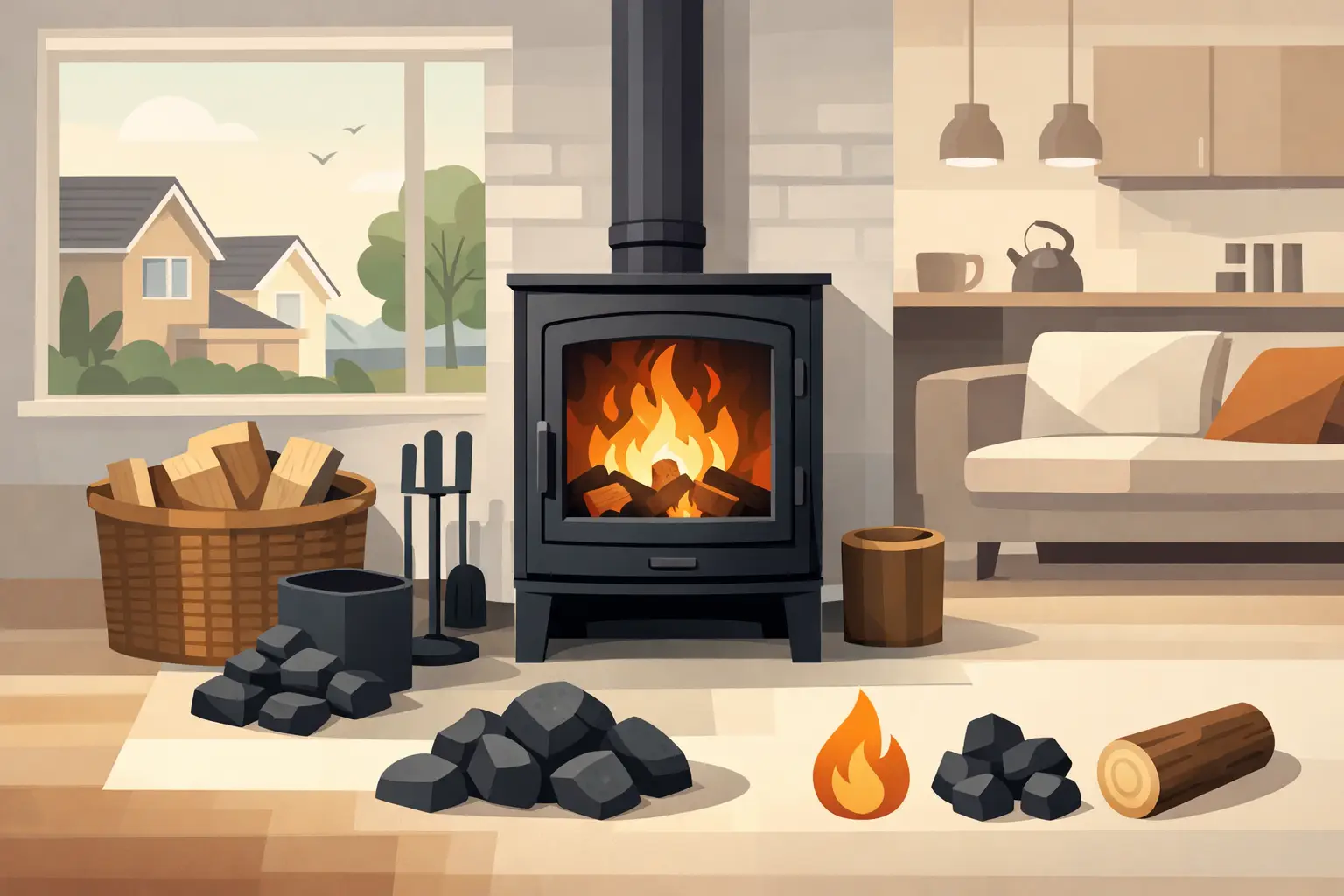
A stove can transform a living room, but the wrong one can quickly become an expensive feature that produces too much heat, needs more attention than expected or does not suit the chimney. This multi fuel stove review looks beyond the showroom appearance to help homeowners make a confident, practical choice.
For many properties across the Wirral, Chester and West Cheshire, a multi-fuel stove offers a pleasing mix of traditional character and useful flexibility. It can be a focal point on a cold evening while also providing a dependable source of room heat. The key is understanding what it is designed to burn, how much heat your room needs and what is involved in fitting it correctly.
What is a multi-fuel stove?
A multi-fuel stove is built to burn more than one approved solid fuel. In most cases, this means seasoned or kiln-dried wood as well as authorised smokeless fuels. Its internal design is different from a dedicated wood burner: multi-fuel models usually have a grate and ash pan, allowing air to rise from underneath the fuel bed.
That under-grate air is particularly useful when burning smokeless fuel. Wood generally burns best on a bed of ash with air supplied mainly from above, whereas smokeless fuel benefits from air coming up through the grate. A good multi-fuel stove gives you the option to adjust the airflow to suit the fuel you are using.
This does not mean that every fuel can be put in every stove. Always follow the manufacturer’s instructions. Burning house coal, wet logs, treated timber, painted wood or general household waste can damage the appliance, create excessive emissions and invalidate a warranty.
Multi fuel stove review: the real advantages
The main attraction is choice. If you enjoy the flame and ritual of a log fire but want the option of smokeless fuel for longer burning periods, a multi-fuel appliance gives you both. This can be reassuring where fuel supply, storage space or personal routines vary through the year.
A quality modern stove can also be a very efficient way to heat the room it is in. Rather than losing much of the heat up an open chimney, a closed stove directs warmth into the space and offers more control over the burn. Many homeowners find that this makes their main living area feel comfortable sooner, especially in homes with older fireplaces.
Style is another strong point. Multi-fuel stoves are available in compact traditional forms, clean-lined contemporary designs and larger landscape models with wide views of the flames. They can sit within an existing chimney breast, stand in an inglenook or form part of a new fireplace package with a surround and hearth chosen to complement the room.
There is also the comfort of having a solid-fuel appliance that does not rely on the gas supply. It should not be viewed as a replacement for a whole-home heating system without careful planning, but it can be a valued additional heat source during colder spells.
Where the compromises come in
Flexibility has a few practical trade-offs. A multi-fuel stove has a grate and ash pan that need regular emptying, particularly if you burn smokeless fuel. Wood ash is usually lighter and less frequent, but any solid-fuel appliance needs routine cleaning to stay safe and perform well.
Fuel storage needs thought too. Logs must be properly seasoned or kiln-dried, with a moisture content of 20% or less. Damp logs are difficult to light, give off less useful heat and leave more deposits in the stove and flue. Smokeless fuel needs to be stored dry as well, ideally close enough to the house that carrying it in on a wet winter evening is not a nuisance.
A stove can also be too powerful. This is one of the most common issues we see when homeowners are comparing models. It is tempting to choose a higher kilowatt rating for peace of mind, but an oversized stove often has to be run with the air controls restricted. That can lead to dirtier glass, inefficient burning and an uncomfortably hot room.
For many average-sized living rooms, a 5kW stove may be more than sufficient, but room size is only part of the calculation. Ceiling height, insulation, window area, the openness of adjoining rooms and the age of the property all affect the heat requirement. A proper discussion before buying is far more useful than choosing by appearance alone.
Wood, smokeless fuel or a mix of both?
The right fuel depends on how you want to use the stove. Kiln-dried logs are a popular choice for the lively flame, natural look and ease of lighting. If you have space to store logs correctly and enjoy tending the fire, wood can be a very satisfying option.
Authorised smokeless fuel may suit households looking for a longer, steadier burn. It can be useful in the evening when you want to maintain warmth with less frequent refuelling. However, it produces more ash and may not offer the same visual flame effect as logs.
If your property is in a Smoke Control Area, the appliance and fuel both matter. A DEFRA-exempt stove is designed to burn wood in these areas when used in line with the manufacturer’s guidance. Smokeless fuel must also be an authorised type. This is worth checking early, rather than after selecting a stove you love.
Installation matters as much as the stove
The best-looking appliance cannot perform properly if the chimney, flue and hearth are unsuitable. Before installation, the existing chimney should be assessed to establish its condition, size and suitability. In many cases, a flue liner is required to provide a safe, efficient route for fumes to leave the property.
A registered installer will also consider ventilation, clearances to combustible materials, the construction of the hearth and whether a carbon monoxide alarm is required. These are not details to leave until the final fitting date. They influence which model can be fitted, where it can sit and the finished look of the fireplace.
In some homes, particularly newer or highly insulated properties, an external air supply may be needed. In others, a chimney breast may need opening up, repairing or lining before the stove can be installed. These are manageable parts of the project when identified at survey stage, but they should be allowed for in the budget.
A professional installation should leave you with clear operating advice as well. Knowing how to light the stove, set the air controls, empty ash safely and recognise when the flue needs sweeping will make a significant difference to day-to-day enjoyment.
Choosing a stove that suits your room
Start with the room, not the brochure. Think about the heat output you need, whether you are replacing an open fire or creating a new feature, and the look you want to achieve. A compact cast-iron stove may feel right in a traditional cottage-style fireplace, while a sleek steel model can work beautifully in a renovated lounge.
Then consider the practical questions. Will you mainly burn logs, mostly use smokeless fuel or genuinely use both? Do you have a suitable place for fuel storage? Is the stove intended to heat one room, or will an open-plan layout allow warmth to travel further? Honest answers will narrow the choices quickly.
It is also worth seeing stoves in person. Photographs cannot always show the scale of a model, the size of the viewing window, the finish of the door furniture or how it will sit against a particular hearth and surround. A showroom visit allows you to compare proportions and ask straightforward questions without pressure.
At Wirral Fires, our team can help homeowners weigh up the appliance, fireplace design and installation requirements together. That joined-up approach helps avoid choosing a stove in isolation, then finding that the practical details limit the options.
Ongoing care for safe, efficient burning
A multi-fuel stove is not maintenance-free, but regular care is simple. Empty ash before it builds up around the grate, clean the glass using an appropriate stove product when needed and inspect rope seals for signs of wear. The flue should be swept at suitable intervals, commonly at least once a year and often more frequently if the stove is used heavily or burns wood regularly.
Use only dry, approved fuel and avoid slumbering the stove for long periods. A bright, controlled fire is generally cleaner and better for the stove than a starved fire producing dark smoke. If the glass blackens quickly, the fire is hard to light or smoke enters the room, stop and seek advice rather than continuing to use it.
The most rewarding multi-fuel stove is not necessarily the largest, most expensive or most ornate. It is the one that suits your room, your fuel preference and your home’s installation requirements – then gives you years of reliable warmth with sensible care.