

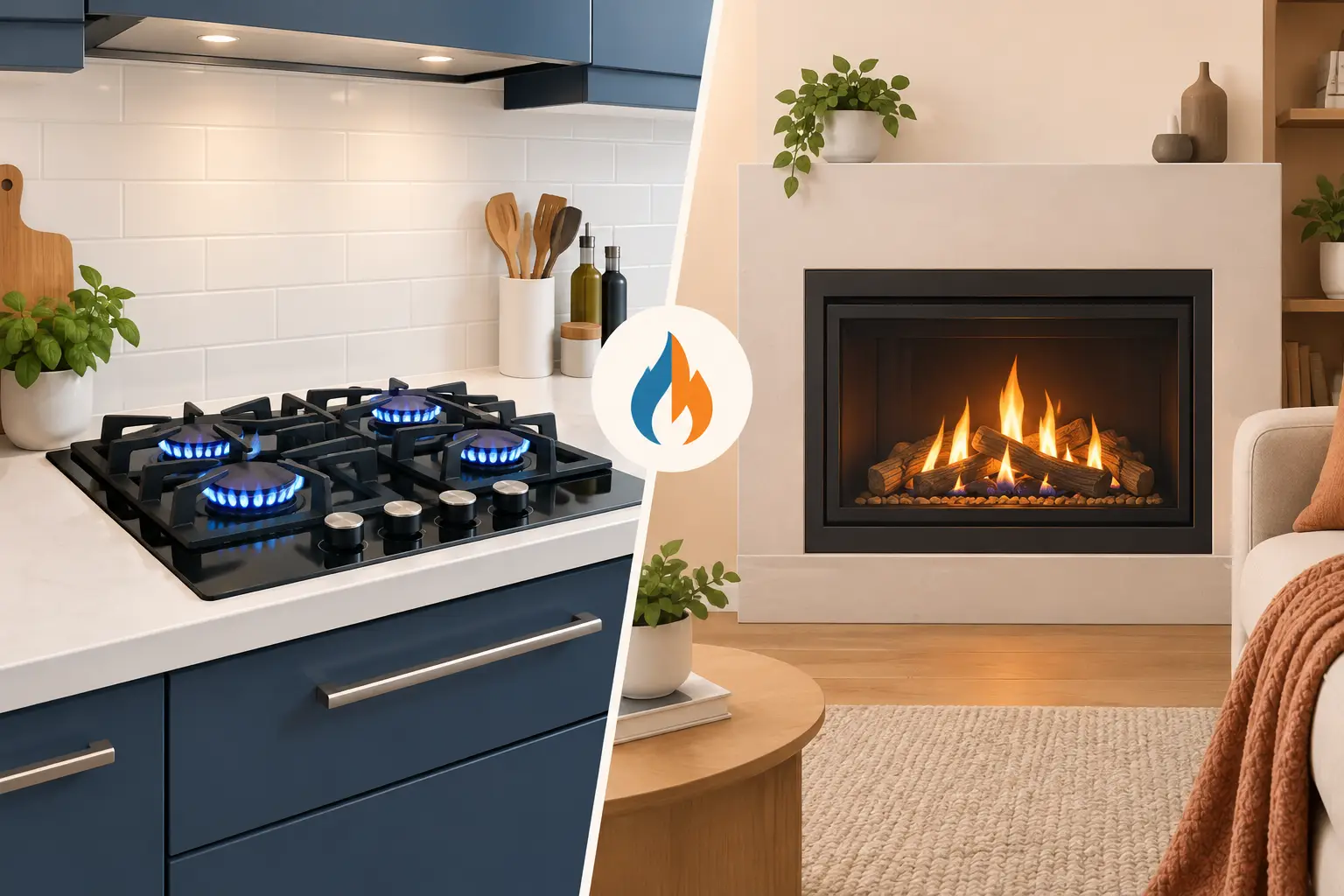
A gas stove or gas fire can both bring dependable warmth and a welcoming focal point to your living space, but they create very different looks. The right choice is rarely just about heat output. It depends on the character of your room, whether you have a usable chimney, how you use the space and the finish you want around the fire.
For many homeowners across the Wirral, Chester and West Cheshire, this is a decision made during a renovation or when replacing an older fireplace. A little clear advice at the start can prevent you choosing an appliance that looks right in a brochure but does not quite suit your home.
Gas stove or gas fire: the key difference
A gas stove is a freestanding or stove-style appliance designed to give the appearance of a traditional solid-fuel burner, without the daily work of carrying logs, lighting a fire or clearing ash. Modern models can be remarkably realistic, with detailed log-effect fuel beds, glowing embers and flame pictures that are easy to control.
A gas fire is generally built into a fireplace opening, chimney breast or purpose-made media wall. It can be classic and inset, contemporary and frameless, or wide and landscape in shape. This makes it especially versatile when the fire is intended to be a strong interior feature rather than a standalone appliance.
Neither option is automatically better. A stove often gives a room a relaxed, substantial feel, while a gas fire can make a fireplace look more tailored, minimal or traditional depending on the model and surround chosen.
When a gas stove is the better fit
Gas stoves work particularly well in rooms where you want the fire to feel established and characterful. They suit period homes, cottages and properties with alcoves or chimney recesses, but they can look equally at home in a modern extension when paired with a simple hearth and clean-lined finish.
Their freestanding appearance is a major part of their appeal. A stove has visual presence even when it is not lit, so it can anchor a room with high ceilings, a large chimney breast or an open-plan layout. If an existing fireplace feels too small or plain, a stove installation may give it more purpose.
Practicality matters too. Many gas stoves are controlled by a simple remote handset, and some have thermostatic settings to help maintain a comfortable room temperature. You get the enjoyment of visible flames with a more convenient routine than a solid-fuel stove.
That said, a stove needs suitable floor space and a well-proportioned setting. In a compact lounge, a large stove can feel imposing. The hearth, clearance requirements and flue route also need to be considered from the outset, rather than treated as finishing details.
The stove look without the chimney work
Some gas stoves can be installed with a balanced flue, allowing them to vent directly through an external wall rather than a conventional chimney. This can be an excellent option for newer homes, extensions and rooms where the chimney has been removed or is no longer usable.
Balanced-flue appliances take combustion air from outside and safely expel products of combustion outside. The wall position, external access and appliance location must all be assessed properly, which is why a site survey and professional installation are essential.
When a gas fire makes more sense
A gas fire is often the natural choice if your room already has a fireplace opening or if you want a clean, integrated appearance. Inset fires can sit neatly within a traditional surround, while larger glass-fronted fires can create a striking focal point across a chimney breast or feature wall.
This flexibility makes gas fires popular for homeowners updating a dated living room. You may want to retain a favourite stone or timber surround, create a more contemporary fireplace suite, or make a simple opening look smarter without overwhelming the room. The fire can be chosen to support the overall design rather than dictate it.
Gas fires are also a good option where floor space is limited. Because the appliance is recessed or set into the wall, it can deliver an attractive flame display while keeping the room feeling open. This is especially useful in narrower lounges, dining rooms and modern houses with more compact chimney breasts.
A glass-fronted high-efficiency gas fire can be a sensible choice for households that want effective room heating alongside the atmosphere of a real flame. Open-fronted styles have their own traditional appeal, but they will not suit every home or every heating priority. Discussing how often you plan to use the fire helps narrow down the most suitable type.
Heat output should suit the room
It is tempting to focus on flame picture and finish first, but heat output deserves equal attention. A fire that is too powerful can make a smaller room uncomfortably warm, meaning it is rarely used at its best setting. One that is undersized may look lovely but not provide the warmth you expected on a cold evening.
Room dimensions, ceiling height, insulation, glazing and whether the space opens into other areas all affect the recommendation. A well-insulated newer property may need a different solution from an older home with single-glazed bays or a draughty chimney breast.
The fire should normally be treated as a valuable source of room heat rather than a replacement for a full central-heating design. Used thoughtfully, it can make the room you use most feel warm and comfortable without heating the whole house more than necessary.
Chimneys, flues and ventilation
Your existing chimney does not automatically determine whether you can have a gas stove or gas fire, but it will influence the available options. A chimney may need to be lined, tested or adapted to suit a particular appliance. In other cases, a balanced flue offers the more straightforward route.
Older properties can sometimes reveal surprises once a fireplace is opened up: damaged brickwork, a restricted flue, unsuitable dimensions or a previous alteration that needs attention. It is always better to establish this before selecting a final model and surround.
Ventilation requirements also vary by appliance and installation. These are safety matters, not optional extras. A Gas Safe registered engineer will assess the room, flue arrangement and gas supply, then install and commission the appliance in line with the relevant requirements. Regular servicing afterwards helps keep it operating safely and efficiently.
Style is about the whole fireplace, not just the appliance
A stove can be paired with a simple slate hearth, a beam-effect mantel or a traditional cast-style fireplace. A gas fire may sit within a classic surround, a clean limestone-style suite or a contemporary hole-in-the-wall design. The best results come from considering the full setting together.
Think about sightlines as you enter the room. A wide gas fire can make a low chimney breast appear broader, while a stove can add height and substance to a larger opening. Consider furniture placement too. The fire should feel like a natural focal point, not something the room has been arranged around awkwardly.
In a showroom, seeing flame effects, proportions and materials in person makes this much easier. Photographs are useful, but they cannot always show how a trim finish catches the light, how realistic a fuel bed appears or how much presence an appliance has at room scale.
Choosing with confidence
Before making a decision, bring together the practical details: the size of the room, photographs of the existing fireplace or proposed wall, whether there is a chimney, and the look you are hoping to achieve. From there, the choice becomes clearer.
If you want a freestanding, stove-like centrepiece with a cosy traditional feel, a gas stove may be right for you. If you prefer a fitted fireplace with a wide choice of contemporary and classic designs, a gas fire may be the stronger option. At Wirral Fires, our no-pressure approach is built around helping you see those differences clearly, then arranging a tidy, professional installation once you have found the right fit.
The most satisfying choice is the one that suits your room on an ordinary winter evening as much as it impresses when guests arrive: warm, simple to use and made to look as though it has always belonged there.