

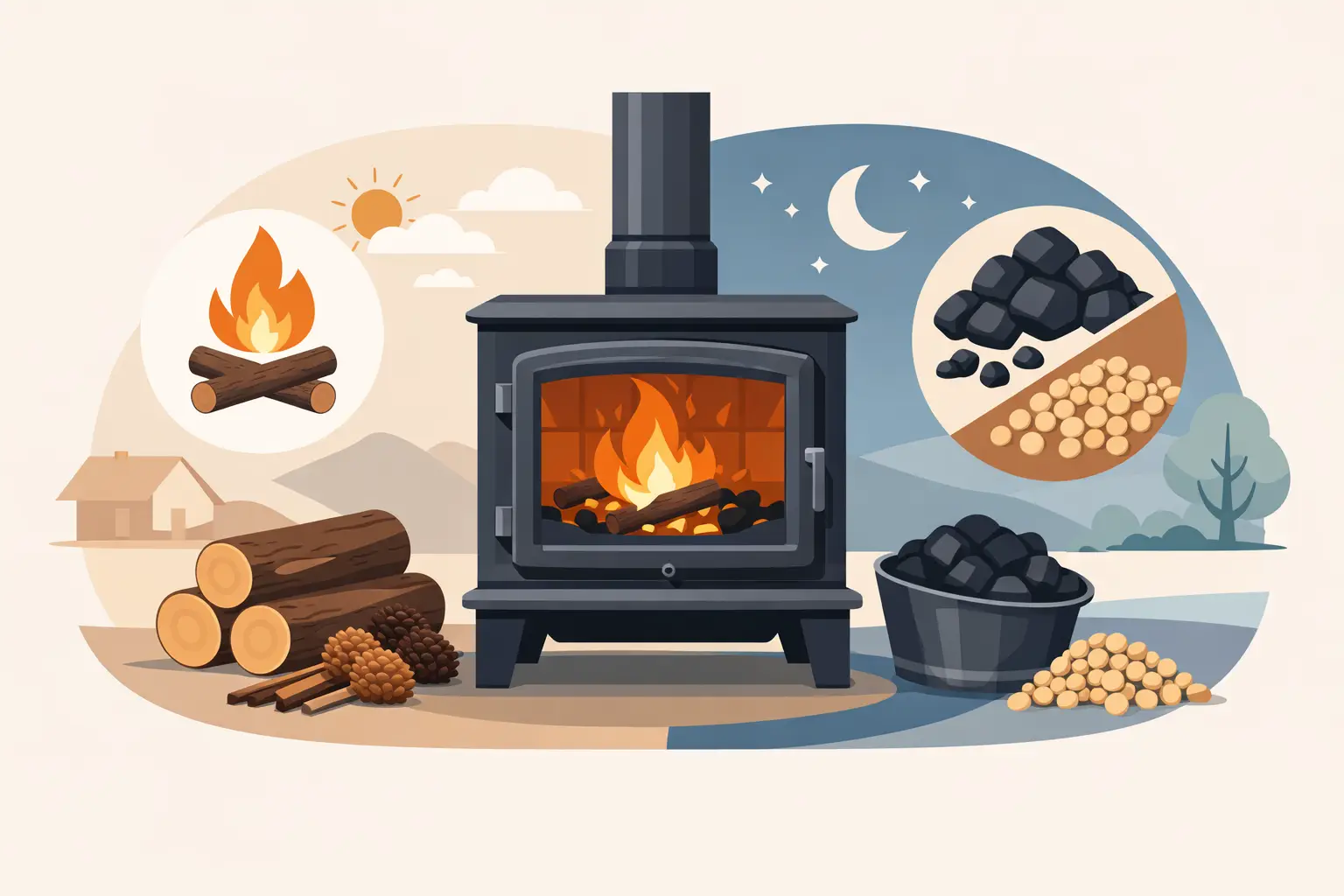
If you already have a stove in place and want the option to burn more than just logs, it is perfectly reasonable to ask: can you convert a wood-burning stove to multi-fuel? The short answer is sometimes, but not always. It depends on how the stove was designed, whether the manufacturer offers a proper conversion kit, and whether the finished setup will still be safe, efficient and compliant.
For many homeowners, the appeal is obvious. A multi-fuel stove gives you more flexibility, especially if you want to use approved smokeless fuels as well as wood. But this is not a case of adding a part and hoping for the best. The right answer starts with the stove itself.
Can you convert a wood-burning stove to multi-fuel in every case?
No, and this is the most important point to get straight early on. Some stoves are designed from the outset so they can be supplied either as wood-burning or multi-fuel models. In those cases, a manufacturer-approved conversion may be possible. Other stoves are built specifically for wood only and should stay that way.
A wood-burning stove and a multi-fuel stove may look very similar from the outside, but they work differently inside. Wood burns best on a bed of ash, with air coming mainly from above. Smokeless fuel needs airflow from underneath, which is why a true multi-fuel stove usually has a raised grate and ash pan. If a stove has not been designed to handle that pattern of combustion, changing how fuel sits and how air moves through the firebox can affect performance and safety.
That is why the make and model matter so much. Before anyone talks about parts, it is worth checking the stove data plate, manual and manufacturer guidance.
What usually needs to change?
If a conversion is possible, the main change is usually inside the firebox. A multi-fuel setup often includes a riddling grate or solid fuel grate, along with an ash pan underneath. This allows air to reach the fuel from below and makes it easier to manage ash produced by smokeless fuels.
In some models, there may also be changes to internal liners, throat plates or air controls. The exact parts vary by manufacturer. That is one reason we would always steer customers away from generic aftermarket fixes. A stove is a tested appliance, not a one-size-fits-all box.
Even when the correct kit exists, the condition of the stove still matters. If the internal components are worn, warped or cracked, fitting new fuel-burning parts may not be the smartest use of money. In older stoves, replacement can be the better long-term option.
Why wood-only and multi-fuel stoves are not the same
A lot of confusion comes from the fact that many people have seen wood burnt in a multi-fuel stove and assumed the reverse must be fine too. In reality, a multi-fuel stove is built to handle different fuel types and the extra stresses that come with them.
Smokeless fuel can burn hotter and differently from logs. That places different demands on the grate, baffle and internal body of the stove. Some wood-only models simply are not designed for this. You might get it to light, but that does not mean it is suitable.
There is also the issue of efficiency and clean burning. A stove that is poorly matched to the fuel can produce disappointing heat output, dirtier combustion and more wear over time. What seems like a practical shortcut can become a false economy.
When conversion makes sense
The best case for converting a wood-burner to multi-fuel is when the manufacturer explicitly allows it and supplies the right kit for that exact model. In that situation, you are not guessing. You are adapting the stove in the way it was designed to be adapted.
It can also make sense if the stove is in good condition, the flue system is suitable, and you genuinely want the extra fuel choice rather than simply trying to avoid replacing an ageing appliance.
For some households, that flexibility is useful. If you live in an area where certain fuels are easier to source, or you want the option of approved smokeless fuel during colder periods, a proper conversion can be worthwhile. It can also help if your heating habits vary and you want more control over burn time and refuelling.
When replacement is the better route
Sometimes the honest answer is that a new stove is the better investment. If your current stove was never intended to be multi-fuel, trying to force the issue is rarely worthwhile. The same goes for older appliances that are inefficient by modern standards or already showing signs of wear.
A replacement may cost more upfront, but it can give you the right fuel capability, improved efficiency, cleaner combustion and a fresh warranty. It may also give you a better visual result if you are already updating the fireplace, hearth or surround.
For homeowners working on a full room renovation, it often makes more sense to choose the right appliance from the start rather than adapting an old one and hoping it still fits the brief a few years down the line.
Flue and chimney considerations
The stove itself is only part of the picture. If you are considering whether you can convert a wood-burning stove to multi-fuel, the chimney and flue setup need checking as well. Different fuels produce different combustion by-products, and the flue system must be suitable for the intended use.
This is especially important if the stove is connected to an existing chimney or an older liner. The diameter, condition and specification of the liner may all need review. Ventilation in the room may also need to be assessed, depending on the appliance and property.
These checks are not there to complicate matters. They are there to make sure the stove works properly and safely once installed or altered.
Compliance and professional fitting
Any change to a solid fuel appliance should be approached properly. That means following manufacturer instructions, meeting current regulations and making sure the appliance remains safe to operate.
This is not really a DIY decision, even if the parts look straightforward. A professional installer can confirm whether conversion is permitted, whether the flue arrangement is suitable, and whether the finished installation will perform as it should. They can also spot when the better answer is to replace rather than convert.
For most homeowners, that reassurance is valuable. A stove is not something you buy on impulse, and it is certainly not something you want to get wrong.
Questions worth asking before you decide
Before spending money on a conversion, it helps to ask a few simple questions. Was the stove designed to accept a multi-fuel kit from the manufacturer? Is the stove in good enough condition to justify the work? Is the flue suitable for the fuels you want to burn? And will the overall cost still make sense compared with replacing the stove altogether?
Those answers usually point quite clearly in one direction or the other. If the signs are mixed, a proper inspection is the sensible next step.
A practical view for homeowners
In our experience, people often start by asking about conversion when what they really want is flexibility, reliability and a stove that suits their home properly. Conversion can provide that, but only in the right circumstances.
If the stove was built for it, the correct kit is available, and the rest of the installation checks out, then yes, converting from wood burning to multi-fuel may be a sensible option. If not, replacing the appliance with a purpose-built multi-fuel model is usually the cleaner and more dependable answer.
At Wirral Fires, that is exactly how we approach it – no pressure, just clear advice based on the appliance, the property and what will work best for the household. The aim is not simply to make a change, but to make the right one.
If you are weighing up your options, the most useful place to start is with the facts of your existing stove. Once you know what it is designed to do, the next step becomes much easier.