

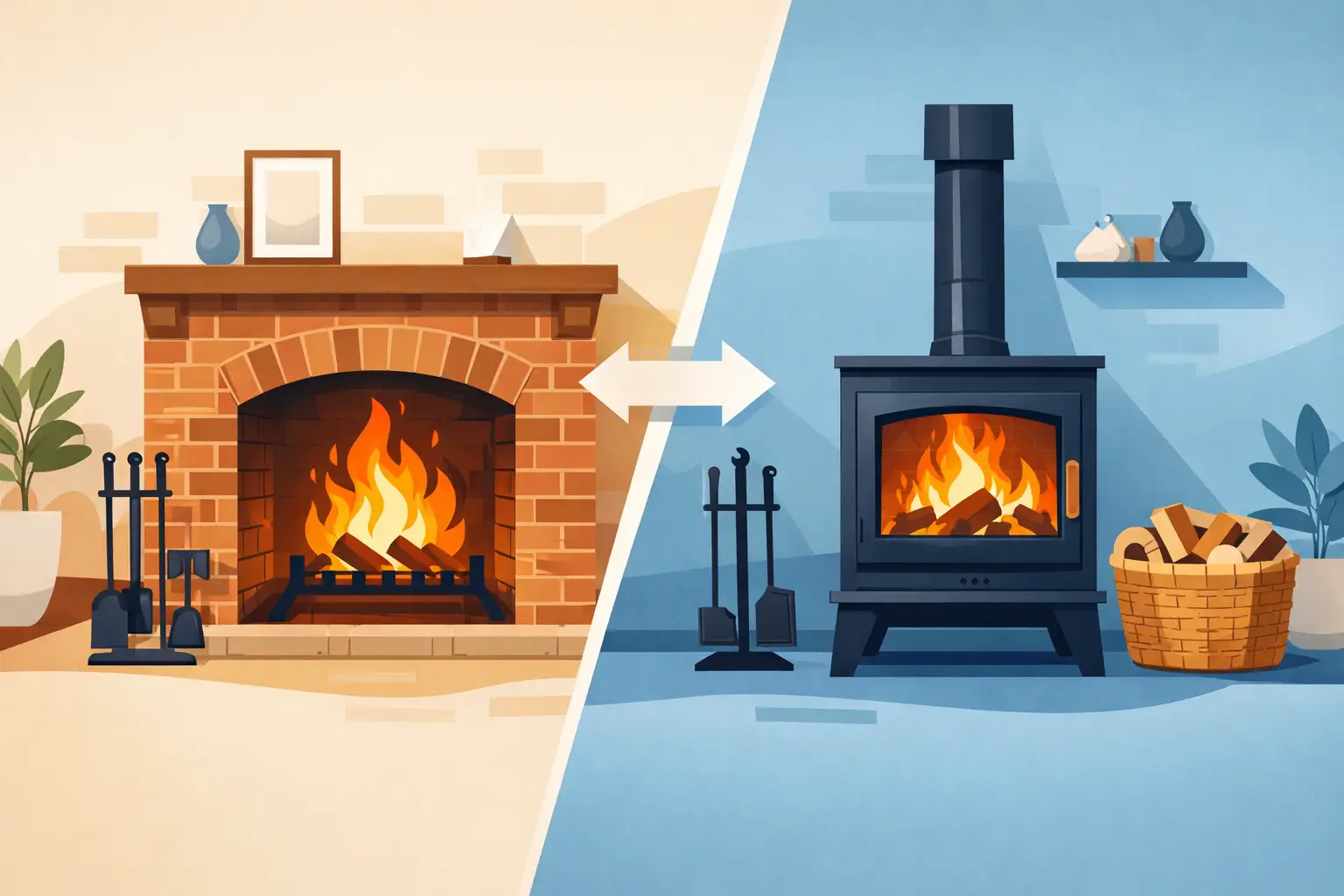
A traditional open fire can look wonderful on a winter evening, but many homeowners find that much of its heat disappears up the chimney. An open fireplace to stove conversion can retain the character of a real flame while making the room feel noticeably warmer, more practical and easier to live with.
For homes across the Wirral, Chester and Cheshire, it is often one of the most rewarding fireplace upgrades. That said, the right result depends on more than choosing a stove you like the look of. Your chimney, room size, fuel preference and the condition of the existing fireplace all need to be considered before installation begins.
Why convert an open fireplace to a stove?
An open fire draws a large volume of air from the room to keep the fire burning. While it produces plenty of atmosphere, it can also send a significant amount of heat up the chimney. A modern wood-burning or multi-fuel stove is a more enclosed appliance, designed to control combustion and direct more useful warmth into the room.
The difference is often felt quickly. Rather than sitting close to the hearth to feel the benefit, a correctly specified stove can provide a more even, comfortable heat across the living space. It also gives you greater control over the fire, with adjustable air controls to manage the burn rate and maintain the flame.
There is a style benefit too. A stove can make an older chimney breast feel purposeful again, whether you prefer a traditional cast-iron appearance or a cleaner, contemporary finish. The existing fireplace opening can often be retained, creating a feature that suits both period properties and modern renovations.
What is involved in an open fireplace to stove conversion?
Every property is different, but the process normally starts with a proper survey of the fireplace opening and chimney. This establishes whether the chimney is suitable, what work may be needed and which stove size will work best for the room.
The old grate, fireback and any loose or unsuitable materials are removed as required. The installer will inspect the chimney structure, opening and hearth, then prepare the space for the new appliance. In some homes, this may include opening up a boarded or reduced fireplace to reveal a more generous recess. In others, a smaller stove within the existing opening is the more sensible choice.
Chimney lining and flue work
Most stove installations in an existing chimney require a suitable flue liner. This runs from the stove outlet to the top of the chimney and helps carry combustion gases safely outside. It also protects the chimney and gives the appliance the flue conditions it needs to perform properly.
The liner size and specification must suit the stove and fuel being used. This is not an area for guesswork. A poorly matched or poorly fitted flue can affect how the stove draws, how cleanly it burns and, most importantly, its safety.
A chimney cowl or terminal may also be fitted at the top of the stack. This helps protect the flue from rain and can improve performance where downdraughts are an issue. The exact solution depends on the property, the chimney location and local wind conditions.
Hearth, chamber and surround
The hearth must provide the correct non-combustible surface and extend the required distance in front of the stove. If the existing hearth is too small, damaged or made from unsuitable material, it may need replacing or extending.
Inside the fireplace opening, a new chamber can transform the final appearance. Brick slips, stone-effect finishes and heat-resistant boards are popular options, each creating a different look around the stove. A beam, mantel or carefully chosen surround can complete the feature, but clearances from the stove and flue must always be respected.
This is where a showroom visit can be particularly useful. Seeing stoves, hearths and finishes together makes it much easier to picture the proportions and colours in your own room.
Choosing the right stove for your room
The biggest stove is rarely the best stove. An appliance with too much heat output can make a room uncomfortably hot, leading people to turn the air controls down too far. That can result in a less efficient, dirtier burn and a blackened stove glass.
Room size is a starting point, but it is not the whole story. Ceiling height, insulation, window quality, open-plan layouts and the age of the property can all affect heat requirements. A compact, well-insulated lounge may only need a modest output, while a larger room in an older house may need more careful calculation.
Fuel choice matters as well. A wood-burning stove is designed for dry, properly seasoned or kiln-dried logs with a suitable moisture content. A multi-fuel stove may offer the flexibility to burn approved smokeless fuels as well as wood, provided it is used in line with the manufacturer’s instructions.
If you live in a smoke control area, the appliance and fuel must be suitable for that location. A DEFRA-exempt stove may be required if you intend to burn wood. Professional advice before purchase helps avoid choosing a stove that does not suit your home or how you plan to use it.
Safety, ventilation and building regulations
A stove installation is not simply a matter of placing an appliance into an opening. It needs to meet current building regulations, manufacturer requirements and relevant safety standards.
Ventilation is one important consideration. Some stoves and properties need a dedicated air vent to ensure the appliance has enough air for safe combustion. Modern, well-sealed homes can be particularly affected, as can rooms where extractor fans are used nearby.
Carbon monoxide alarms are also required in the room where a solid-fuel appliance is installed. They are a vital safety measure, but they do not replace professional fitting, regular chimney sweeping or correct stove operation.
For solid-fuel installations, using a competent installer gives you reassurance that the flue, hearth, clearances and ventilation have been assessed properly. You should also receive the appropriate certification once work is complete. Keeping this paperwork is useful for your own records and may be needed when selling your property.
When an open fire may not be suitable for conversion
In many homes, converting an open fire to a stove is straightforward. However, there are situations where additional work is needed or a different solution may be better.
A damaged chimney, significant damp, an unstable opening or an unsuitable flue route can all affect the project. In some cases, chimney repairs or rebuilding work may be needed before a stove can be fitted. In properties without a usable chimney, a stove can sometimes still be installed with a twin-wall flue system, although this changes the scope and appearance of the work.
It is also worth thinking honestly about how you want to use the fire. If you want instant heat with minimal preparation, a gas or electric fire may suit your lifestyle better. A stove brings a distinctive warmth and focal point, but it also requires the right fuel, regular ash removal and periodic maintenance.
Getting the best from your new stove
Once fitted, a stove should be operated with dry fuel and according to the manufacturer’s guidance. Burning wet wood creates more smoke and deposits in the flue, reduces heat output and can blacken the glass. Good fuel storage makes a real difference, so logs should be kept under cover with plenty of airflow.
Your chimney or flue should be swept regularly, generally at least once a year and more often if the stove is used heavily. The door seals, firebricks and baffle plate should also be checked as part of routine care. Small maintenance jobs dealt with early can help protect performance and prolong the life of the appliance.
At Wirral Fires, the focus is on helping homeowners choose a stove and installation package that genuinely suits their room, chimney and style. A no-pressure survey and showroom conversation can take the uncertainty out of the process, from heat output through to the finishing details.
A well-planned conversion should feel like it has always belonged in the room: a fire you can enjoy looking at, but one that also earns its place when the temperature drops.