

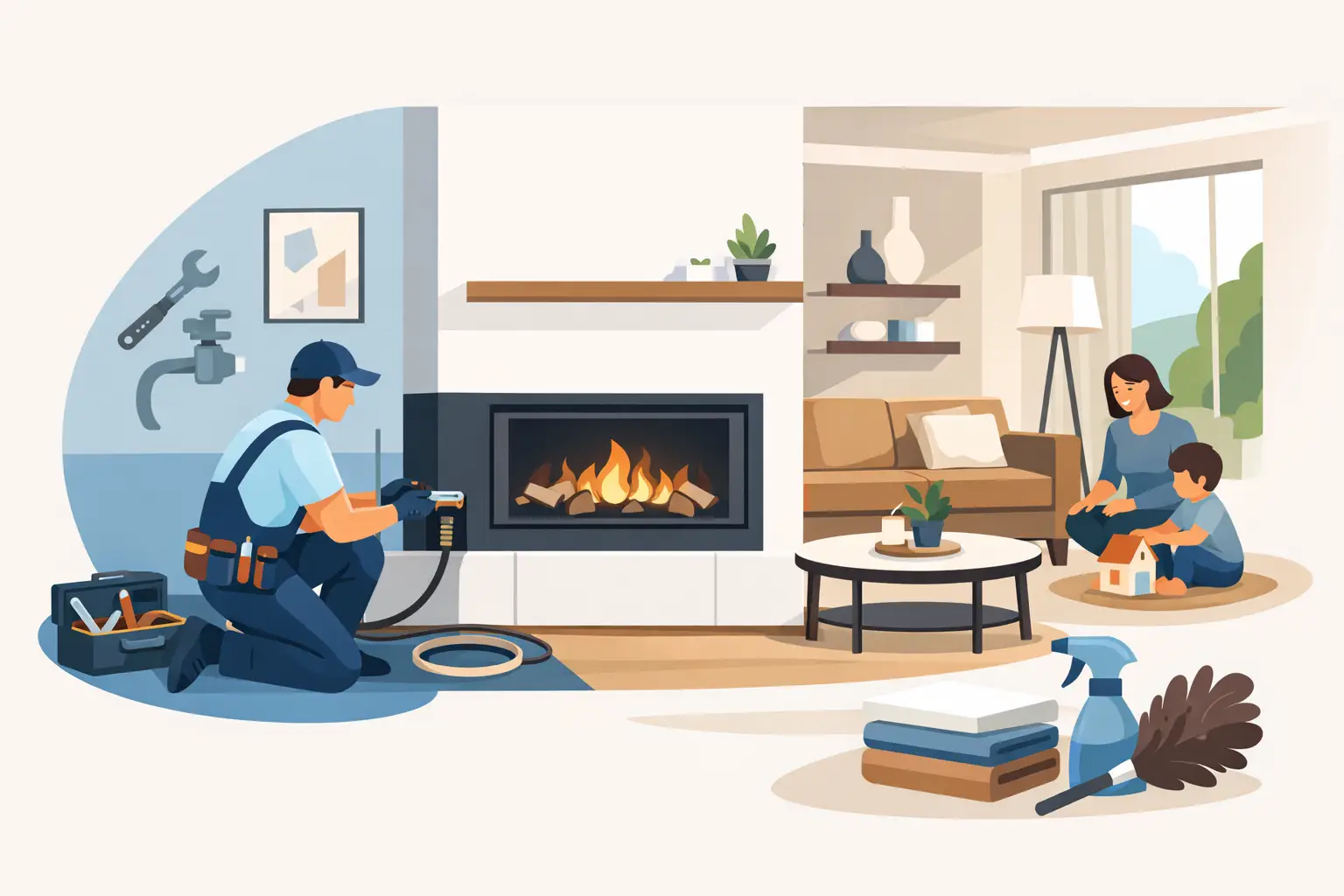
A new fire can completely change the feel of a living room, but gas fire installation is about far more than fitting an attractive appliance into an existing opening. The right fire must suit the room, the available flue or chimney, and the way your household wants to use it. Getting these details right from the start helps ensure a safe, efficient and smart-looking result that you can enjoy with confidence.
For homeowners across the Wirral, Chester and West Cheshire, a professional survey is often the simplest way to turn a long list of questions into a clear plan. Whether you are replacing an older gas fire, renovating a chimney breast or creating a new feature wall, expert advice can prevent costly changes later on.
Start with the room, not just the fire
It is easy to be drawn to a particular flame picture or surround style first. Appearance matters, especially when the fire will be the focal point of the room, but the practical details should lead the decision. Room size, insulation, ceiling height and how the space is used all affect the heat output that will feel comfortable.
A fire that is too low in output may struggle to take the chill off a larger lounge. One that is too powerful can make a well-insulated room uncomfortably warm, meaning it is rarely used at its best setting. A suitable appliance gives you useful control, attractive flames and warmth that works with your central heating rather than fighting against it.
The position of furniture also deserves thought. Sofas, curtains, rugs and television placement should all be considered before installation begins. A good layout makes the fire feel like a natural part of the room, while maintaining the clearances required by the appliance manufacturer.
Understanding your flue and chimney options
Not every gas fire works with every property. This is one of the most important parts of planning a gas fire installation, and it is where an in-person survey offers real reassurance.
If your home has a traditional chimney, it may be suitable for a conventional flue gas fire. However, the chimney must be checked for its condition, draw and suitability. In some cases, a flue liner or other preparatory work may be needed to create the correct route for combustion gases.
Homes without a usable chimney are not automatically ruled out. Balanced flue gas fires are designed to vent directly through an external wall, drawing air from outside rather than from the room. They can be an excellent choice for extensions, newer properties and rooms where a chimney breast is not present. Their position is governed by specific installation requirements, so the outside wall, nearby windows, doors and boundaries all need to be assessed.
There are also flueless gas fires, which have their own strict conditions around room size and permanent ventilation. They can suit certain situations, but they are not the right answer for every home. The key is choosing the option that meets the manufacturer’s requirements and feels right for how you live, rather than trying to make a preferred model fit an unsuitable space.
Why a proper survey makes the difference
A survey is not simply a quick measurement of the fireplace opening. It is the stage where the installer checks the factors that determine whether the chosen fire can be fitted safely and neatly.
This may include examining the chimney or external wall, confirming the gas supply route, assessing ventilation, measuring the hearth and opening, and looking at the condition of the surrounding structure. If you are considering a hole-in-the-wall fire or a fireplace suite, the survey also helps establish the right construction work, clearances and finishing details.
It is particularly valuable when replacing an old fire. An existing appliance may have been fitted to older standards, and its opening or flue arrangement may not be suitable for a modern replacement without alterations. Finding this out before ordering avoids disappointment and allows the installation to be planned properly.
At Wirral Fires, our no-pressure approach means homeowners can discuss styles, room layouts and practical concerns in the showroom before making a decision. With more than 50 years of combined industry experience, the team can help match the look you want with an installation route that makes sense for your property.
The installation should always be carried out professionally
Gas work is not a DIY job. A gas fire must be installed, tested and commissioned by a Gas Safe registered engineer who is qualified for the type of appliance and work involved. This protects your household and ensures the appliance is set up in line with the manufacturer’s instructions.
Professional installation includes far more than connecting a gas pipe. The engineer will ensure the fire has the correct flue arrangement or ventilation, check gas soundness, test the appliance’s operation and confirm that combustion products are being removed safely. They should also explain the controls, demonstrate safe use and provide the relevant paperwork once the work is complete.
Depending on the installation type, Building Regulations notification may also be required. A qualified installer can advise on this and handle the process where applicable. It is one less detail for a homeowner to worry about, and it provides an important record of compliant work.
What to expect on installation day
A well-planned installation is usually straightforward, although the amount of work depends on the fire and the property. A simple replacement may be completed with limited disruption. A new fireplace opening, flue lining, false chimney breast or bespoke surround will naturally take more preparation.
Before work begins, the installation team should protect the immediate area and explain what will happen. Some dust and noise can be unavoidable where building work is needed, but tidy working practices and careful preparation make a noticeable difference. Once the fire is fitted, the final finishing work should complement the room rather than look like an afterthought.
Do not be surprised if an installer advises against a particular model after seeing the property. Honest advice is a sign that safety and long-term performance are being put ahead of a quick sale. There is usually another fire, stove or installation option that will give a better result.
Choosing a style you will still enjoy in years to come
Gas fires offer considerable choice, from traditional inset designs that suit a classic fireplace to contemporary hole-in-the-wall models with wide flame views. The best choice depends on the character of the room as much as current trends.
A traditional fire with a mantel and hearth can bring warmth and structure to an older property. A more minimal fire can work beautifully in a renovated space, particularly where the aim is to create a clean feature wall. Think about the surrounding materials too. Stone, timber-effect finishes, porcelain, marble and painted surrounds each create a different feel.
It is worth seeing fires in person where possible. Flame effects, frame finishes and proportions can look very different in a showroom than they do in a small online image. Standing in front of an appliance also helps you judge whether its size and heat output feel suitable for your own room.
A few checks once your fire is installed
Your engineer will cover the appliance-specific guidance, but good everyday habits help keep your fire working as intended. Keep the required ventilation openings clear, avoid placing items too close to the appliance and use only the controls supplied or specified for your model. If the fire is not operating normally, stop using it and arrange for it to be checked.
An annual service is a sensible part of ownership. It gives a qualified engineer the opportunity to inspect the fire, clean relevant components, confirm safe operation and identify wear before it becomes a bigger issue. This is especially worthwhile before the colder months, when you are likely to rely on the fire more often.
The best gas fire installation is one that feels effortless once it is complete: a fire that suits the room, performs safely and gives you a place to gather on cooler evenings. Take the time to ask questions, view the options in person and arrange a professional survey, and the finished result will feel like it has always belonged in your home.