

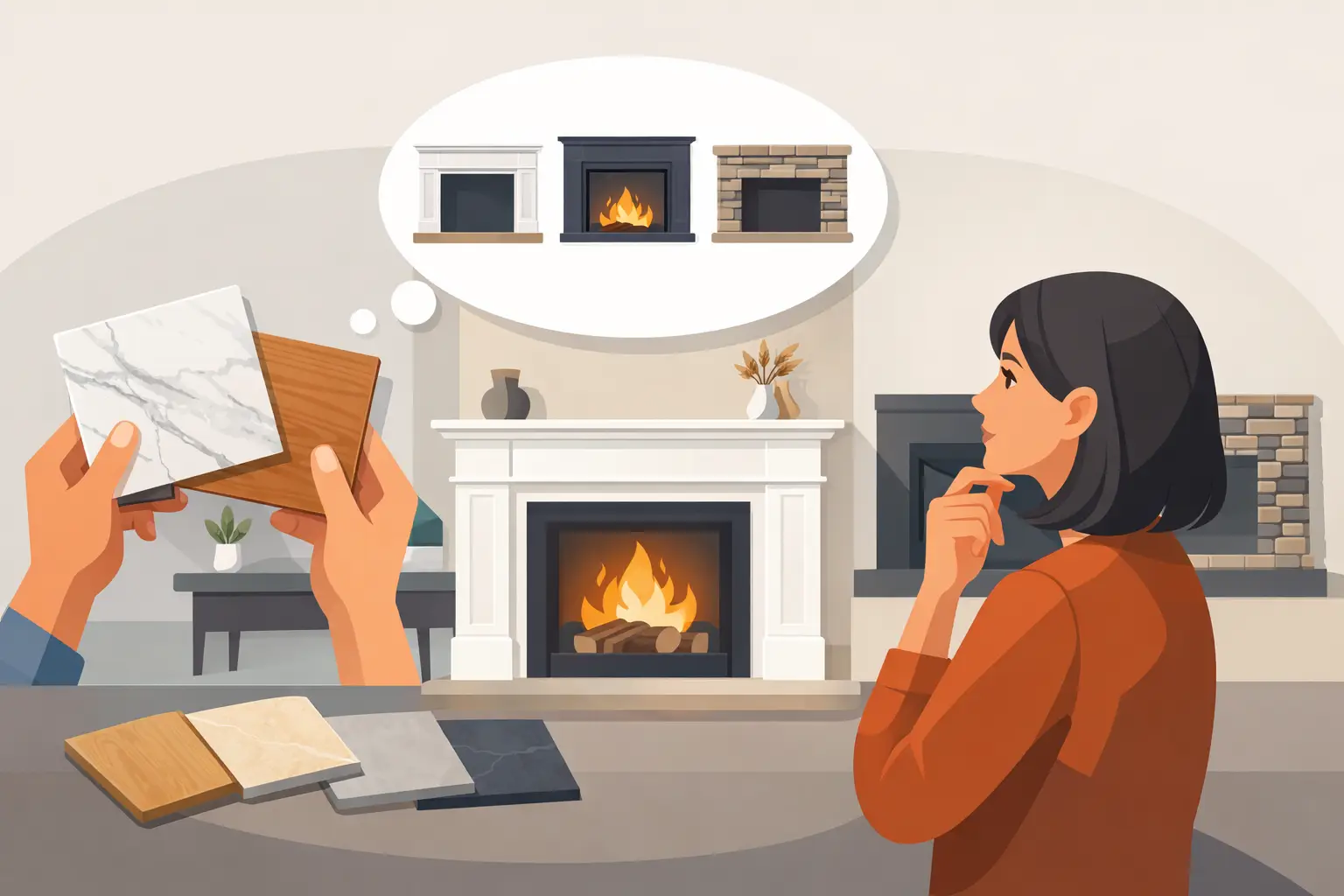
A fireplace surround can make a fire look beautifully at home – or slightly out of place. We often see rooms where the appliance is right, but the surround is either too heavy, too small or simply not in keeping with the space. If you are wondering how to choose a fireplace surround, the best place to start is not with colour or finish, but with the room itself and the type of fire you are fitting.
A surround does more than frame a fire. It affects the scale of the room, the overall style and, in some cases, what can be installed safely and practically. That is why it helps to treat the surround and the fire as one package rather than two separate decisions.
How to choose a fireplace surround for your room
The right surround should suit the proportions of the space just as much as your taste. In a smaller lounge, a large ornate surround can dominate the whole chimney breast and make the room feel tighter. In a larger room with high ceilings, a very slim or minimal surround can sometimes look lost.
Start by standing back and looking at the wall where the fireplace will sit. Think about ceiling height, chimney breast width, alcoves and the furniture nearby. If the fireplace is intended to be the main focal point, the surround can be bolder. If the room already has strong features such as built-in shelving, patterned wallpaper or a television above the fire, a simpler surround often works better.
It is also worth thinking about how traditional or modern the rest of the room feels. A period-style home can carry more detail, such as corbels, bevelled edges or a deeper mantel shelf. A newer property often suits cleaner lines and a less decorative finish. That said, there is always some flexibility. A contemporary surround in an older home can look excellent when done with confidence, and a classic stone surround can soften a modern room.
Match the surround to the fire type
One of the biggest parts of how to choose a fireplace surround is understanding what it needs to work with. Gas fires, electric fires, wood-burning stoves and multi-fuel appliances all come with different requirements.
With an inset gas or electric fire, you may have a wider choice of surrounds because many designs are made to house these appliances neatly. With a stove, the look is often different. Some customers prefer a beam and chamber arrangement rather than a full surround, while others want a complete mantel to add presence.
For solid fuel and stove installations, heat resistance and clearance distances matter. Not every surround material or shelf projection will be suitable, and this is where early advice can save time and cost later. What looks right on a brochure page may not be the correct option for the appliance you have chosen.
Hole-in-the-wall fires are another example. These usually suit a more minimal framing detail, and in some cases a full traditional surround would not fit the style at all. The key is to choose a surround that complements the fire rather than competing with it.
Size matters more than many people expect
It is easy to focus on style and overlook measurements, but size is often what makes a fireplace look balanced. A surround should feel properly scaled to the opening, the hearth and the wall. Too narrow, and it can look mean. Too wide, and it can overwhelm the fire.
Mantel shelf height matters too. If it is too high, the whole fireplace can feel disconnected. Too low, and it may not work well visually or practically, especially if there are manufacturer clearances to consider. This becomes even more important if you are planning a television, mirror or artwork above.
In a showroom, a surround can look smaller than it really is because of the open space around it. In a home setting, dimensions become far more noticeable. Taking careful measurements and viewing options in person can make a real difference.
Choosing the right material
Material affects appearance, maintenance and price, so it is worth thinking through properly rather than choosing on looks alone.
Micro marble is a popular option because it gives a smooth, smart finish and suits a wide range of interiors. It often works well for customers who want a clean, polished look without going too ornate. Natural stone has more variation and character, which many people like, especially in homes where a softer or more textured finish feels right.
Wooden surrounds bring warmth and can tie in well with furniture, flooring or beams. They can work beautifully in both classic and modern schemes, depending on the design. However, they are not always suitable close to higher heat outputs, so the appliance choice matters.
Limestone and other natural materials can create a timeless look, but they may mark or age differently over time. That is not necessarily a drawback – some people prefer a fireplace that develops character – but it is worth knowing in advance. If you want something low maintenance and consistent in colour, an engineered material may be the better fit.
Think about the finish in daylight, not just under showroom lights
Cream, white, grey and stone shades can all look slightly different depending on the room. Natural light, wall colour and flooring will affect how the surround reads once it is in place. A bright white surround may feel fresh in one room and stark in another. A warmer ivory tone can feel softer, but in some spaces it may appear more traditional than expected.
This is one reason many homeowners prefer to compare surrounds in person. Looking at samples and full displays makes it easier to judge undertones, texture and scale with more confidence.
Consider the whole fireplace, not just the outer frame
A surround rarely sits alone. It usually works alongside a hearth, back panel, chamber or beam, depending on the installation. These elements need to feel connected.
For example, a contemporary electric fire with a crisp surround often suits a simple back panel and a neat hearth. A stove might look better with a slate hearth and a chamber that adds depth and contrast. If one part is very modern and another is very traditional, the finished result can feel disjointed.
That does not mean everything has to match exactly. Contrast can work very well. A pale surround with a dark chamber can make the fire stand out beautifully. The important thing is that the choices feel deliberate.
Budget and value
When people ask how to choose a fireplace surround, budget is always part of the conversation. The cheapest option is not always the best value if it does not suit the fire properly or if you end up wanting to replace it a few years later.
It helps to decide early whether the surround is meant to be a subtle frame or a standout feature. If it is the main design statement in the room, it may be worth investing a little more in material and detailing. If the appliance itself is the hero, a simpler surround may give you a better balance of cost and appearance.
Installation should also be factored in. Some surrounds are straightforward to fit, while others need more preparation, adjustments or additional components. Looking at the full package can give a more realistic idea of overall value.
Practical questions worth asking before you buy
A few simple questions can narrow the choice quickly. Is the fire for regular heating or mainly for appearance? Is the room modern, traditional or somewhere in between? Do you want the fireplace to stand out or blend in? Are you working with an existing chimney breast or starting from scratch?
It is also sensible to ask what is actually suitable for your appliance and property. There is little point falling in love with a surround if the clearances, dimensions or installation requirements do not stack up. Honest advice at this stage can prevent disappointment.
Why showroom visits still help
Fireplaces are one of those purchases that are much easier to judge in person. Photos can be useful, but they do not always show texture, scale or quality accurately. Seeing working displays, comparing materials side by side and talking through the options with someone experienced often makes the decision far simpler.
For many homeowners, that reassurance matters. A fireplace is not a small accessory you can swap next month. It becomes part of the room for years, so it is worth getting right.
At Wirral Fires, we often find that customers arrive with one idea in mind and leave with something that suits their home far better once they have seen the options properly. That is not about selling the most expensive surround. It is about making sure the final result looks right, works safely and still feels like the right choice long after installation day.
If you are weighing up different styles, materials and fire types, trust your first impressions but back them up with practical advice. The best fireplace surround should feel right in the room, not just right in theory.