

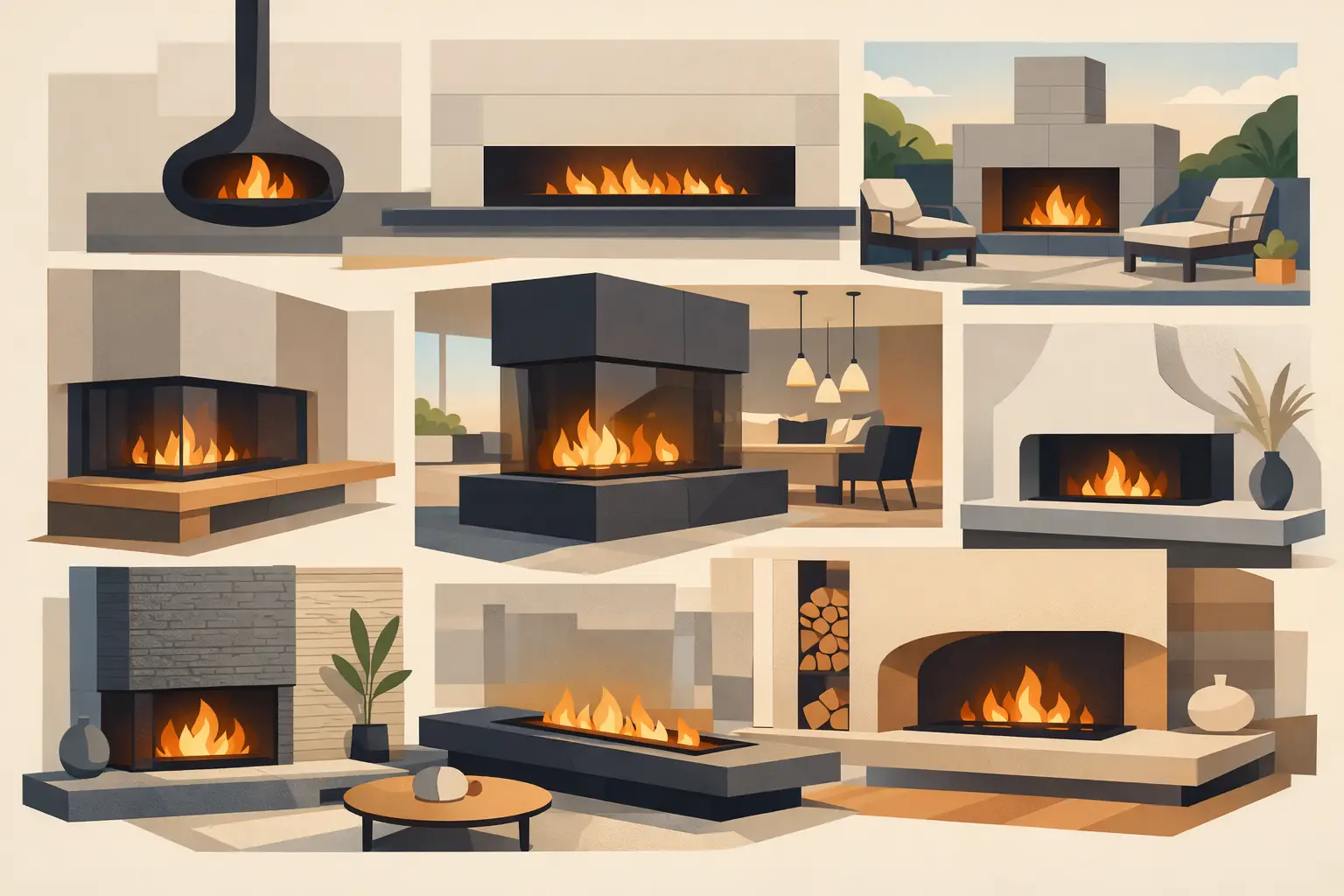
A fireplace can change the feel of a room faster than almost anything else. We often speak to homeowners who start by asking about heat output or fuel type, then realise the bigger question is how the fire will shape the whole space. That is why modern fireplace design trends matter so much – they are not just about appearance, but about how your room works, feels and comes together.
For most households, this is not a quick purchase. It is part heating choice, part design decision, and part installation project. The best results come from balancing style with practicality, especially when you are working around chimney breasts, flues, room size, furniture layout and the way you actually use the space.
Modern fireplace design trends are moving towards cleaner lines
One of the strongest shifts in recent years is a move away from heavy, ornate fireplace styling. Many homeowners still want a clear focal point, but they want it to feel calmer and more architectural. Clean lines, slimmer profiles and uncluttered finishes are now far more popular than decorative details for their own sake.
That does not mean every fireplace needs to look stark or ultra-contemporary. In practice, it often means choosing a simple surround, a neater opening, or a fire that sits more naturally within the wall. Even in period homes, people are mixing traditional room features with a more pared-back fireplace design so the room feels current without losing character.
This trend works particularly well in open-plan areas and modernised living rooms, where too much visual weight around the fire can make the space feel dated. A simpler design usually gives you more flexibility with furniture, paint colours and flooring as tastes change over time.
Media walls continue to be a major modern fireplace design trend
The media wall remains one of the most requested looks, and it is easy to see why. Bringing a television, fireplace and often storage or shelving into one designed feature wall creates a neat, purposeful layout. It gives the room a strong centre point and can make a plain wall work much harder.
Electric fires are especially popular for this type of installation because they offer flexibility in size and placement. Wider flame pictures, neat glass fronts and slimmer frames all suit the fitted look people want. In many homes, the appeal is as much about tidiness as style. Cables are hidden, proportions are considered, and the whole wall feels more finished.
That said, a media wall is not right for every room. If the wall is too small, or if seating positions mean the television ends up too high, the design can start to feel forced. The best versions are carefully planned around viewing height, heat clearances and the room’s natural proportions rather than copied from a photo and squeezed into place.
Wide landscape fires are replacing smaller focal openings
Another clear trend is the rise of wider, landscape-style fires. These create a broader flame effect and give a more contemporary look than a smaller square or portrait opening. They suit both media wall settings and more minimalist chimney breast designs, especially where homeowners want the fire to feel sleek and understated.
The attraction is not only visual. A wider flame picture often feels more luxurious and can help a room feel more balanced, particularly in larger spaces. It also works well under a television when the design is being planned as one complete feature.
As with any trend, scale matters. In a modest lounge, going too wide can overpower the room. A fire should complement the space, not dominate it. This is where seeing products in person can make a real difference, because measurements on paper do not always tell you how a fire will actually sit within a wall.
Natural textures are softening modern schemes
While cleaner styling is popular, many homeowners still want warmth and character. That is why stone-effect finishes, textured surrounds, oak beams and more tactile hearth materials are still very much part of current design. The overall look may be modern, but it is often softened with natural finishes so the room feels inviting rather than cold.
This approach works particularly well with stoves and cassette fires. A simple chamber paired with a timber beam, or a contemporary stove with a slate or stone hearth, can give you a balanced look that feels both current and comfortable. It suits homes that want modern styling without losing a sense of homeliness.
There is a practical side to this as well. Natural-look materials tend to age well and are less likely to feel like a passing fashion. If you are making a long-term investment in a fire and surround, that matters.
Black finishes remain a firm favourite
Black-framed fires, black glass, black stoves and darker trim details continue to lead the way. The reason is simple. Black gives definition. It frames the flame nicely, works with most colour schemes and adds contrast without needing extra ornament.
In lighter rooms, a black fire creates a crisp focal point. In darker, moodier interiors, it adds depth and feels cohesive. It also pairs easily with popular finishes such as grey, white, stone and oak. For many customers, it is the safest modern choice because it looks smart now and is unlikely to date quickly.
Even so, it is worth thinking about the full room scheme. If you already have dark media units, dark flooring and dark wall colours, too much black can make the area feel heavy. Sometimes a softer finish or a mixed-material design gives a better result.
Stove style is becoming more contemporary
Stoves are still hugely popular, but the style has shifted. Many homeowners now want the warmth and character of a stove with a cleaner, more modern shape. That means simpler door designs, larger glass windows and less decorative detailing.
This is especially noticeable in rooms that combine traditional and modern elements. A contemporary stove can sit beautifully in an older property that has been updated, offering the charm of a real flame without pulling the room too far into a rustic look. Multi-fuel and wood-burning options still appeal, but customers are often just as focused on the visual balance as the fuel itself.
Of course, stove choice depends on more than appearance. Chimney condition, flue requirements, ventilation, room size and how often you plan to use it all need to be considered. A stove that looks right but is not suited to the property is never the right answer.
Built-in and hole-in-the-wall designs keep rooms feeling open
Another trend that continues to grow is the preference for fires that sit neatly within the wall rather than projecting strongly into the room. Built-in gas and electric fires, along with hole-in-the-wall designs, help create a cleaner finish and can make the room feel more spacious.
This is a good option where floor space is limited or where homeowners want a contemporary focal point without a full surround. It can also suit newer homes, extensions and renovated spaces where a traditional fireplace shape would feel out of place.
The trade-off is that these installations need proper planning. Recess depth, wall construction, clearances and appliance suitability all matter. A tidy, modern look depends on getting the details right behind the scenes as well as at the front.
Flame effect matters more than ever
Years ago, people often accepted that electric fires looked practical rather than especially realistic. That has changed. One of the biggest reasons modern fires appeal to homeowners now is the quality of the flame picture. Better flame visuals, glowing fuel beds and more convincing lighting effects are making electric models a much stronger design choice in their own right.
For customers who want the look of a fire with flexible installation and straightforward use, this is a major plus. You can create a strong visual feature without relying on a chimney or aiming for a traditional setup. It is one reason electric fires feature so heavily in current design schemes.
Still, realism is subjective. What looks impressive online may feel different in person, and different brands achieve the effect in different ways. It is always worth comparing options properly before deciding.
The best trend is the one that suits your home
Trends can be useful for inspiration, but the right fireplace is the one that works for your room, your heating needs and your home as a whole. A media wall may be ideal in one property and wrong in another. A landscape fire might look superb in a large extension, while a well-chosen stove is the better fit for a character lounge.
That is why a no-pressure, practical approach matters. At Wirral Fires, we find the best outcomes usually come when homeowners bring their ideas, room sizes and style preferences into the conversation early, then shape the design around what is actually possible and sensible.
If you are planning a new fire or replacing an older one, it helps to think beyond what is fashionable this year. Choose a design that will still look right when the room evolves, still suit the way you live, and still feel like part of the home rather than a feature added for effect alone.