

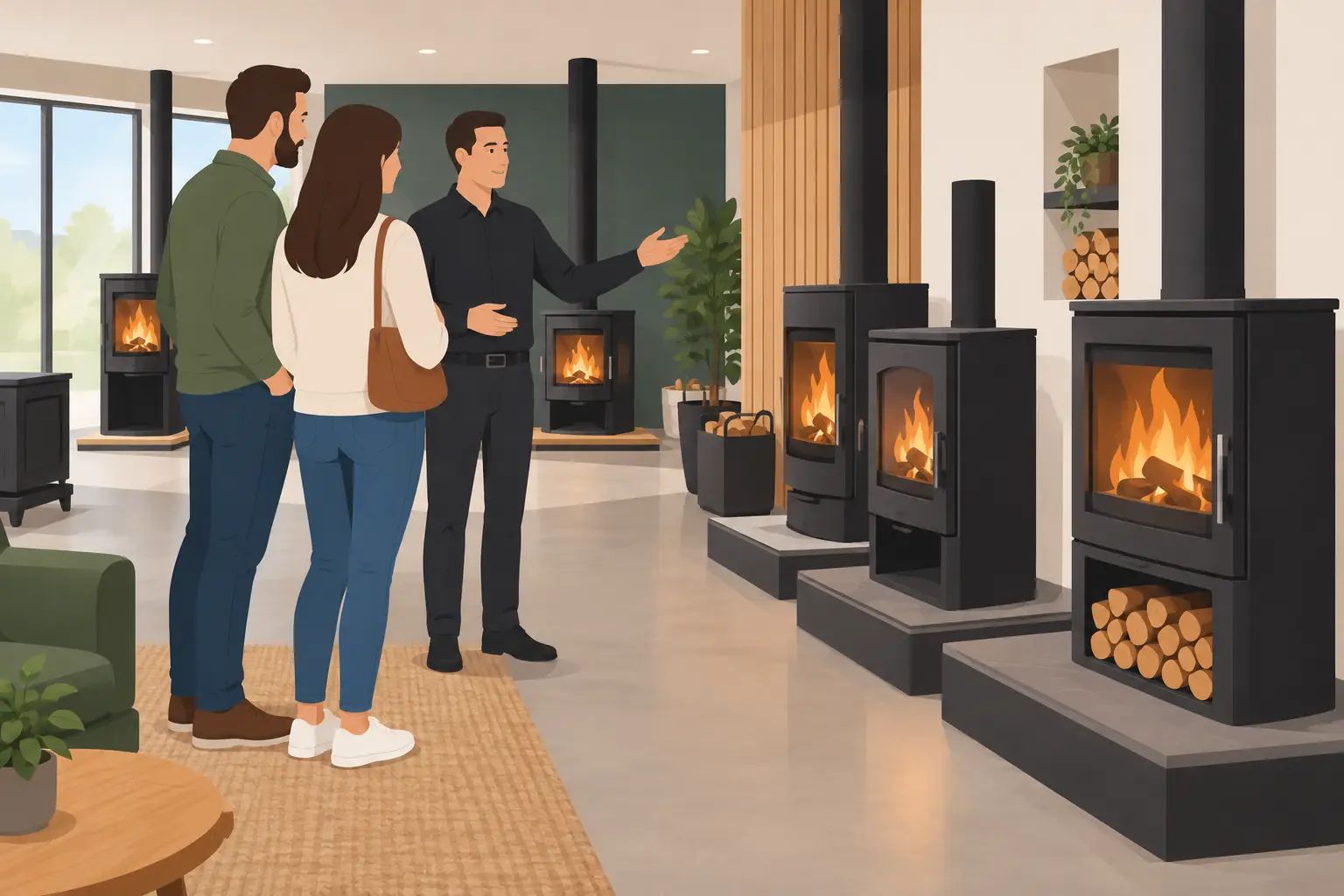
A new stove can change the feel of a room, but it also needs to work safely with the property you already have. Visiting a HETAS approved stove showroom gives you the chance to see different models in person, ask the right questions and get practical advice before making a decision that will be part of your home for years.
For homeowners across the Wirral, Chester and Cheshire, this is often the simplest way to move from an idea on a screen to a stove and installation plan that genuinely suits the room, chimney and household.
Why a HETAS approved stove showroom is worth visiting
A stove is not simply a piece of furniture with a flame inside it. The appearance matters, of course, but so do heat output, fuel type, flue arrangements, ventilation and the condition of the chimney. These details can be difficult to judge from photographs or product descriptions alone.
A HETAS approved stove showroom is designed to provide informed guidance on solid-fuel and biomass heating appliances. It gives customers a place to compare styles, sizes and finishes while speaking to people who understand the practical side of choosing a stove. That advice is especially valuable when you are replacing an existing fire, opening up a chimney breast or planning a full fireplace renovation.
HETAS credentials are a useful sign of professional knowledge and standards, but they should not be treated as a shortcut around assessing your individual home. Every installation has its own considerations. A stove that looks ideal in a large open-plan room may be too powerful for a smaller lounge, while a property without a suitable chimney may need a different flue solution. Good advice begins with listening to what you need, rather than steering you towards a particular model.
See the difference between stove styles
Online research is useful for gathering ideas, but it cannot show the true scale of a stove or how its finish will sit alongside your flooring, furniture and fireplace opening. In a showroom, you can stand back and compare a compact contemporary stove with a more traditional cast-iron design. You can also see whether a wide landscape firebox, a tall portrait model or a classic square stove feels right for the room.
This matters because proportions are easy to misjudge. A stove may appear modest in a photograph but look imposing in a narrow chimney breast. Equally, a very small appliance can get lost in a large inglenook. Seeing products in person makes those decisions much clearer.
It is also a chance to look closely at details that affect daily use. Door handles, air controls, ash pans and viewing windows vary from one stove to another. Some households want the simplest possible operation; others enjoy taking a more hands-on approach to managing a real fire. There is no single best option, only the stove that best suits how you intend to use it.
Start with the room, not the stove
The most successful installations are planned around the property. Before settling on a style, it helps to consider the room size, insulation, ceiling height and whether doors are usually open to adjoining spaces. These factors influence the heat output required.
Choosing too much heat is a common mistake. A powerful stove may seem appealing, particularly when replacing an older fire, but an oversized appliance can make a well-insulated room uncomfortably warm. When a stove is regularly turned down too far to reduce the heat, it may not burn as cleanly or efficiently as intended. A suitably sized model is normally more enjoyable to live with and easier to operate correctly.
The position of the stove matters too. A chimney breast, a false wall for a built-in feature, or an existing fireplace all create different possibilities. Bring room photographs and a few basic measurements when visiting a showroom if you can. They give the team a helpful starting point and make the conversation more productive.
Questions about chimneys and flues
A chimney is an important part of the installation, not an afterthought. Older chimneys may require inspection, sweeping, lining or remedial work before a stove can be fitted. The existing opening may need altering, and the hearth and surrounding materials must be suitable for the heat produced.
Where there is no usable chimney, a stove may still be possible with an appropriately designed flue system. This depends on the layout of the house, the route available for the flue and the relevant installation requirements. A showroom visit cannot replace a proper survey, but it can help you understand the likely options before work begins.
Be open about the age and type of your property, any previous fireplace work and whether you have noticed issues such as smoke, damp or poor chimney draw. These are not reasons to abandon the idea of a stove, but they may affect the work required to achieve a safe result.
Choosing between wood-burning and multi-fuel stoves
Fuel choice should be based on how you want to use the appliance. A wood-burning stove is designed specifically for logs and can offer the familiar appearance and atmosphere many homeowners are looking for. A multi-fuel stove has a grate arrangement that can also accommodate approved smokeless fuels, giving more flexibility where that is important.
The best choice depends on your fuel supply, storage space and routine. Logs need to be properly seasoned or suitably dry, stored in a sheltered and ventilated area, and brought indoors before use. Smokeless fuel has different handling and storage needs. A knowledgeable showroom adviser can explain the practical differences without making the decision feel overly technical.
If you live in a smoke control area, ask about appliance suitability and the fuel you plan to burn. This is a detail worth checking early, particularly if you are comparing several models. Responsible stove ownership also means following the manufacturer’s instructions and using the correct fuel, as both have a direct effect on performance and cleanliness.
Installation is part of the decision
A beautiful stove is only as good as the installation behind it. The flue, hearth, ventilation, clearances and finish around the appliance all need careful consideration. This is why it is helpful to choose a retailer that can advise on the full project rather than supplying a stove in isolation.
At Wirral Fires, customers can browse a wide choice of stoves and fireplace options, then discuss the installation requirements with an experienced local team. This joined-up approach helps avoid the uncertainty of buying an appliance first and discovering later that extra work, different components or a change of plan is needed.
Professional fitting also protects the finished look of the room. The best installations are not only safe and compliant, but neatly planned around the fireplace opening, hearth, surround and flue. Attention to these details creates a result that feels like it belongs in the home rather than an appliance that has simply been placed there.
What to bring to your showroom appointment
You do not need a full set of building plans to have a useful conversation. A few photographs of the room and chimney breast, rough room measurements, and an idea of the style you prefer are usually enough to begin. It can also help to mention whether you are renovating, replacing an old fire or starting with a blank wall.
Think about the questions that matter to your household. You may want to know how the stove will look with a particular surround, how easy it is to clean, whether it can provide useful additional heat, or what preparation the chimney might need. No-pressure advice is particularly valuable with a purchase like this, because the right decision is rarely made by rushing.
A showroom visit should leave you feeling clearer, not overwhelmed. Take the time to compare the options, ask about the installation process and consider how the stove will work in everyday life. With the right guidance, a well-chosen stove can bring dependable warmth, a welcoming focal point and real enjoyment to your home for many years.