

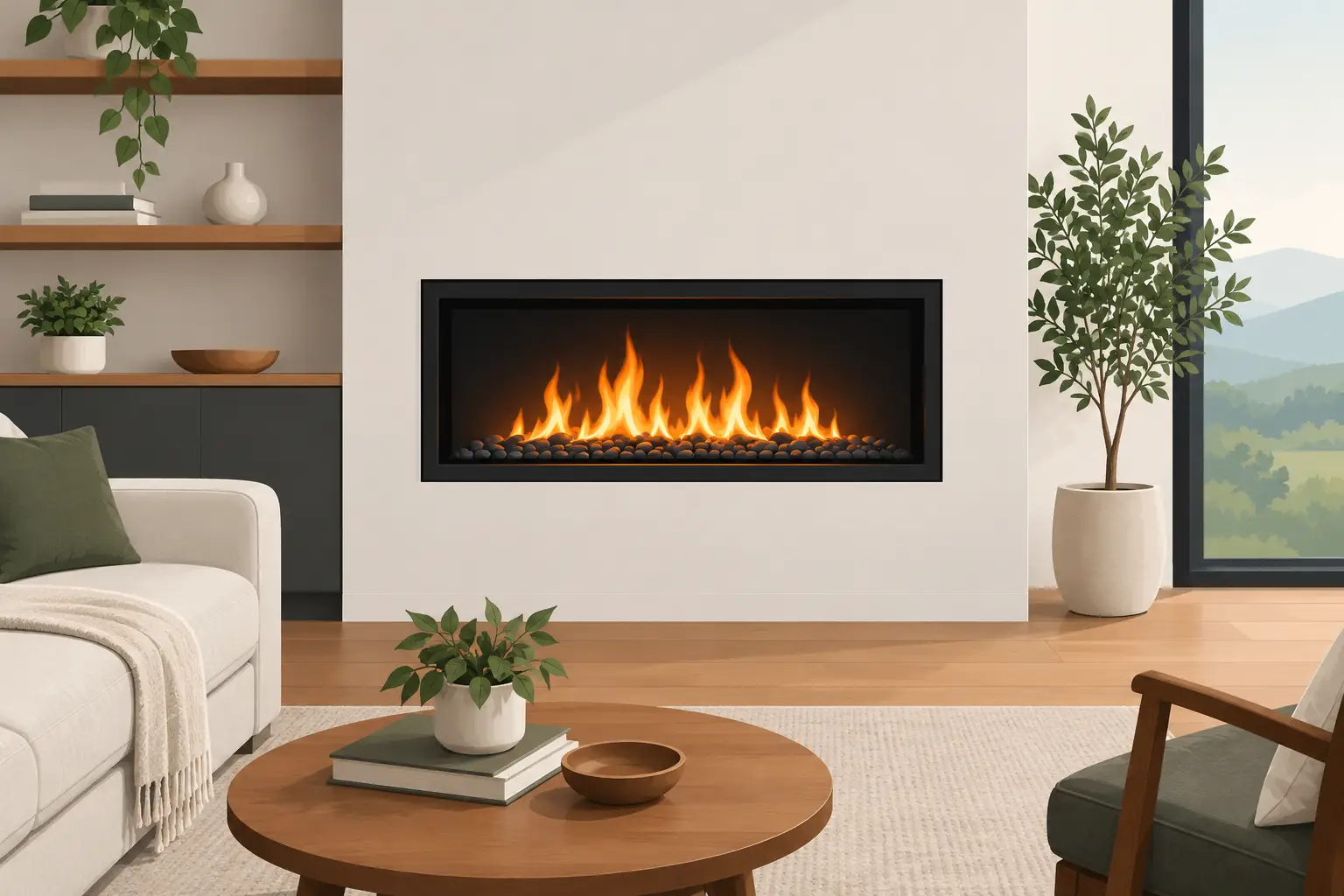
A hole-in-the-wall fire can transform a plain living room wall into the natural focal point of the space. This guide to hole in wall fires will help you understand the choices involved before you fall in love with a particular design, from fuel type and heat output to the wall itself and the level of installation work required.
The appeal is easy to see. With no traditional surround taking up floor space, these fires offer a clean, contemporary look that suits everything from modern extensions to carefully updated period homes. Yet the best result is not simply the largest flame picture or the most dramatic recess. It is a fire that looks right in the room, provides suitable warmth and is installed safely for years of dependable use.
What is a hole-in-the-wall fire?
A hole-in-the-wall fire is built into a prepared opening or recess within a wall, rather than sitting in front of it like a freestanding stove or a conventional fire with a surround. The opening can be finished in plaster, tile, stone, porcelain or another non-combustible material, depending on the appliance and the look you want to achieve.
Some models sit neatly within a chimney breast, while others can be installed on a flat, purpose-built false wall. This flexibility makes them a popular choice where there is no usable chimney, although it does not mean every wall is suitable without preparation.
The visual effect varies considerably. A landscape fire creates a long horizontal flame display that works well beneath a television or along a feature wall. A more compact square or portrait model can bring definition to a smaller chimney breast. There are also three-sided and see-through designs for open-plan spaces, though these usually need more detailed planning.
Choosing between gas and electric fires
For most homes, the first practical decision is whether a gas or electric fire is the better fit.
A gas hole-in-the-wall fire provides real flame and useful heat, making it a strong option for a main living area that needs more than occasional background warmth. Depending on the model and property, it may use an existing chimney, a balanced flue through an external wall, or another approved flue arrangement. The exact possibilities need to be assessed before a fire is selected, not after.
Electric fires are often the simplest route where a flue is not available or where the fire is primarily a visual feature. Modern electric flame effects can look impressively realistic, with adjustable brightness, flame colours and optional heat settings. They also allow greater freedom over positioning, provided the wall construction, power supply and clearances meet the manufacturer’s requirements.
Neither choice is automatically better. Gas tends to suit homeowners looking for a convincing live flame and effective room heating. Electric may be more suitable for an upper-floor room, a media wall, a newer property or a home where installation needs to be less intrusive. Your lifestyle matters too: an electric fire is quick to switch on for an evening, while gas offers a more traditional flame experience.
Guide to hole in wall fires: start with the room
A fire should be chosen for the room, not just the wall where it will sit. Begin by considering the room size, insulation, glazing, ceiling height and how the space is used. A large open-plan kitchen and living area has different heating needs from a well-insulated snug with a door that can be closed.
Heat output is particularly important with gas fires. Too little output and the fire may not make a noticeable difference on cold days. Too much, and the room can become uncomfortably warm before you have had time to enjoy it. Flame appearance is only one part of the specification, so ask for guidance based on your actual room rather than choosing solely from an image.
Think about viewing height as well. A fire positioned too low may feel disconnected from a wall-mounted television, while one placed too high can make the flame difficult to enjoy from the sofa. The centre of the flame picture should usually be comfortable to view when seated. A showroom visit can be particularly helpful here, as you can see different sizes and formats at realistic distances.
Is your wall suitable?
One of the biggest misconceptions is that a hole-in-the-wall fire can simply be cut into any internal wall. In reality, the construction of the wall determines what is possible.
A chimney breast may offer a natural location, but it still needs checking for its condition, opening size, flue suitability and any previous alterations. An existing fireplace opening sometimes needs widening, reducing or rebuilding to suit the selected appliance. This work must be planned around the fire manufacturer’s stated clearances and installation instructions.
A stud partition or false chimney breast can be an excellent solution, especially for electric fires. It can conceal cables, create a media wall or give a room the proportions of a traditional chimney breast where none exists. However, it must be built with appropriate materials and ventilation where required. A television, soundbar, shelves and decorative finishes all need to be considered as part of the same design, not added as an afterthought.
External walls introduce another set of questions. A balanced-flue gas fire may be possible, but the route of the flue, its terminal position and nearby doors, windows, boundaries and external features need professional assessment. This is why an in-home survey is so valuable before finalising a choice.
Designing the finished feature wall
The fire is only one element of the finished wall. The surrounding material has a major effect on whether the result feels calm and timeless or overly busy.
For a contemporary look, many homeowners choose a simple plastered finish with a slim trim around the fire. Large-format porcelain can add texture without too many visible joints, while natural stone or a timber-effect finish can soften a modern scheme. Any combustible materials, including timber features, must be positioned in line with the fire’s stated clearances. Never assume that a material is safe simply because it is decorative or commonly used elsewhere in the room.
If you are fitting a television above the fire, plan it early. Heat rising from a gas appliance, the manufacturer’s minimum distances and access to cables all need careful consideration. An electric fire may offer more flexibility, but the appliance instructions still take priority. Recessing the television or adding a mantel shelf can sometimes help manage proportions and separation, although the right approach depends on the individual fire.
Avoid making the opening larger than necessary just to create drama. A precisely sized recess with clean lines usually looks more considered and is easier to finish neatly. The aim is for the fire to feel like part of the room rather than an appliance squeezed into a decorative wall.
Safety, flues and professional installation
A hole-in-the-wall fire is a building and heating project in one. For gas appliances, installation must be carried out by a Gas Safe registered engineer. The flue system, ventilation, gas supply, wall construction and clearances all need to meet the appliance requirements and relevant regulations.
For electric fires, safety still goes beyond plugging in a unit. The electrical supply should be suitable, accessible where necessary and installed appropriately. The recess needs the correct dimensions and airflow, and any surrounding structure must be designed around the manufacturer’s guidance.
It is also worth thinking about access for servicing from the start. A very minimal finish should not leave essential components impossible to reach. Gas fires need regular servicing to maintain safe, efficient operation, while electric fires benefit from periodic checks and cleaning. Good installation is not only about the day the fire is fitted – it should support straightforward care afterwards.
At Wirral Fires, the process begins with practical advice about suitability, then brings together the appliance, the room design and certified installation. That no-pressure approach helps avoid costly changes midway through the project.
Common planning mistakes to avoid
The most frequent issue is choosing the fire before confirming the installation route. A model may look perfect online, but its flue requirements, recess depth or heat output may not suit the property. Checking these details first keeps the project realistic.
Another common mistake is treating a media wall as purely decorative. Cables, sockets, ventilation, access panels, TV placement and safe distances need to be allowed for behind the finished surface. Planning them before boarding and plastering produces a cleaner result and avoids disruptive alterations later.
Finally, do not overlook the furniture layout. A fire needs to be enjoyed from the seating area, but sofas and chairs should not be placed too close. Consider where the family naturally sits, how people move through the room and whether the feature wall will still work when seasonal decorations or everyday storage are in place.
Seeing your options before you decide
Photographs are useful for collecting ideas, but they rarely show true scale, flame depth or finish quality. Seeing fires in person makes it easier to compare flame effects, controls, frame styles and the difference between a subtle inset design and a wide statement fire.
Take a few room measurements, photographs of the proposed wall and details of any existing chimney or gas supply when you seek advice. This gives an experienced retailer or installer a much clearer starting point and helps narrow the options without pressure.
A well-planned hole-in-the-wall fire should bring warmth, character and a sense of occasion to everyday evenings at home. Give the same attention to the wall, the heat requirement and the installation as you do to the flame picture, and you will create a feature that feels right from the first switch-on.