

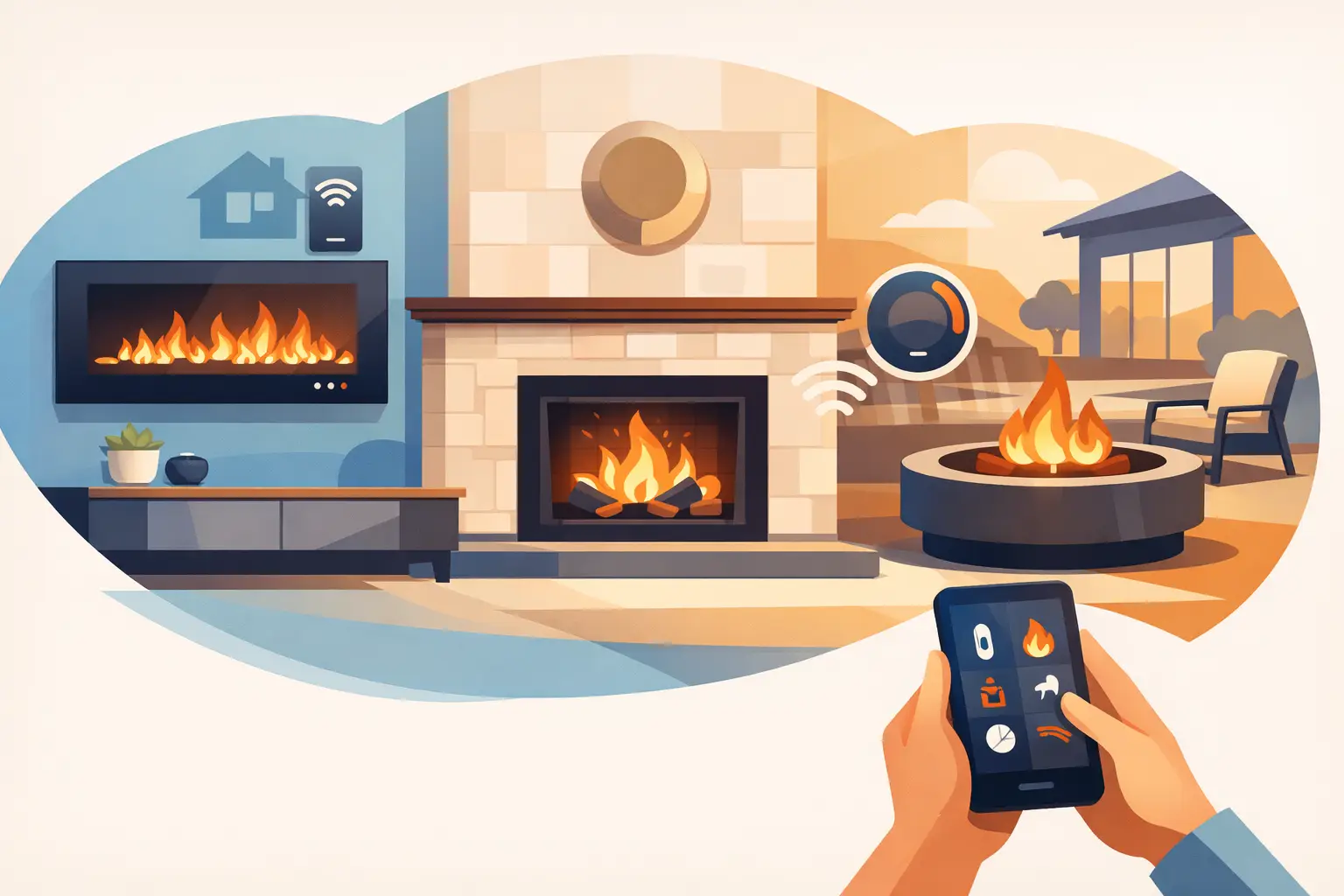
A fireplace should feel simple when you are sitting in front of it. The clever work happens behind the glass, beneath the burner or within the stove itself. Modern fireplace technology has made it easier to create the right atmosphere, control heat more accurately and choose a fire that suits the way your household lives.
For homeowners across the Wirral, Chester and West Cheshire, the most useful question is not simply which fire looks best. It is whether the appliance, its heat output and its installation requirements are right for the room. The answer depends on the fuel type, the property, the available chimney or flue, and how you want to use the space.
Fireplace technology is about more than remote controls
Smart controls are often the first thing people notice. Many electric and gas fires can be operated by remote control, wall control or an app, allowing you to adjust flame effect, heat level and timers without leaving the sofa. That convenience is welcome, particularly in a busy family home, but it is only one part of the picture.
The more meaningful advances are found in how efficiently a fire produces heat, how realistically it creates a flame picture and how safely it operates. Electric fires can offer independent flame and heat settings, so you can enjoy the appearance of a fire on a mild evening without warming the room. Gas fires can provide responsive, controllable heat, while modern wood-burning and multi-fuel stoves are designed to burn fuel far more cleanly than older appliances.
The right technology should make the fire easier to enjoy, not give you another complicated device to manage. A straightforward handset with clear settings may suit one household perfectly. Another may prefer programmable controls that bring warmth into the room before breakfast or when they return from work.
Choosing the right heat source
Each type of fire uses technology differently, so it helps to start with the experience you want from the room.
Electric fires: flexible flame effects and simple fitting
Electric fires have moved well beyond the flat, repetitive flame effects many people remember. Modern models use layered lighting, reflective panels, glowing fuel beds and adjustable flame colours to create depth and movement. Some designs allow you to change the flame speed, brightness and fuel-bed colour to match the mood of the room.
They are particularly practical where there is no chimney, where fitting flexibility matters, or where the fire is mainly intended as a visual focal point with occasional heat. A media-wall style electric fire can make a strong feature in a contemporary lounge, while an electric suite can bring character to a room without major building work.
Heat output still matters. An electric fire may be ideal for taking the edge off a living room or adding comfort in the evening, but it may not be the best choice if you need it to be the principal heat source for a large, poorly insulated space. This is where viewing a fire in person can be valuable: flame effects and proportions often look very different in a showroom than they do in a photograph.
Gas fires: controlled warmth with a real flame
Gas fireplace technology combines the appeal of a real flame with quick heat and convenient control. Depending on the model, you may be able to vary the flame height and heat setting, making it easier to avoid overheating a smaller room. Many contemporary gas fires are designed with wide viewing windows, realistic logs or pebbles, and clean lines that work well in both traditional and modern homes.
However, the appliance must be suitable for the available gas supply and installation setting. Some gas fires need a chimney or flue, while balanced-flue models can offer an option for properties without a conventional chimney. Correct ventilation, flue arrangements and professional fitting are essential. A Gas Safe registered engineer should assess what is appropriate rather than trying to make a preferred model fit a space where it is unsuitable.
Wood-burning and multi-fuel stoves: efficient combustion matters
For many homeowners, the appeal of a stove is tangible: the warmth, the flame and the presence it brings to a room. Today’s stoves use carefully designed airflow to help fuel burn more completely. Secondary air systems introduce pre-heated air above the fire, supporting cleaner combustion and helping keep the glass clearer. Airwash systems direct air across the inside of the glass, although no stove glass will stay spotless forever.
A modern stove can be a very efficient way to heat a room when it is correctly sized and used with suitable fuel. Yet bigger is not automatically better. An oversized stove can make a room uncomfortably hot and encourage the owner to turn it down too far, which can lead to less efficient burning. The best result usually comes from matching the stove’s output to the room and the property’s heat loss.
Wood-burning and multi-fuel appliances also need the right chimney or flue system, hearth and clearances around the stove. These are not finishing details. They are central to safe performance and should be planned before choosing the final style.
The details that affect day-to-day comfort
It is easy to focus on the fire itself and overlook the room around it. Good fireplace technology works best when it is paired with sensible planning.
Start with the size of the room, its insulation, window area and whether it opens into other spaces. A fire that feels perfect in a compact, well-insulated lounge may struggle in a large open-plan room. Conversely, a high-output appliance can dominate a small room, even if it looks proportionate within the fireplace opening.
Think about how you use the space too. If the room is used mainly in the evenings, fast-response heat and a remote control may be especially useful. If you want a stove to provide dependable warmth over longer periods, fuel storage, flue position and routine maintenance deserve more attention. If the fire will be a centrepiece in a newly renovated room, the surround, hearth and chimney breast design need to work with the appliance’s required clearances and ventilation.
Noise is another consideration. Most modern fires are quiet, but some electric fires use a fan for the heater. It is worth seeing and hearing a model before making a decision if a silent room is important to you.
Safety and installation should never be an afterthought
The most impressive flame picture is not worth compromising on safe installation. Gas fires, stoves and electric fires each have different requirements, from electrical supply and wall construction to flue integrity, ventilation and hearth dimensions.
A proper survey can identify issues that are difficult to spot during online browsing. An existing chimney may need checking or lining. A wall intended for a hole-in-the-wall fire may need suitable non-combustible construction. A stove installation may require a new flue route where no usable chimney exists. Addressing these points early helps avoid disappointment and ensures the finished fireplace looks considered rather than added as an afterthought.
For gas appliances, professional installation and commissioning by a Gas Safe registered engineer are essential. For solid-fuel installations, use experienced, appropriately approved installers and make sure the system is designed as a whole: appliance, flue, hearth, air supply and clearances. Once fitted, follow the manufacturer’s guidance for servicing, sweeping and everyday use.
Why seeing a fire in person still matters
Technology can be compared online, but a showroom visit adds context that specifications alone cannot provide. You can judge the true depth of an electric flame effect, compare the warmth and appearance of different fuel beds, and see how a wide landscape fire differs from a more traditional inset model.
It is also a chance to discuss practicalities without pressure. At Wirral Fires, the conversation can cover the style you like alongside the questions that protect your investment: whether the fire suits the room, what preparation may be required and which installation route is safest for your home.
A well-chosen fireplace is not simply a piece of heating equipment. It is part of how a room feels on an ordinary winter evening, when the lights are low and everyone has gathered in one place. Choose the technology that supports that moment, then make sure the installation gives it the safe, reliable foundation it deserves.