

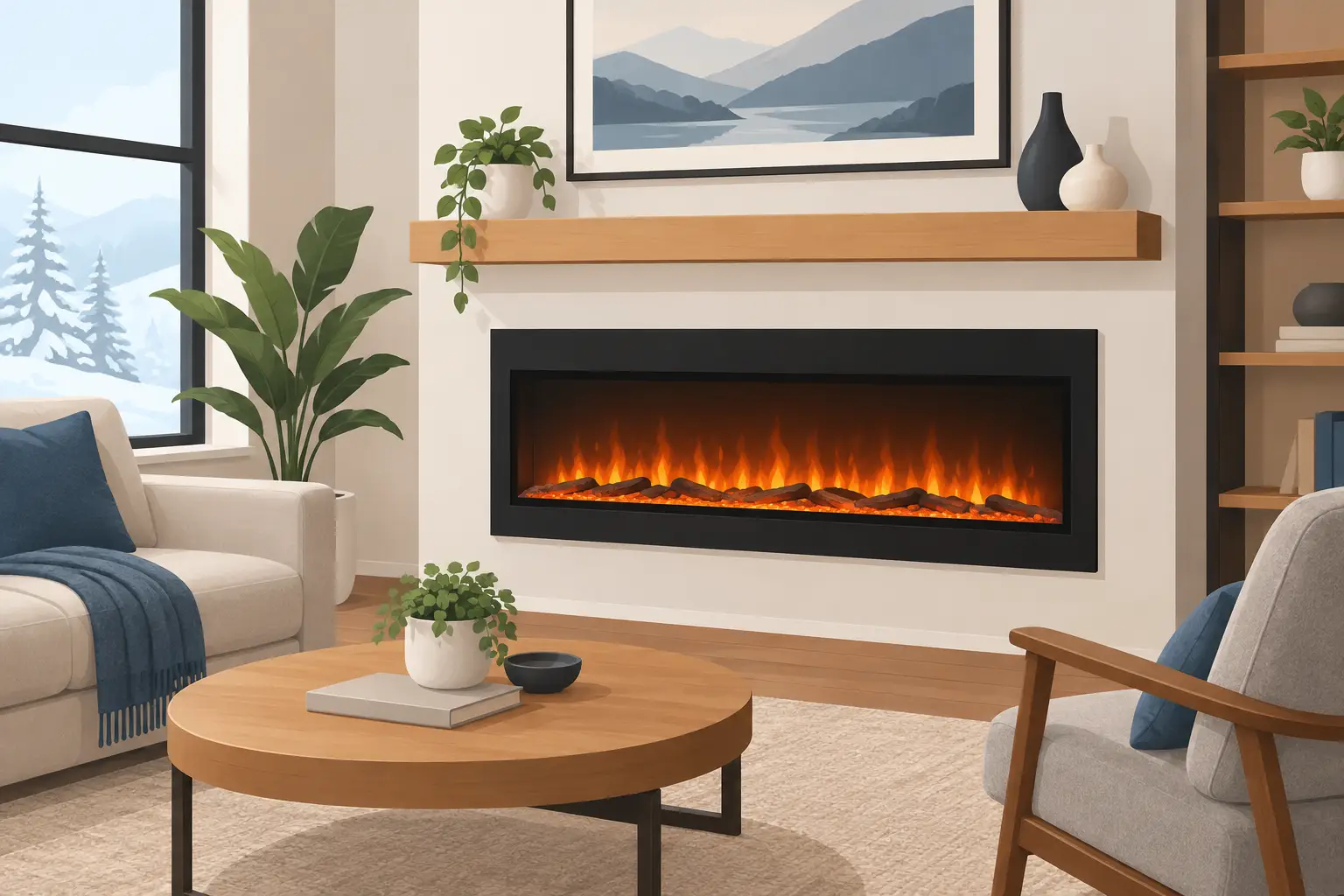
A fireplace can change the feel of a room long before the heating comes on. Electric fireplaces are a particularly appealing option for homeowners who want a convincing flame effect, flexible positioning and straightforward day-to-day use, without relying on a chimney, gas supply or solid fuel.
For many homes across the Wirral, Chester and West Cheshire, they offer a practical way to update a dated fireplace opening, create a new focal point in a lounge, or add warmth and character to a newer property that has no chimney breast at all. The key is choosing a fire that suits the room, the look you want to achieve and the way you intend to use it.
Why electric fireplaces appeal to modern homes
An electric fire is powered from the mains and uses LED technology to create a realistic flame display. Most models allow you to enjoy the flame effect independently of the heater, so you can have the ambience of a fire on a mild evening without adding extra heat to the room.
This flexibility is one of their biggest advantages. There is no flue to line, no ash to remove and no annual chimney sweeping requirement. Electric fireplaces also give far more freedom over placement than gas or solid-fuel appliances. A media wall, a blank living-room wall, a converted dining room or an existing fireplace recess can all become potential locations, provided the installation and power supply are properly considered.
They are especially well suited to homes where the main central heating does the hard work and the fire is there for comfort, atmosphere and a useful boost of heat when you are relaxing in one room. If you need a fire to provide substantial, whole-home heating, another type of appliance may be more appropriate. There is no one-size-fits-all answer, which is why discussing how you use the room matters before settling on a model.
Choosing the right electric fireplace style
The best starting point is not the fire itself but the wall or space around it. Think about the overall room scheme, viewing angles, available width and whether you want the fireplace to look traditional, contemporary or somewhere in between.
Fireplace suites for a complete look
An electric fireplace suite combines an electric fire with a surround, back panel and hearth. It is a popular choice when you want a finished focal point without arranging separate elements. Suites are available in a wide range of finishes, from clean white designs that work well in modern homes to timber-effect and more traditional mantel styles.
They can be a sensible solution where there is no existing chimney breast. A suite gives the appearance of a built-in fireplace while remaining relatively uncomplicated to position. It also helps to frame the fire correctly, rather than leaving it looking undersized against a large wall.
Inset fires for existing openings
If you have a fireplace opening or a chimney breast that you would like to retain, an inset electric fire can provide a neat, familiar appearance. These models sit back into a recess, creating a more integrated look than a freestanding appliance.
Before choosing one, check the opening dimensions carefully and consider the condition of the existing hearth and surround. Older fireplaces are not always square or level, and a professional survey can prevent awkward gaps or unnecessary alterations on installation day.
Wall-mounted and hole-in-the-wall designs
A wall-mounted electric fire makes a strong feature in a contemporary room, particularly where floor space is limited. Some models sit on the wall, while others are recessed into it for a cleaner finish. Wider landscape fires can be fitted as a single-sided feature or built into a media wall with a television positioned above.
This style needs careful planning. The height of the fire, the position of the television, ventilation around any equipment and cable management all affect the finished result. It is easy to focus on the image that inspired the project, but proportions matter just as much. A very wide fire can look superb on a large wall and overpowering on a smaller one.
Freestanding electric stoves
Electric stoves bring the character of a traditional burner without the need for a flue or fuel store. They work particularly well in alcoves, conservatories, bedrooms and period-style rooms where a compact focal point is wanted. Many have flame effects visible from the front and sides, helping them feel more like a conventional stove.
Heat output: what it means in everyday use
Most electric fires provide a modest fan-assisted heat output, commonly with more than one heat setting. This is useful for taking the chill off a room, particularly in spring and autumn, or for making the lounge feel comfortable while the rest of the heating is set lower.
However, it is worth being realistic about their role. Room size, insulation, ceiling height, glazing and draughts will all influence how warm the space feels. An electric fire in a well-insulated snug may be very effective as a supplementary heat source. In a large, open-plan room with bi-fold doors, it is better viewed primarily as an attractive feature with occasional added warmth.
Look for a model with a thermostat and timer if control is important to you. A thermostat helps maintain a chosen comfort level, while a timer can be useful for evening routines. Remote controls and app-based controls are also available on some fires, but simple, reliable operation should take priority over features you are unlikely to use.
Flame effects and fuel beds make a real difference
The realism of electric fireplaces has improved greatly, but designs vary. Some produce a gentle, natural-looking flicker; others create a bolder, more stylised display. Seeing the flame effect in person is valuable because photographs and videos do not always show how it looks from your usual seating position.
The fuel bed has a major effect on the final style. Logs tend to suit a cosy, classic interior, while crystals, pebbles or a darker contemporary bed can complement a modern media wall. Adjustable flame brightness and colour settings give you options, although the most successful setting is often the one that looks believable rather than the brightest available.
When visiting a showroom, stand back and view the fire from different angles. Consider how it will look in daylight as well as after dark. A fire that is impressive in a dim display area may feel different beside a sunny bay window or under bright ceiling lights.
Installation should be planned, not assumed
One of the benefits of an electric fire is that installation can be simpler than fitting a gas or solid-fuel appliance. That does not mean every installation is simply a matter of plugging it in. The type of fire, the wall construction, the chosen surround and the electrical arrangement must all be suitable.
A freestanding stove or some fireplace suites may be positioned close to a suitable socket, with the lead concealed neatly where possible. An inset or recessed fire often needs more preparation, particularly if a recess has to be formed, a wall needs strengthening or the supply needs to be routed out of sight. For a media wall, planning should happen before the framework and finish are completed, not after.
Avoid trailing extension leads across the room or squeezing plugs behind a fire where they cannot be accessed safely. Any fixed electrical work should be assessed and completed appropriately. A tidy installation is not only about appearance; it protects the practical use and future maintenance of the appliance.
If you are replacing an old gas fire, do not assume an electric model will use the same opening without alteration. The existing fireplace may need adapting, and the former gas supply must be dealt with correctly. An experienced retailer and installer can explain what is practical before work begins.
Making an electric fire work with your room
A fireplace should earn its place even when it is switched off. Consider the scale of the surround, the height of a mantel, the colour of the wall finish and the furniture layout. In a compact room, a slimmer fire or a simple suite can keep the space feeling open. In a larger lounge, a wider landscape fire may give the wall the presence it needs.
Also think about where people sit. A fire that faces the main sofa will feel more inviting than one hidden by a chair or placed too high on the wall. If the television is above the fire, check that the viewing height remains comfortable. Designing around a screen alone can leave the fireplace looking like an afterthought.
At Wirral Fires, homeowners can view different styles in person and discuss the practical details before committing to a design. That no-pressure conversation can be particularly useful when you are weighing up a simple replacement against a more involved media wall or fireplace package.
The right electric fire is the one that fits naturally into your home, looks good in every season and gives you a focal point you genuinely enjoy using. Take a few room measurements, bring along photographs of the space and allow time to compare the flame effects properly. A considered choice will feel like part of the room, rather than an appliance added at the end of the project.