

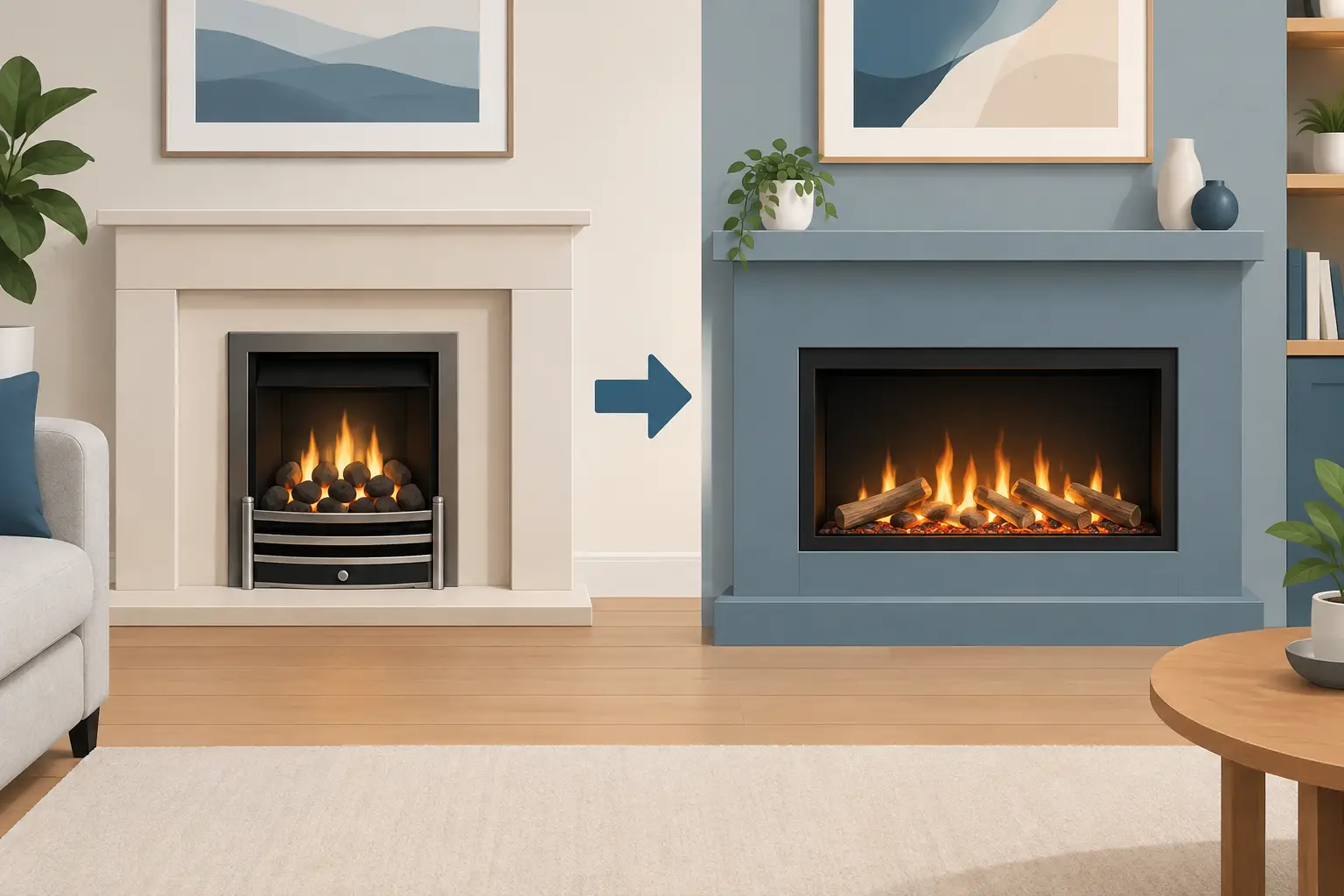
A gas fire that has become unreliable, dated or difficult to maintain can quickly stop being the feature you want in your living room. So, can you replace a gas fire? In most homes, yes – but the best replacement depends on the type of fire you have now, the condition of your chimney or flue, and how you would like the room to look and feel afterwards.
Replacing a fire is not always simply a case of taking one model out and fitting another in its place. A professional survey helps establish what is safely possible, whether any alterations are needed and which options will give you the right balance of warmth, style and practicality.
Can You Replace a Gas Fire Like for Like?
A like-for-like replacement is often the most straightforward route. If you are happy with gas as a fuel and your existing fireplace opening, chimney and flue are suitable, a new gas fire can provide a refreshed look with modern controls, improved efficiency and a choice of flame styles.
However, the phrase “like for like” can be misleading. Not every gas fire is designed for every chimney or flue. Older homes may have a conventional brick chimney, while some newer properties have a pre-cast flue system. Other fires are balanced flue models that vent directly through an external wall, or flueless models that have their own specific room requirements.
Before choosing a replacement, a Gas Safe registered engineer should check the existing installation. They will look at the flue type and condition, the size of the opening, the hearth, clearances around the appliance and the available gas supply. This avoids choosing a fire that looks right in a brochure but is not suitable for the room.
A new gas fire can also be an opportunity to rethink the full fireplace. You may retain a traditional surround and hearth, introduce a more contemporary inset fire, or create a cleaner feature wall with a hole-in-the-wall design where the property allows.
Replacing a Gas Fire With an Electric Fire
Many homeowners decide to replace a gas fire with an electric fire, particularly where they want a simpler installation, a wider choice of visual styles or the flexibility to use the flame effect without heat. Modern electric fires can suit everything from a classic fireplace opening to a media wall or a sleek inset feature.
The gas fire must still be disconnected and made safe by a suitably qualified professional. The old gas supply cannot simply be left behind without proper attention. Once the gas appliance has been safely removed, the fireplace opening may need making good, depending on the electric fire selected.
An electric replacement is not automatically maintenance-free from an installation point of view. The electrical supply needs to be appropriate for the appliance, and the fire must be fitted in line with the manufacturer’s instructions. If you are changing the surround, hearth or wall finish at the same time, planning the whole job before work begins usually produces a neater result.
Electric fires are particularly useful where a chimney is no longer in use, where a property does not have a suitable flue, or where the main aim is creating an attractive focal point rather than heating a large room. They can also be a sensible choice for homeowners who would prefer a fire that is easy to operate at the touch of a button.
Could You Replace a Gas Fire With a Stove?
It may be possible to replace a gas fire with a wood-burning, multi-fuel or gas stove, but this is usually a more involved project. A stove can transform the character of a room, especially in a period property or renovation, yet it needs the right chimney arrangement, hearth and clearances to work safely.
Where a solid-fuel stove is being considered, the chimney will normally need inspecting and may require a suitable liner. Ventilation, combustible materials near the appliance and the hearth construction all need careful consideration too. These details are not add-ons – they are central to a safe, compliant installation.
A gas stove can offer the appearance of a traditional stove while retaining the convenience of gas. As with any gas appliance, suitability depends on the available flue arrangement and a proper assessment by a Gas Safe registered engineer.
If the room has an existing fireplace recess, it may provide a useful starting point, but dimensions alone do not confirm that a stove can be fitted. A showroom visit and home survey can help you compare stove sizes, finishes and heat outputs against the space you actually have.
What Affects Your Gas Fire Replacement Options?
The condition of the chimney is one of the biggest factors. A chimney that has not been used for years may need testing, sweeping or remedial work before it can safely serve a new appliance. In some cases, it may be more sensible to choose an electric fire rather than alter an unsuitable flue.
The heat requirement for the room matters too. A large, open-plan room with poor insulation may need a different solution from a well-insulated lounge used mainly in the evening. Your installer can advise on suitable heat output, but it is worth considering how you use the room rather than selecting a fire on appearance alone.
Your preferred design is equally relevant. Replacing an inset gas fire with another inset model may preserve the existing fireplace layout. Choosing a wider landscape fire, a stove or a media-wall electric fire may involve changes to the opening, surround, hearth or wall. It is often easier and tidier to make these decisions together rather than fit a new fire first and revisit the fireplace later.
Finally, consider access. Removing an old cast-iron surround, altering a chimney breast or installing a larger fireplace suite can involve more than the appliance fitting itself. An experienced installer will explain what is included, what preparation is required and how the room will be left once the work is complete.
Why Professional Installation Matters
Gas work should never be treated as a DIY job. Any installation, disconnection or alteration to a gas fire and its supply must be carried out by a Gas Safe registered engineer. This protects your household and ensures the appliance is tested properly once fitted.
A professional installation should begin with a clear assessment rather than assumptions. The engineer will confirm the proposed appliance is compatible with the property, check the flue or chimney where relevant, safely remove the existing fire and fit the replacement to the manufacturer’s requirements. Testing at the end is essential, including checks for safe operation and effective removal of combustion gases where a flued gas appliance is installed.
For solid-fuel appliances, HETAS expertise is just as valuable. The correct flue system, hearth, ventilation and distances from combustible materials all need to be right. A fire should bring reassurance and comfort, not leave you wondering whether essential details have been overlooked.
Planning Your Replacement Without Unnecessary Surprises
Start by taking a few photographs of your current fireplace and noting any information you have about the existing fire. If you know whether it is a chimney, pre-cast, balanced flue or flueless model, that is helpful, but do not worry if you do not. A survey will provide the answer.
Think about what is not working for you now. It may be the dated appearance, a lack of heat, an awkward control system or the amount of space the fireplace takes up. Knowing the reason for replacing the fire makes it easier to narrow down the right options.
It is also worth viewing fires in person where possible. Flame effects, finishes and proportions can feel very different in a real room compared with a small image. Seeing surrounds, hearths and fires together helps homeowners make a confident choice that suits their décor as well as their heating needs.
At Wirral Fires, our approach is to offer straightforward advice, a broad choice of fires and professional fitting from experienced engineers. Whether you want to retain the convenience of gas, move to electric or explore a stove, the right starting point is a proper conversation about your home – not a rushed decision based on what happens to fit the old opening.