

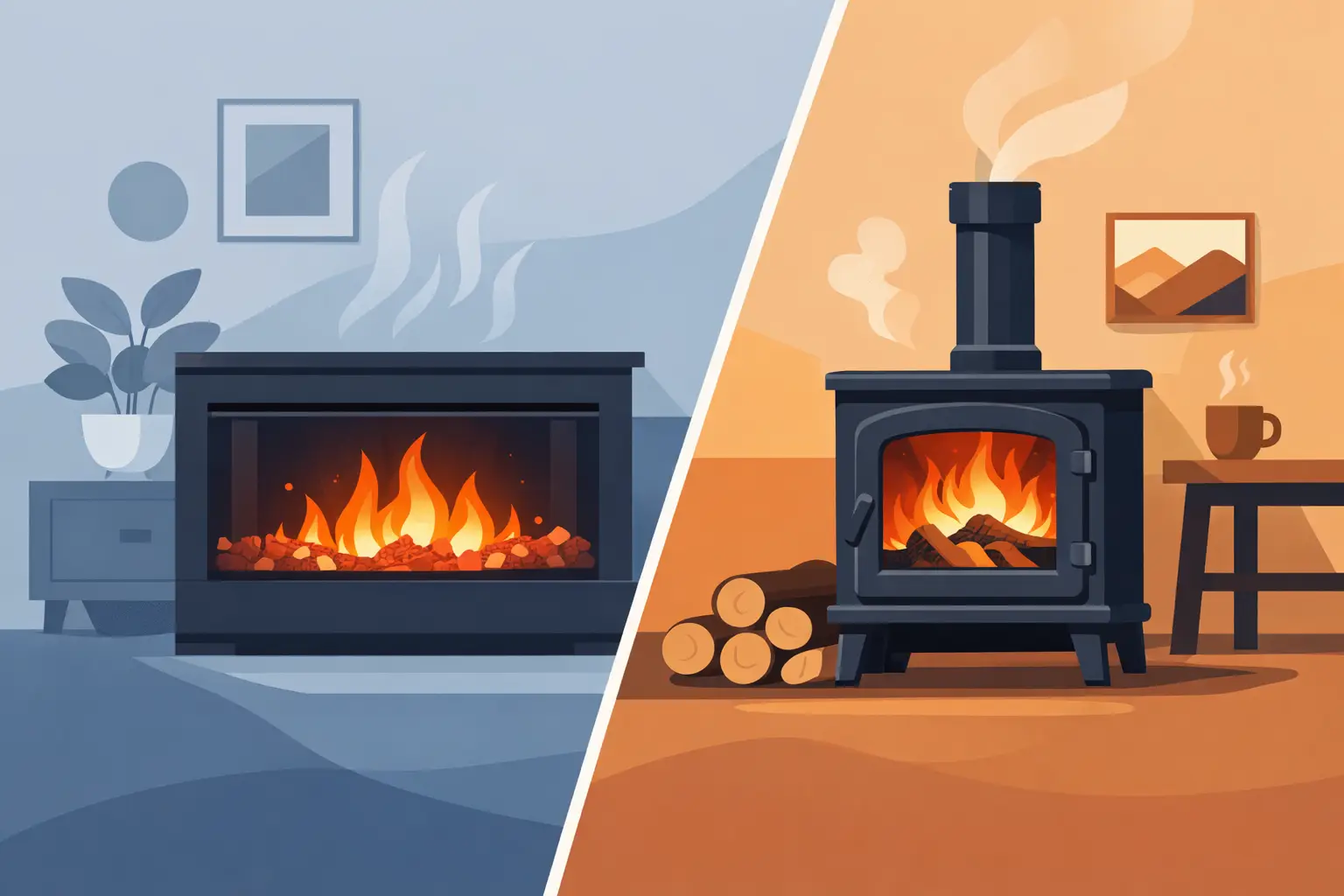
A fireplace choice often starts with a room that feels unfinished. Perhaps you have an unused chimney breast, a dated gas fire to replace, or a living room that needs a warmer focal point. When deciding between an electric fire or wood burner, the right answer is not simply about appearance. It comes down to how you use the room, the heat you need and what your home can accommodate safely.
Both options can transform a space. An electric fire offers simple, flexible ambience with very little disruption, while a wood burner brings genuine flame, strong radiant warmth and a traditional sense of occasion. Looking closely at the practical differences before choosing will make the final result more satisfying for years to come.
Electric Fire or Wood Burner: Start With the Room
Think first about the role the fire needs to play. If the room already has central heating and the fire will mainly create atmosphere on darker evenings, an electric model may be all you need. Modern electric fires can provide convincing flame effects, glowing fuel beds and adjustable brightness even when no heat is required. That makes them particularly useful in spring and autumn, when a full heating system may feel unnecessary.
A wood burner is often chosen where meaningful heat is part of the plan. In a lounge, open-plan family area or older property with cooler spots, the radiant heat from a properly specified stove can make a noticeable difference to comfort. The flame is real, the warmth is immediate once the stove is up to temperature, and the appliance can become the natural centre of the room.
Room size matters in either case. A fire or stove that is too powerful can make a modest living room uncomfortably hot, while one that is underpowered may look attractive but fail to deliver the warmth you expected. Heat output should be considered alongside insulation, ceiling height, glazing and how connected the room is to the rest of the house. A professional survey helps avoid guessing.
The Installation Difference
For many households, installation is the deciding factor. An electric fire does not need a chimney or flue, so it can be fitted in properties where a stove would be impractical. It can work within a fireplace suite, on a media wall, in a chimney breast opening or as a contemporary hole-in-the-wall feature. This gives you plenty of freedom when designing a new focal point.
Electrical requirements still need consideration. The appliance must be installed correctly, with a suitable power supply and enough clearance around it. A well-planned installation also hides cables neatly and ensures the fire sits at the right height within the surround or wall. The finished appearance is just as important as the appliance itself.
A wood burner has more to consider because it needs a safe route for combustion gases to leave the property. If you have a chimney, it may need inspecting and lining before a stove is fitted. If there is no usable chimney, a twin-wall flue system may be possible, but its route through the house and roof needs careful planning.
The hearth, clearances to combustible materials and ventilation also form part of a compliant stove installation. These are not details to leave until after you have chosen a model based on looks alone. An experienced installer can assess what is achievable and recommend a stove that fits the available opening, flue arrangement and room properly.
Warmth, Convenience and Everyday Use
Electric fires are exceptionally straightforward to live with. Switch one on with a remote control, select the flame setting you like and enjoy the visual effect without bringing in fuel or lighting a fire. There is no ash to remove, no logs to stack and no waiting for the appliance to cool before bed. For busy households, this convenience is a genuine advantage.
Many electric fires offer a choice of heat settings and independent flame operation. That gives you more control over the mood of the room, especially in a well-insulated home where extra heat is only occasionally wanted. If you are renovating a bedroom, dining room or snug, that flexibility can be more useful than maximum output.
A wood burner asks a little more of its owner, but many people consider the routine part of the appeal. Building and lighting the fire, tending it as the evening goes on and enjoying the natural movement of the flames creates an experience no electric flame effect can fully reproduce. It is a more hands-on form of comfort.
There is maintenance involved. Ash needs emptying, the glass may need cleaning and the chimney or flue needs regular sweeping. You will also need dry, properly stored fuel. Burning seasoned wood with a moisture content of 20% or less helps the stove burn more efficiently, keeps the glass clearer and reduces unnecessary deposits in the flue.
Think Carefully About Fuel and Air Quality
A wood burner should be selected and used responsibly. In smoke control areas, the appliance must be suitable for use with wood under the relevant requirements. The fuel matters just as much as the stove: wet or unsuitable wood produces more smoke, less heat and more residue.
A modern, correctly installed stove used with good-quality dry wood can be an efficient heating choice. However, it is not a fit-and-forget appliance. If you prefer not to manage fuel, ash and servicing, an electric fire may better suit your routine. Being honest about how you want to use the fire is more helpful than choosing solely on a photograph.
Electric fires have no on-site emissions and no fuel storage needs. Their running cost will depend on the heat setting, how long they are used and your electricity tariff. A wood burner’s costs depend on the type, quality and availability of fuel, as well as the condition and efficiency of the stove. Neither option is automatically right for every household.
Style Can Point You in the Right Direction
Electric fires work particularly well in clean-lined, contemporary interiors. A wide landscape fire beneath a television, a slim inset model within a chimney breast or a complete fireplace suite can all create a polished finish without requiring a traditional opening. Flame colour, fuel bed choice and lighting effects allow the look to be tailored to the room.
That does not mean electric fires are only modern. Traditional-style electric stoves and classic surrounds can suit period homes, smaller alcoves and rooms where you want the look of a hearth without the work associated with a solid-fuel appliance.
Wood burners naturally suit cottage, country and character-led interiors, but they are equally effective in a more modern setting. A simple cylindrical stove on a slate hearth can look striking in a contemporary extension, while a traditional cast-iron model can restore purpose to an original chimney breast. The key is proportion. The stove, surround, hearth and mantel should work together rather than compete for attention.
A Showroom Visit Makes the Choice Easier
Pictures can help with ideas, but they rarely show the scale of a fire, the depth of a stove or the quality of a flame effect. Seeing different styles in person makes it easier to compare finishes, ask practical questions and picture how each option will sit in your own home.
It is also the best time to discuss the details that affect suitability: whether you have a chimney, the likely heat requirement, your preferred style and the level of upkeep you are happy with. There is no benefit in rushing a decision on an appliance that will form part of your home for many years.
At Wirral Fires, the aim is to make that process clear and no-pressure, from choosing a suitable product through to professional installation. Whether you are drawn to the ease of an electric fire or the character of a wood burner, start with the room, the practical requirements and the kind of evenings you want to enjoy there.