

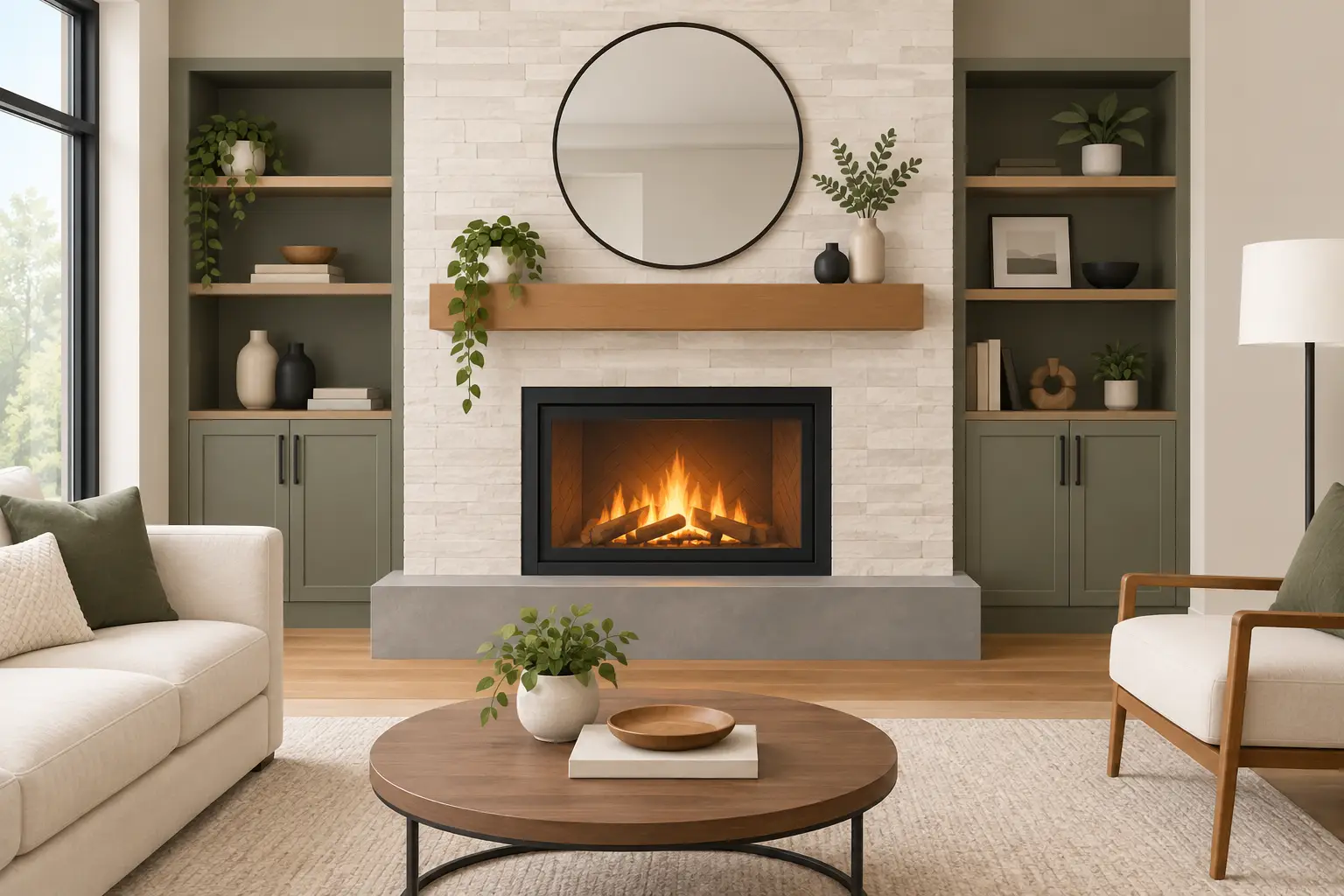
A fireplace can still be the focal point of a living room without looking heavy, traditional or overly ornate. The best modern fireplace surround design ideas give the fire a clear place in the room, balancing warmth and character with clean lines, practical materials and proportions that suit the property.
Whether you are refreshing an existing chimney breast or planning a complete new installation, the surround should be considered alongside the fire itself. Heat output, appliance type, wall construction and clearances all affect what will work safely and look right once fitted.
Start with the fire, not just the surround
It is tempting to choose a surround from a photograph and work backwards, but the appliance should lead the decision. A hole-in-the-wall electric fire, for example, can suit a broad, minimalist media wall, while a traditional inset gas fire may look best with a more defined hearth and mantel arrangement. A wood-burning or multi-fuel stove brings further considerations, including the hearth, flue arrangement and the non-combustible materials around it.
The overall scale matters too. A compact fire can feel lost within a very wide surround, while an oversized feature can dominate a modest room. Looking at the room from the main seating position is useful: the fireplace should draw the eye without making the space feel narrower or taller than it is.
This is where seeing fires and surrounds in a showroom can be particularly helpful. Materials, flame effects and proportions often look very different in person than they do on a screen.
1. Large-format porcelain for a crisp finish
Large-format porcelain is a strong choice for homeowners who want a clean, contemporary fireplace wall. With fewer grout lines, it creates a calm, uninterrupted surface around an electric, gas or inset fire. Finishes can range from soft concrete-effect tiles to marble-look designs, slate tones and warmer stone effects.
Porcelain is practical as well as stylish. It is hard-wearing, straightforward to maintain and available in many colours without the variation or upkeep associated with some natural stones. A pale grey or warm off-white finish can brighten a darker living room, while charcoal porcelain gives a fire a more dramatic frame.
For the most modern result, keep the edges neat and avoid adding too many competing details. A simple floating shelf in timber or a discreet ledge can provide definition without turning the wall into a collection of features.
2. A plastered chimney breast with a built-in fire
A smooth, plastered chimney breast is one of the most adaptable modern fireplace surround design ideas. It works especially well where homeowners want the fire to feel integrated into the architecture rather than placed within a separate surround. An inset electric or gas fire can sit centrally within the wall, with the finish painted in a soft neutral, warm clay shade or a deeper colour for contrast.
This approach suits newer homes as well as renovated properties. It can be kept very simple, or it can incorporate a recess for logs, shelving or a television where the layout allows. However, planning is essential if a TV is being positioned above a fire. The heat produced by the appliance, ventilation requirements, viewing height and manufacturers’ guidance all need to be considered before the wall is built.
A plastered finish is not necessarily the lowest-maintenance option. In a busy family room, it may mark more easily than porcelain or stone, particularly around a real-fire installation. Choosing a durable paint finish and ensuring the appliance is specified correctly will help it stay smart for longer.
3. Natural stone with simpler lines
Stone does not have to mean a traditional carved fireplace. Honed limestone, pale sandstone and understated slate can all look thoroughly current when cut into clean rectangular forms. The key is restraint: a slim mantel, a straightforward chamber and a hearth that does not project too far into the room can preserve the natural character of the material without making it feel formal.
Natural stone has variation in tone and texture, which is precisely why many homeowners choose it. It softens modern interiors and works beautifully with timber floors, wool fabrics and muted wall colours. In older Cheshire and Wirral homes, it can also bridge the gap between original features and a newer fire.
There are trade-offs. Stone can be more porous than manufactured materials and some types require sealing or more careful cleaning. Its weight also means the wall and fitting method must be suitable. Professional advice at the planning stage avoids unwelcome compromises later.
4. Add warmth with a timber beam or mantel
A timber beam can make a contemporary fireplace feel more relaxed and welcoming. It is particularly effective above a stove or a simple tiled chamber, where it introduces warmth without adding visual clutter. Reclaimed-look oak, lightly finished timber and darker stained beams each create a different feel.
A real timber beam must be installed with appropriate clearances from the appliance and flue. These distances are not optional styling details: they are a safety requirement and vary according to the fire, stove and installation. In some schemes, a non-combustible beam-effect alternative may be the better choice, giving the desired look where a timber beam would not be suitable.
Keep accessories considered rather than crowded. A single framed print, a small vase or a carefully placed mirror can work well. Filling every inch of the mantel tends to take away from the clean, modern effect.
5. Make the hearth part of the design
The hearth is often treated as an afterthought, yet it has a major effect on the finished look. A flush hearth in dark slate, porcelain or glass can create a refined, almost architectural result. It is a popular option for inset fires and some stove installations where the floor level and building regulations allow for it.
A raised hearth, meanwhile, can make a stove feel more prominent and can provide a practical visual boundary in an open-plan room. Low, wide hearths in concrete-effect porcelain or honed stone suit contemporary spaces particularly well.
The right choice depends on the appliance and the floor construction. Solid-fuel appliances have specific hearth requirements, while gas and electric fires may offer greater flexibility. It is worth discussing this before flooring is laid, especially during a wider renovation.
6. Use dark tones for a confident focal point
A black or deep charcoal surround can give a fireplace real presence, especially in rooms with high ceilings, generous natural light or pale surrounding walls. Matt black porcelain, dark slate, microcement-style finishes and painted chimney breasts can all work well.
Dark finishes are not only for large rooms. In a smaller lounge, concentrating the dark colour on the fireplace wall can create depth and make the fire feel intentional rather than imposing. Pair it with lighter flooring and walls to keep the room balanced.
Be realistic about maintenance. Very dark matt surfaces can show dust, while highly polished finishes may reveal fingerprints or reflections. The best material is one that suits both the look you want and the way the room is used day to day.
7. Let an electric fire shape a modern media wall
For homes without a usable chimney, or for homeowners who want flexible placement, an electric fire can form the centrepiece of a modern media wall. Wide landscape designs, multi-sided fires and flame effects visible from different angles offer plenty of scope for a tailored look.
A well-designed media wall should not be built around the television alone. Consider where cables, sockets and access points will sit, whether shelving will become dusty or cluttered, and how much storage the room genuinely needs. A simple composition with a fire, a few well-proportioned recesses and a calm finish is often more timeless than an elaborate wall packed with lighting and shelves.
Electric fires also offer a useful choice where the primary aim is atmosphere rather than room heating. For households seeking additional heat from their fireplace, the right appliance and output should be selected for the room rather than chosen purely for its appearance.
Bringing the scheme together
The most successful fireplace spaces repeat a few materials or colours elsewhere in the room. A timber mantel might connect with a coffee table or floor finish; a soft stone surround can sit comfortably beside neutral curtains and textured cushions. You do not need to match everything exactly. A little contrast gives the fireplace the presence it deserves.
Before committing to a design, take room measurements, photographs and a note of any chimney, flue or electrical details you already know. At Wirral Fires, experienced advice can help turn an inspiring idea into a safe, practical installation that suits both your home and how you live in it. A fireplace should feel like it has always belonged there – not just look good on the day it is fitted.