

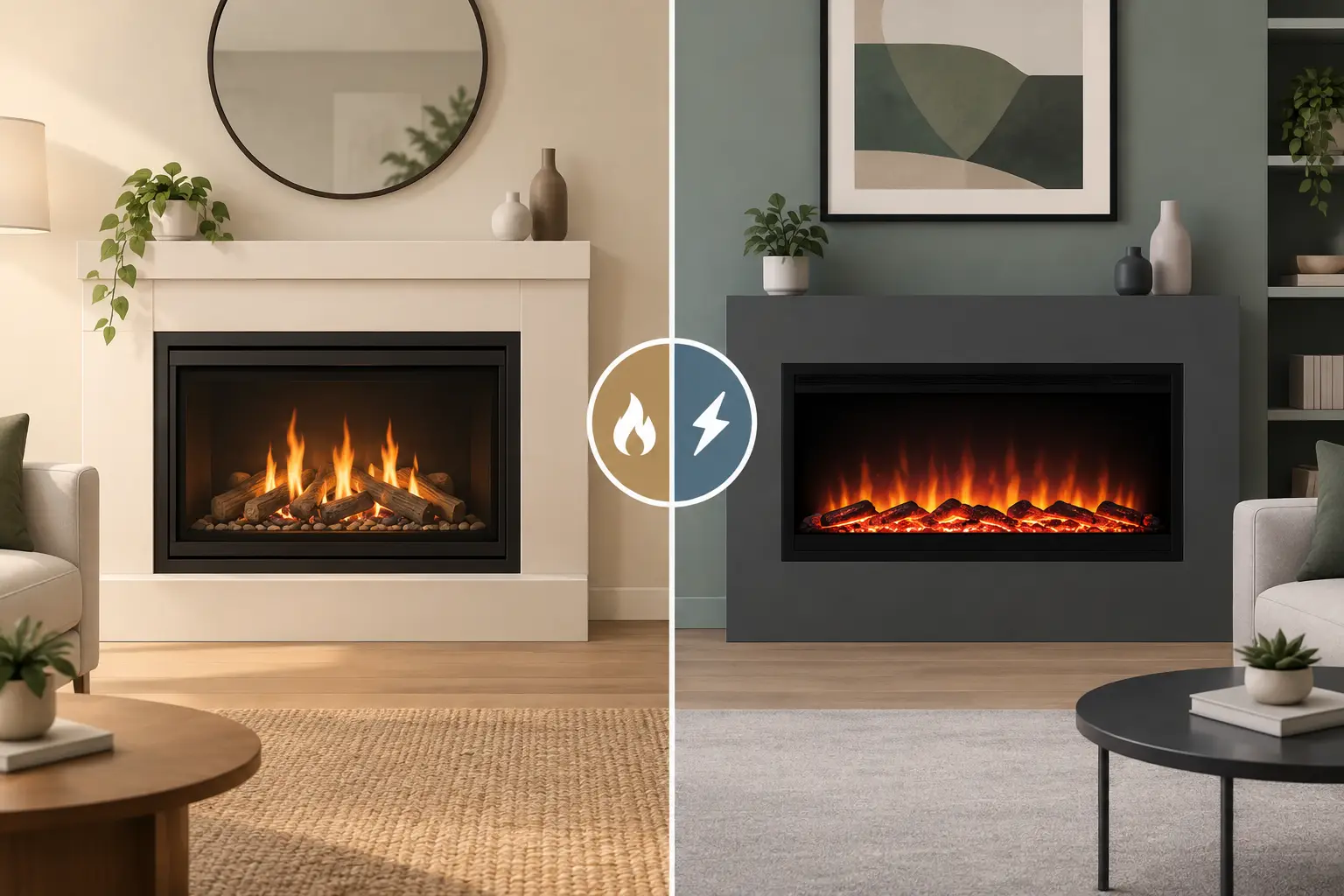
A fireplace can completely change the feel of a living room, but choosing a gas fire or electric suite is about more than picking the design you like most. The right choice depends on how you use the room, the heat you need, the existing chimney or gas supply, and whether you want a traditional focal point or a straightforward fit for a modern space.
For many homeowners across the Wirral, Chester and West Cheshire, the decision becomes clearer once they have seen both options in person. A fire is a long-term addition to the home, so it is worth looking at the practical details alongside the flame effect, surround and overall style.
Start with the room, not the fire
Before choosing between gas and electric, consider the room itself. Is the fireplace intended to take the chill off on an autumn evening, provide meaningful heat in a frequently used lounge, or create a feature in a room where central heating does most of the work? Those answers will influence the best option.
The layout matters too. A traditional chimney breast may offer opportunities for a gas fire or inset electric fire, while a solid wall, media wall or recently renovated room may suit an electric suite particularly well. It is also sensible to think about the scale of the fire. A compact room can feel overwhelmed by an oversized surround, whereas a large open-plan living area may need a more substantial focal point.
A showroom visit is useful at this stage. Seeing the flame picture, surround finishes and proportions in person often gives a far better sense of what will work at home than looking at photographs alone.
When a gas fire is the better choice
A gas fire is often chosen by households that want convincing real flames and dependable, controllable warmth. Modern gas fires are available in a wide range of styles, from traditional inset designs that sit neatly within a fireplace opening to contemporary hole-in-the-wall models with a wide flame display.
For a main living room that is used regularly, gas can be an appealing option because it can provide a useful level of heat quickly. Many models offer remote controls and adjustable flame settings, allowing you to alter the ambience and warmth without tending fuel or clearing ash. For homeowners replacing an older gas fire, a newer appliance can also bring a refreshed look and more considered control options.
The visual appeal is a major part of the decision. There is a natural movement and depth to a real gas flame that many people prefer, particularly in a classic fireplace setting with a surround, hearth and mantel. A gas fire can make a room feel properly lived-in during the colder months, rather than simply decorated.
What gas installation involves
Gas is not a one-size-fits-all solution. The appliance must be suitable for the property, the room and the available flue arrangement. Some fires use an existing chimney or flue, while others may be designed for alternative flue systems. A professional survey is the right way to establish what is possible safely.
You will also need a suitable gas supply and installation by a Gas Safe registered engineer. Ongoing care matters as well: gas appliances should be serviced in line with the manufacturer’s guidance to help keep them operating safely and efficiently. For most homeowners, this is a manageable part of ownership, but it should be considered before making a decision.
Gas is particularly worth exploring if you want the fire to contribute more than occasional background warmth, have the necessary property requirements, and enjoy the character of a genuine flame.
Why an electric suite can be the practical favourite
An electric suite combines an electric fire with a coordinated surround, and often a hearth and back panel, to create a complete fireplace look. It can be an excellent option where there is no usable chimney, no gas supply, or where the priority is a simple installation with plenty of design flexibility.
Modern electric flame effects have come a long way. Quality models can create realistic-looking flame movement, glowing fuel beds and adjustable lighting effects, often with the option to use the visual display without the heat. That makes an electric fire useful throughout the year, including those evenings when you want atmosphere but do not need extra warmth.
Electric suites are available in traditional and contemporary styles, from softly detailed timber-effect surrounds to crisp, modern finishes. Because the suite forms a complete feature, it can be a good answer for a plain wall or a room where a chimney breast has been removed. It also makes it easier to coordinate the fireplace with your flooring, furniture and wall colours.
The practical side of electric
For many installations, electric is less disruptive than gas because there is no flue requirement. However, the fire still needs to be positioned correctly and supplied from a suitable electrical connection. The surround must also be assembled and secured carefully for a neat, lasting finish.
Electric heat is generally best suited to supplementary warmth rather than being relied upon as the principal heating source for a larger home. The exact output and features vary between models, so it is important to match the appliance to the size and use of the room rather than assuming every electric fire will perform in the same way.
An electric suite may be the strongest choice if you want a complete fireplace feature with fewer property constraints, enjoy changing the flame effect to suit the mood, or are updating a room where central heating already provides the main source of warmth.
Gas fire or electric suite: compare what matters
The choice is not simply a question of traditional versus modern. Both gas fires and electric suites can look classic, contemporary or somewhere in between. The more useful comparison is how each option fits your home and daily routine.
Gas usually has the advantage for those seeking a real flame and a more substantial heating contribution in the living room. It can feel especially at home within a chimney breast or as part of a carefully planned fireplace package. In return, it has stricter installation requirements and needs professional servicing.
An electric suite offers greater freedom where flues and gas supplies are not available or not desirable. It is often a sensible route for a quick visual transformation, a newly decorated lounge or a feature wall that needs warmth and character without major building work. Its heat function may be sufficient for comfort on cooler days, but it is not always the best answer for heating a larger room extensively.
There is also the matter of how you want the fireplace to look when it is switched off. A gas fire can sit within a wide range of surrounds and openings, while an electric suite creates a defined piece of furniture-like architecture in the room. Bring measurements, photographs and a sense of your preferred style when seeking advice. Small details, such as the height of a mantel or the depth of a hearth, can make a significant difference to the finished result.
Make the decision with proper advice
A good fireplace should suit the property as well as your taste. That is why a no-pressure conversation before you buy is valuable. An experienced retailer can help you consider the fire’s heat output, the condition and type of chimney, ventilation needs, wall construction, suitable surround materials and the practicalities of installation.
At Wirral Fires, the aim is to make that process straightforward, from browsing fireplace styles in the showroom to arranging professional fitting. With more than 50 years of combined industry experience and Gas Safe registered engineers, the team can help homeowners choose an option that looks right, works properly and is fitted with care.
The best choice is the one you will enjoy using. Take a few room measurements, think honestly about the heat you need, and view a range of fires and suites before deciding. A well-chosen fireplace can make everyday evenings at home feel warmer, more comfortable and more like yours.