

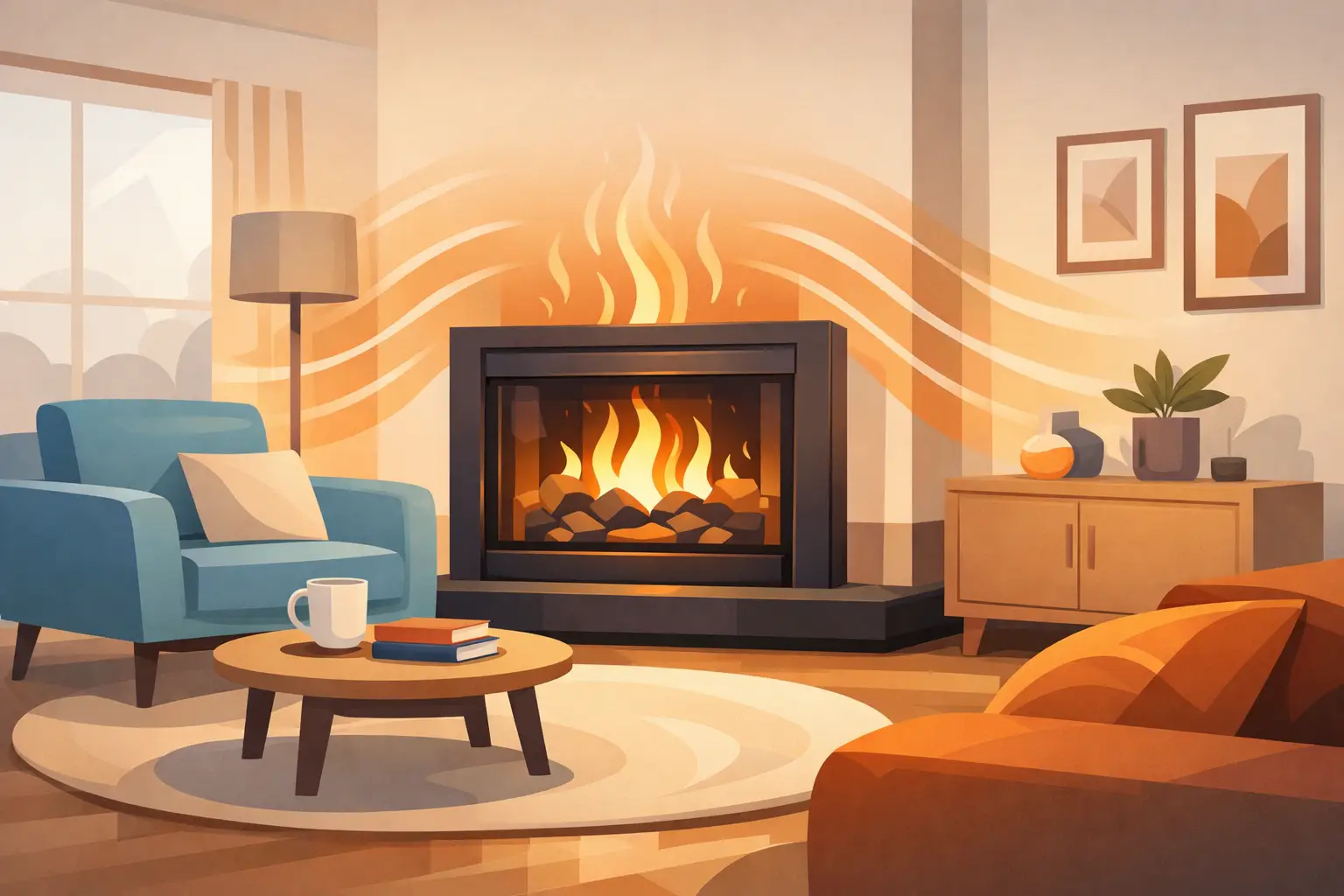
A gas fire can turn a chilly living room into a genuinely comfortable space within a short time – but the answer to “can a gas fire heat a room” is not simply yes or no. It depends on the fire’s heat output, the size and layout of the room, how well the property holds heat, and whether the appliance is designed as a main heat source or a supplementary one.
For many homes across the Wirral and Cheshire, a properly chosen gas fire provides far more than a pleasant flame effect. It can take the edge off cold mornings, make evenings in the lounge feel cosy, and provide focused warmth without heating every room in the house. The key is selecting a fire that suits the room and having it fitted correctly.
Can a Gas Fire Heat a Room Effectively?
Yes, a gas fire can heat a room very effectively when its kilowatt output is appropriate for the space. A modern gas fire delivers direct radiant and convected heat into the room, rather than relying on heat travelling through a full central-heating system. That means you can feel the benefit quickly, particularly when sitting nearby.
A fire with too little output may look attractive but struggle to warm a large, open room. One with too much output can make a smaller lounge uncomfortably warm, meaning you may turn it down before making the most of its potential. This is why a little planning before choosing a style or finish is worthwhile.
Gas fires are often especially useful in the main living area – the room where people spend the most time in the evening. They can also be a practical source of warmth during milder weather, when putting the whole heating system on feels unnecessary.
Heat Output, Room Size and Insulation
The heat output of a gas fire is measured in kilowatts, usually written as kW. As a broad starting point, many typical living rooms are suited to a fire in the region of 3kW to 5kW, though this is not a rule that should be applied without looking at the property itself.
A compact, well-insulated lounge with modern glazing may need considerably less heat than a larger room in an older property with single glazing, draughty doors or high ceilings. Open-plan layouts also need careful thought. A fire may provide a warm and inviting seating area, but it cannot always be expected to heat an entire kitchen-diner and adjoining hallway to the same level.
The factors that affect how warm a room feels include:
- the room’s width, length and ceiling height;
- insulation in walls, floors and loft spaces;
- window size, glazing and draughts;
- whether doors are usually open to other areas of the home; and
- the position of the fireplace within the room.
This is where showroom advice can be valuable. Rather than choosing a fire on appearance alone, it is sensible to discuss the room, the existing chimney or flue, and how you want to use the appliance day to day.
Radiant Heat Makes a Difference
Gas fires do not heat a room in exactly the same way as radiators. Many models provide radiant heat, which is the comforting warmth you feel when seated in front of the fire. Others also circulate warm air into the room through convection.
That combination can make a room feel warm sooner than the thermometer might suggest. It is particularly welcome in a sitting room where the family gathers around the fire, rather than in a space where warmth needs to reach every corner evenly.
Which Type of Gas Fire Gives the Best Room Heat?
The right type of gas fire depends on the property and your priorities. Open-fronted gas fires offer a traditional fireplace feel and an attractive living flame, while glass-fronted models generally retain more heat in the room and can offer higher efficiency.
Balanced flue gas fires are a strong option where there is no conventional chimney. They take air from outside and expel combustion gases outside through a sealed flue, making them suitable for many modern homes and fireplace locations. Conventional flue fires use an existing chimney or flue system, subject to a proper inspection and suitability checks.
There are also outset gas fires, which project into the room and can provide substantial heat output, and hole-in-the-wall designs that create a clean, contemporary focal point. The best-looking fire is not necessarily the best choice if it does not meet the heating needs of the room, so performance and style should be considered together.
Is a Gas Fire Enough to Replace Central Heating?
Sometimes, but not always. A gas fire can be the main heat source in a single room, especially in a smaller home, an older property with a traditional fireplace arrangement, or a household that spends most evenings in one living space. It can also reduce the need to run central heating as high in rooms that are not being used.
For heating the whole house, central heating remains the more practical solution in most properties. A gas fire works best as targeted room heating or as an additional source of warmth and atmosphere. It gives you control over the room you are using, without suggesting that one appliance can efficiently heat every bedroom, bathroom and corridor.
A good approach is to think about your normal routine. If the living room is the heart of the home, a gas fire can make it comfortable while allowing the thermostat to be set sensibly elsewhere. If the room is rarely used or very open to the rest of the house, the benefit may be more about ambience than significant heating savings.
Installation Affects Both Safety and Performance
Even an excellent gas fire will not perform as intended if it is poorly specified or incorrectly installed. The chimney, flue route, ventilation requirements and gas supply all need to be assessed before fitting. Some installations may require a liner or alterations to the fireplace opening, while others may be suitable for a balanced flue solution.
Gas appliances must be installed by a Gas Safe registered engineer. This protects your household and helps ensure the fire burns correctly, vents safely and delivers its stated performance. A professional installer can also explain the controls, show you how to use the fire safely, and leave the installation neat and finished to a high standard.
Annual servicing is equally important. A service checks that the appliance is operating safely and efficiently, and gives an engineer the opportunity to identify wear, blockages or issues before they become more serious.
Do Not Overlook Ventilation
Some gas fires require permanent ventilation, particularly in certain chimney and flue arrangements. This can seem counterintuitive when you are trying to keep a room warm, but ventilation is a safety requirement and should never be blocked or altered.
A correctly chosen modern fire will take these requirements into account from the outset. If draughts are a concern, the answer is not to cover an air vent. It is to seek advice on whether another fire type or installation method would better suit the property.
Getting Better Warmth From Your Gas Fire
Small changes can help the room retain the heat your fire produces. Closing doors to unused rooms, drawing curtains at dusk and dealing with obvious draughts around windows or external doors can all make a noticeable difference. Keeping furniture clear of the appliance also allows heat to circulate properly and keeps the fireplace area safe.
Use the controls as intended rather than always running the fire at maximum. Many gas fires have variable heat settings, allowing you to bring the room up to temperature and then maintain a comfortable level. This offers flexibility that suits changing weather and different times of day.
If you are replacing an older gas fire, do not assume a like-for-like model is automatically right. Room layouts, insulation standards and household needs often change over time. A fresh assessment may reveal that a different output, flue type or style would provide a better result.
A gas fire should feel like an easy part of home life: warm when you need it, attractive when it is off, and professionally fitted for peace of mind. For homeowners considering their options, a visit to the Wirral Fires showroom can make the decision clearer, with practical no-pressure advice based on the room you actually live in.