

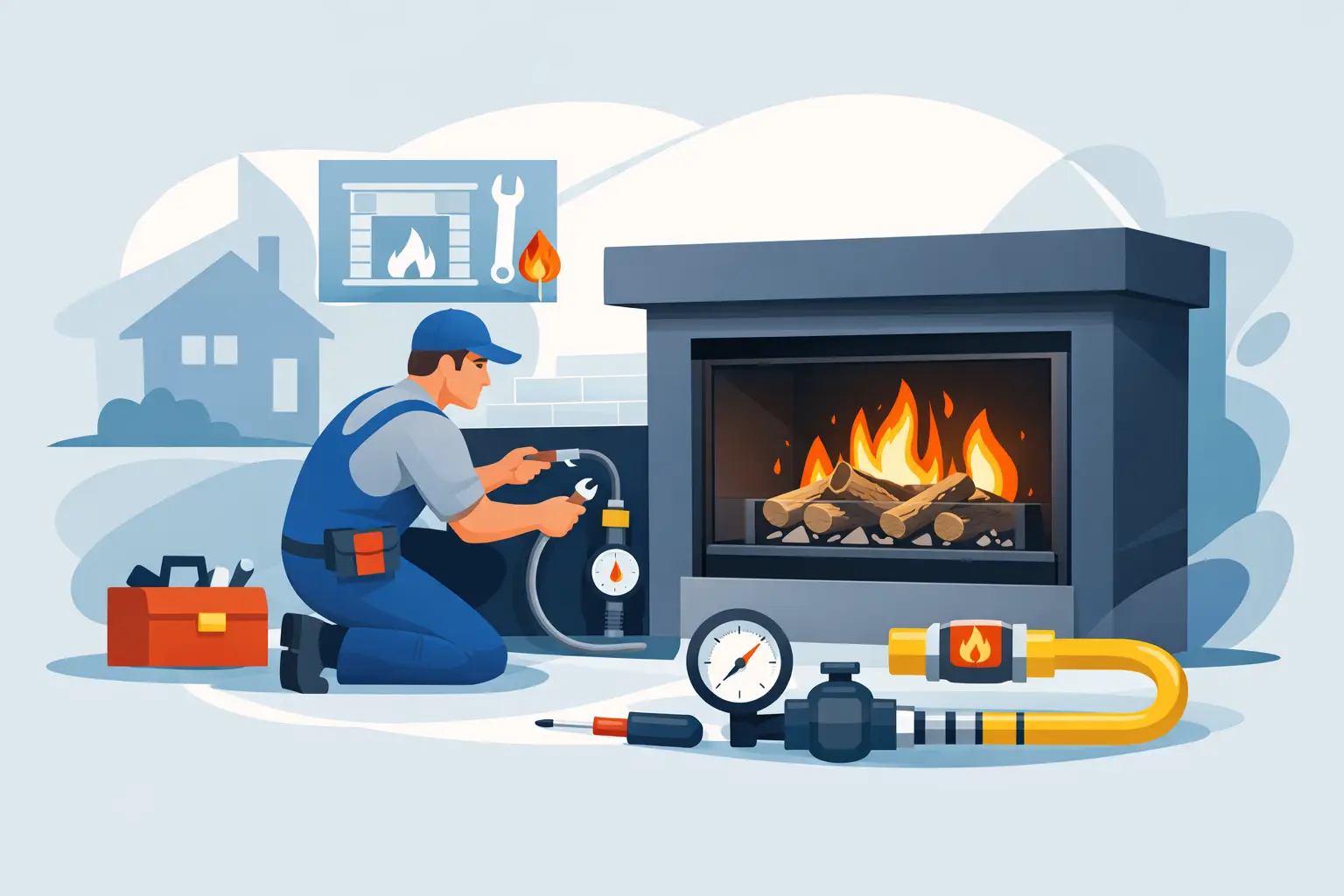
Choosing a gas fire is usually the easy part. The questions tend to start once you find a style you like – will it suit your chimney, does the room need extra ventilation, and what actually happens on installation day? This guide to gas fire installation is designed to make that process clearer, so you know what to expect before any work begins.
For most homeowners, a gas fire is not just about heat. It is also about how the room looks, how much disruption the job will cause, and whether the finished result feels properly fitted rather than added as an afterthought. That is why a good installation starts long before the appliance is switched on for the first time.
What a gas fire installation involves
Gas fire installation is part product choice, part property assessment, and part certified fitting. The appliance itself has to suit the room, but it also has to match the technical conditions of the property. That includes the chimney or flue arrangement, the hearth and surround, the gas supply, and the required clearances around the fire.
In practical terms, installation often includes a site survey, checking the existing opening or fireplace recess, confirming the flue route, assessing ventilation, preparing the chamber or surround, connecting the appliance, testing the fire, and carrying out the final safety checks. Some jobs are very straightforward, particularly when replacing like for like. Others involve more preparation, especially in older homes where chimneys may need attention or where a room layout has changed over time.
A guide to gas fire installation starts with the right fire
Not every gas fire suits every home, and this is where many installation decisions are made. Open-fronted gas fires, glass-fronted high-efficiency models, inset fires, outset fires and hole-in-the-wall designs all have different requirements. A fire that looks ideal in a brochure may not be the right choice for your chimney type or room size.
If you have a traditional chimney breast and want a classic look, an inset gas fire may be a natural fit. If efficiency is the priority, a glass-fronted model often gives better heat retention into the room. If your property does not have a conventional chimney, a balanced flue or flueless gas fire may be possible, but only if the room and external wall position allow for it.
Heat output matters too. Bigger is not always better. A fire that is too powerful for the room can leave the space feeling overly warm and less comfortable to use, while an underpowered model may not give you the level of heat you expected. The best choice usually balances appearance, heat, efficiency and installation practicality.
Chimneys, flues and why they matter
One of the most important parts of any guide to gas fire installation is understanding how the appliance will safely remove fumes. That is the job of the chimney or flue. Even the most attractive fire cannot be installed safely if the flue arrangement is unsuitable.
In homes with an existing chimney, the condition of that chimney needs to be checked. It may require sweeping, testing or, in some cases, a flue liner. Older chimneys can suffer from leaks, blockages or deterioration, and these issues need sorting before installation can go ahead.
If there is no chimney, that does not always rule out a gas fire. Balanced flue models can vent directly through an outside wall, making them a popular option in many modern homes. Flueless appliances are another alternative, but they come with very specific room size and ventilation requirements. They are suitable in the right setting, though they are not the right answer for every household.
This is where experienced advice makes a real difference. Two properties on the same street can need completely different solutions depending on room layout, wall position, chimney condition and the type of fire being considered.
What happens before installation day
A proper survey saves time, avoids surprises and helps ensure the appliance you choose can be installed safely and neatly. During this stage, the installer will usually assess the fireplace opening, chimney or flue, gas supply position, hearth dimensions and the surrounding wall or alcove.
This is also the point where practical details should be discussed. Will the existing surround stay or be replaced? Is the chamber being lined or altered? Does the old fire need to be removed? Are you looking for a simple replacement, or are you creating a full new fireplace feature with hearth, surround and fire fitted together?
Good preparation matters because installation is rarely just about connecting a new appliance. Quite often there is building work, making good, finishing touches and appliance positioning to think about. A tidy end result depends on getting those details right from the outset.
Safety, regulations and certified fitting
Gas fires must be fitted by a Gas Safe registered engineer. That is not an optional extra – it is a legal and safety requirement. A professionally installed gas fire should be checked for safe gas pressure, soundness, burner performance, ventilation, flue operation and overall compliance with the manufacturer instructions and current regulations.
Homeowners sometimes ask whether installation can be kept simple to reduce cost. In some cases, yes – particularly for a straightforward replacement. But corners cannot be cut on safety. If additional ventilation is needed, it must be provided. If the flue fails testing, it must be addressed. If clearances around the fire are inadequate, the installation plan needs to change.
The right installer will explain these points clearly and without jargon. That matters because most customers are not looking for a technical lecture. They simply want to know the fire will be safe, legal and fitted to a high standard.
What to expect on installation day
The exact process depends on the type of appliance and the condition of the existing fireplace, but most installations follow a similar pattern. The old fire is removed if needed, the opening or chamber is prepared, the flue or chimney work is completed where required, and the new appliance is fitted and connected.
There may also be work to fit or level the hearth, install the surround, adjust the back panel, or finish the chamber so the fire sits properly within the overall fireplace design. Once the appliance is in place, the engineer carries out testing and commissioning to make sure everything is operating safely.
A good installation should feel organised rather than chaotic. There is always some degree of disruption with fireplace work, but it should be managed carefully and the area should be left as clean and tidy as possible. For many customers, that standard of workmanship is just as important as the product itself.
Common issues that can affect gas fire installation
Some installations are delayed not because of the fire, but because of the property. A chimney may fail a smoke test. An old opening may be the wrong size for the chosen model. A surround may not provide the clearances required by the manufacturer. The gas supply may need upgrading or repositioning.
None of these issues automatically stop the project, but they can change the scope of work. That is why it helps to choose your fire based on real site conditions rather than appearance alone. It also explains why one home can have a quick replacement while another needs a more involved installation package.
Older properties in particular often reveal hidden issues once an existing fire or surround is removed. Loose plaster, poor previous workmanship and uneven chambers are all fairly common. The right approach is not to force the job through, but to correct those problems so the final result is safe and looks right.
How to choose the right installer
When comparing suppliers, look beyond the fire itself. A showroom can be helpful because it allows you to see styles, finishes and flame pictures in person, but the installation side matters just as much. You want clear advice, honest guidance on what will and will not work, and qualified engineers who take responsibility for the finished job.
It is worth asking who carries out the survey, who completes the fitting, and what is included in the quoted work. Some companies only supply the fire. Others offer the full package, including the appliance, fireplace materials, fitting and aftercare. For many homeowners, that joined-up approach makes the process much easier.
If you are based across the Wirral, Chester or surrounding areas, working with a local specialist such as Wirral Fires can also make the experience more straightforward. Being able to visit a showroom, talk through options face to face and arrange certified installation through one provider gives many customers more confidence than trying to coordinate separate trades.
Aftercare and living with your new gas fire
Once installed, a gas fire should be easy to enjoy, but it still needs proper care. The appliance should be serviced in line with the manufacturer guidance, and any change in flame picture, smell or performance should be checked promptly. Regular servicing helps keep the fire working efficiently and safely over time.
It also helps to understand how the fire is intended to be used. Some models are designed more for atmosphere with supplementary heat, while others are built to provide stronger room heating. Knowing that from the start avoids disappointment and helps you get the best from the appliance.
A well-chosen gas fire should suit the room visually, provide dependable heat and feel like a natural part of the home rather than a compromise. If you start with the right advice and the installation is handled properly, the process is usually far more straightforward than many people expect.
If you are at the stage of comparing styles or wondering what is possible in your property, the most useful next step is often a proper conversation. A little guidance early on can save a lot of guesswork later, and it usually leads to a better result all round.