

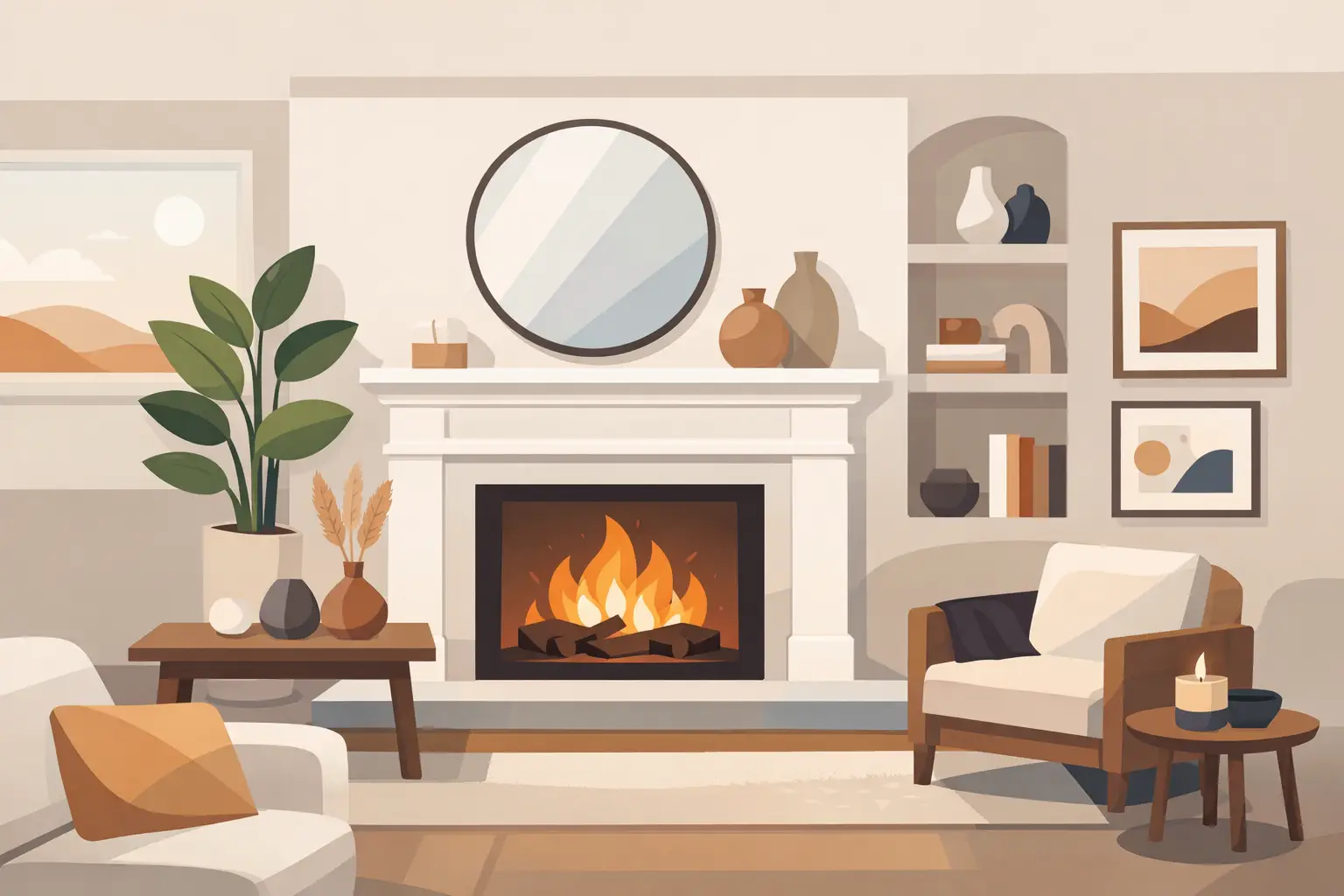
A new fire can transform a living room, but it is often the surround that makes it feel like a considered part of the home rather than an appliance placed against a wall. Fireplace surrounds frame the flame, set the style of the room and provide the visual balance between the fire, hearth and chimney breast. Choosing one well is about more than finding a finish you like. It needs to work with the fire you have chosen, the size of the wall and the practical requirements of a safe installation.
For homeowners across the Wirral, Chester and West Cheshire, this is where seeing complete displays in person can make a real difference. A surround that appears modest in a photograph may feel substantial in a smaller lounge, while a design that looks simple can give a larger open-plan space the definition it needs.
What a fireplace surround does for your room
A fireplace surround is the decorative framework around a fire opening. It usually includes the mantel shelf and legs, while the hearth sits below and the back panel fills the area directly behind the fire. Together, these elements create a complete fireplace suite.
Its first job is visual. A surround gives the eye somewhere to settle, making the fire a natural focal point whether the flame is on or off. In a period property, it can echo original details such as coving, panelled doors or traditional skirting boards. In a newer home, a clean-lined surround can soften a plain chimney breast without making the room feel overly formal.
It also has a practical role. The surrounding materials, clearances and construction must be suitable for the type of appliance being fitted. This matters particularly with gas fires, wood burners and multi-fuel stoves, which produce very different levels of heat. The right surround is therefore selected alongside the fire, not as an afterthought.
Choosing fireplace surrounds to suit your style
The best material depends on the look you want, how the room is used and the appliance being installed. There is no single right answer, but there are some useful starting points.
Marble and micro marble
Marble remains a popular choice because it brings a polished, timeless finish to both traditional and contemporary rooms. Natural marble has individual veining and variation, so every piece has its own character. Micro marble offers a more consistent appearance and is available in a broad range of neutral shades, making it easier to coordinate with modern décor.
A pale surround can brighten a room with a darker fire opening, while grey, cream and soft beige tones tend to work well with changing furniture and wall colours. If you enjoy updating your décor regularly, a restrained marble design usually gives more flexibility than a highly ornate finish.
Timber and painted surrounds
Timber surrounds create warmth before the fire has even been lit. They are especially effective in homes with natural flooring, exposed beams or a more traditional feel. Oak offers texture and depth, whereas painted timber can be selected to blend with joinery or provide a gentle contrast against the wall.
The important consideration is suitability. Timber has different clearance requirements from non-combustible materials, so it cannot simply be placed close to every fire or stove. A professional survey will establish what is safe and whether a heat-resistant beam effect or an alternative material would better achieve the look you have in mind.
Limestone, stone and cast finishes
Limestone and stone-effect surrounds have a relaxed, solid appearance that suits cottages, older properties and larger rooms. Their softer, natural colouring works particularly well with stove installations and hearths that have a little texture. Cast iron inserts and tiled panels can add period detail, especially where a home retains Victorian or Edwardian character.
These options can be more visually substantial than a slim marble suite. That can be exactly what a wide chimney breast needs, but in a compact room it may be better to choose a simpler profile that leaves more wall space visible.
Get the proportions right before choosing a finish
One of the most common mistakes is selecting a surround from a photograph without considering scale. The width of the chimney breast, ceiling height, furniture placement and fire opening all affect what will look right in the finished room.
A generous mantel can give a tall wall more presence, but it may overpower a narrow alcove. Equally, a very small surround can appear lost on a broad chimney breast, particularly if there is a large television or artwork above it. The aim is not necessarily symmetry, but a balanced arrangement that feels settled when you walk into the room.
Think about how far the surround projects into the space too. In a busy family lounge, prominent legs or a deep hearth can affect the route through the room. A shallower suite or a more streamlined electric fire arrangement may be more practical. For a formal sitting room used mainly for relaxing, you may have more freedom to choose a larger, more decorative design.
It is also worth considering the height of a television before planning a mantel. Mounting a TV above a fire can be possible in some situations, but heat, viewing height, cable routes and the appliance manufacturer’s guidance all need to be addressed. It is better to discuss this at the design stage than make compromises after the fireplace is fitted.
Match the surround to the type of fire
The fire and surround should always be treated as one installation. An electric fire often gives the greatest design flexibility because there is no working chimney or flue requirement in many cases. It can be paired with a conventional suite, fitted into a media wall or used to create a feature in a room that has no existing fireplace.
Gas fires offer convincing flame effects and responsive heat, but the opening size, ventilation needs and flue arrangement must be assessed. A suitable surround, hearth and back panel will be chosen around the specific model rather than assumed from a standard measurement. Gas work should only be carried out by a Gas Safe registered engineer.
For wood-burning and multi-fuel stoves, heat protection and clearances are central to the design. A stove may sit within a fireplace opening, in front of a chimney breast or on a freestanding hearth arrangement. Non-combustible materials, the condition of the chimney and the flue system all need careful attention. A stove surround can look beautifully simple, but the work behind it must be properly planned and installed.
Hole-in-the-wall fires create a striking contemporary focal point, yet they do not always need a traditional surround. Sometimes a carefully finished chimney breast, a discreet hearth or a shelf at a safe height provides the cleanest result. It depends on the fire, the wall construction and whether you want the fireplace to blend in or become the room’s main feature.
Why a home survey matters
Measurements are only one part of selecting a fireplace suite. A survey checks the condition and dimensions of the chimney breast, the available opening, hearth requirements, ventilation, access for installation and the suitability of the proposed fire. In older homes, it may also reveal details that are not obvious from the room itself, such as a blocked chimney, an unsuitable flue or combustible material close to the planned appliance.
This is not about making the process complicated. It is about preventing the frustration of choosing a surround that cannot safely be fitted as intended. Clear advice early on gives you a more reliable result and helps the installation run tidily and efficiently.
At Wirral Fires, the benefit of a showroom visit is being able to compare complete fireplace combinations, rather than trying to imagine separate pieces together. You can see how different hearths, back panels and surrounds change the character of the same fire, then discuss what will suit your property with an experienced team.
Small details that make a surround feel finished
The surrounding area deserves as much attention as the main suite. A hearth should suit the fire and provide the correct protection, but it should also work with the flooring. Dark granite can create a crisp contrast against a pale surround, while a softer stone finish may connect more naturally with timber or carpeted rooms.
Consider the back panel as well. A matching panel offers a calm, coordinated look; a contrasting finish can give depth and draw attention to the flame. If you are renovating the whole room, take a sample of flooring, paint or fabric with you where possible. Colours can look quite different under showroom lighting and in your own home.
Finally, do not overlook the mantel shelf. It can be a place for a mirror, seasonal decoration or a few personal items, but it should not become overcrowded. The strongest fireplace designs leave enough breathing space for the surround itself to be appreciated.
A fireplace is a long-term addition to your home, so take the time to view the materials, discuss the installation and choose a surround that feels right for the way you live. With the right advice from the outset, the finished fireplace can bring warmth, character and reassurance to the room for years to come.