

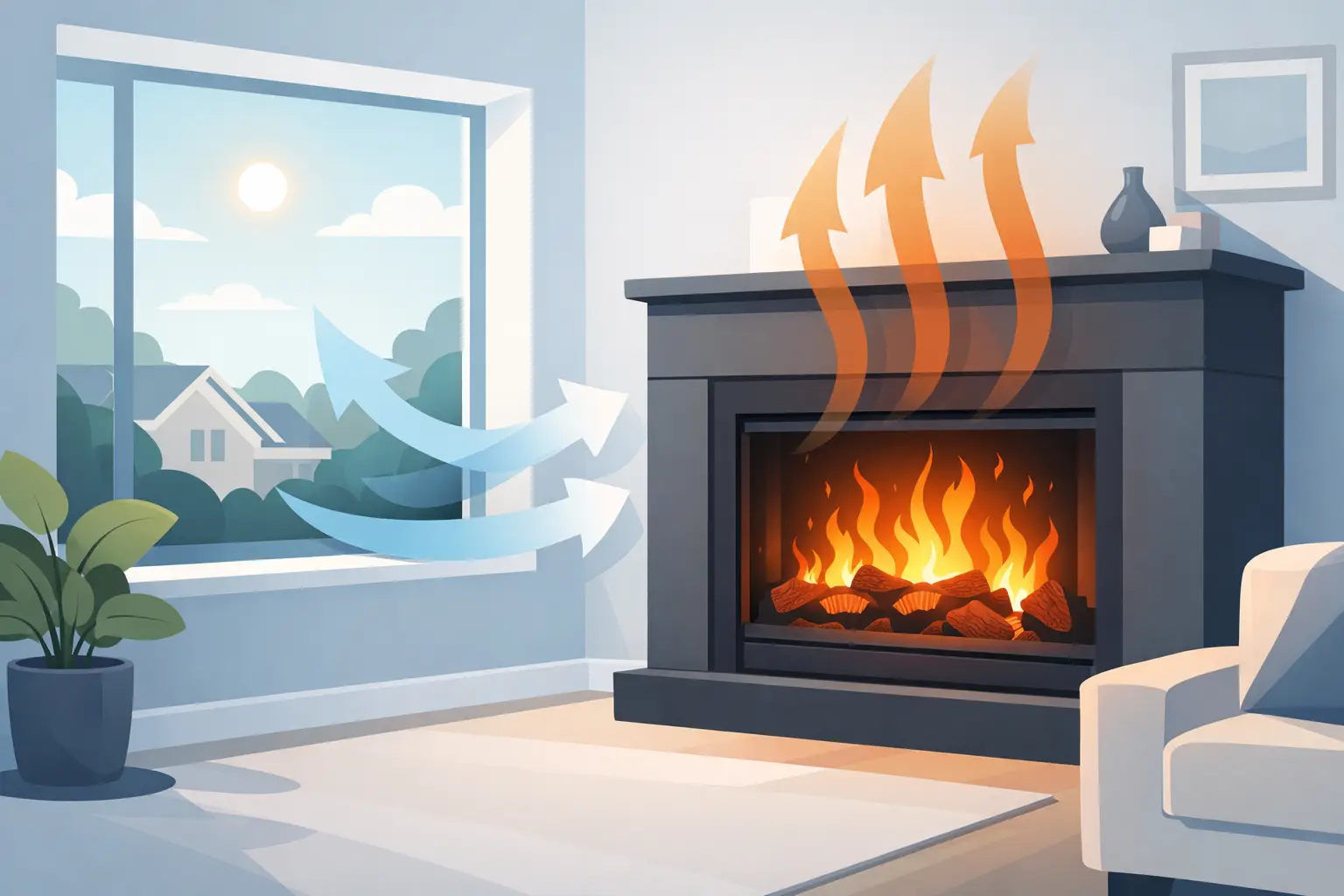
A new electric fire can transform an unused chimney breast or create a striking media wall without the building work associated with a gas or solid-fuel appliance. But homeowners often ask: do electric fires need ventilation? In most cases, no. Electric fires do not burn fuel, so they do not produce combustion gases that need to be carried outside through a chimney, flue or permanent air vent.
That makes them one of the most flexible options for living rooms, bedrooms, extensions and properties where a working chimney is not available. There are still a few important fitting requirements, however, particularly around clearances, electrical supply and any existing chimney opening.
Do electric fires need ventilation or a chimney?
A standard electric fire does not need a chimney, flue, air brick or room vent for safe operation. Unlike gas fires, wood burners and multi-fuel stoves, it creates heat using electricity rather than a flame produced by combustion. There is no smoke, carbon monoxide or exhaust gas to remove from the room.
Most electric fires use a concealed fan heater to circulate warm air back into the room. The flame effect is produced separately using LEDs and visual technology, so you can usually enjoy the look of the fire with the heat switched off. This is particularly useful during warmer months, when you may want the atmosphere of a feature fire without adding warmth.
It is worth separating the fire itself from the room it is installed in. Good general ventilation is beneficial in every home, especially where condensation is an issue, but it is not a requirement created by the electric fire. You do not need to leave a window open or fit an air vent solely because you have chosen an electric model.
The ventilation that an electric fire does need
While electric fires do not need external ventilation, they do need space for air to move around their own heater and controls. Every model has manufacturer-specified clearances, and these must be followed during installation.
The air intake and outlet grilles must never be covered by a rug, furniture, a fireplace surround, decorative pebbles or a television unit. Blocking these openings can restrict airflow, cause the safety cut-out to operate and, over time, affect the performance and lifespan of the appliance.
For inset electric fires, the dimensions of the opening matter. A fire designed to sit within a standard fireplace opening needs the correct recess depth and suitable space around the unit. Wall-hung and media wall fires also require a properly built opening, with the ventilation gaps specified by the manufacturer left clear. The visible flame picture may look simple, but the construction behind it should never be an afterthought.
A professional installer will check the appliance instructions before building or adapting the space. This is especially helpful when planning a bespoke media wall, where the fire, television, shelving and cable routes all need to work together safely and look neat from the front.
Keep heat-sensitive items at a safe distance
The warm air from an electric fire is normally directed outwards from the front, often at low level or just above the flame display. Avoid positioning sofas, curtains and other soft furnishings directly in front of the outlet. The exact distance depends on the model, so the product manual is always the right reference point.
If a television is going above an electric fire, consider both the heat path and the television manufacturer’s guidance. Many modern electric fires are designed for media wall installations, but a suitable recess, heat deflection arrangement where required, and adequate separation are still essential. A well-planned installation protects your equipment as well as improving the finished appearance.
What if the electric fire is going into an old chimney breast?
An existing chimney does not need to be active for an electric fire. In fact, an electric fire is often a practical way to bring an unused fireplace back into use without lining the chimney or fitting a flue.
However, the chimney itself may need consideration. If it has been capped or closed off, it may require ventilation to help prevent damp and condensation within the chimney void. This is a property maintenance issue, not an operating requirement of the electric fire. In some homes, ventilation is provided at the top of the chimney and discreetly within the room; the right approach depends on the condition of the stack, the type of capping and how the opening is being finished.
If you are covering an old fireplace opening with a fireplace suite, fitting an inset fire or building a false chimney breast, it is sensible to have the area assessed first. Signs such as staining, a musty smell, crumbling plaster or visible damp should be dealt with before the new feature is installed. Covering over a moisture problem rarely makes it disappear.
Electrical requirements matter more than ventilation
The main practical requirement for an electric fire is a safe electrical connection. Many freestanding, wall-mounted and inset models are supplied with a standard 13-amp plug, while some premium built-in fires may be designed for a fixed connection. Check the individual product specification rather than assuming all electric fires are fitted the same way.
Where a new socket, concealed cable route or hardwired connection is needed, the work should be planned properly and carried out in line with current electrical requirements. A power lead should not be trapped behind the fire, run under carpets or stretched across a walkway. Extension leads and multi-plug adaptors are not a suitable long-term solution for a fixed fireplace feature.
The fire’s heat output is also worth considering. Many electric fires offer around 1kW to 2kW of heat, which can provide welcome warmth in a living room or take the chill off a bedroom, home office or conservatory. They are best viewed as a responsive room-heating option rather than a replacement for a whole-house heating system. The benefit is control: you can heat the room you are using without having to warm every room in the property.
Choosing the right type of electric fire
The lack of a flue gives you more freedom over placement, but the style of fire should still suit the room and the way you plan to use it. An electric fireplace suite can offer a complete focal point with minimal disruption, while an inset model can retain the traditional look of a hearth and surround.
For a contemporary renovation, a wide landscape fire or a three-sided model can work beautifully in a media wall. Hole-in-the-wall electric fires create a clean, built-in finish, although they need careful sizing and construction. If you are looking to refresh a room without major changes, a freestanding electric stove or a simple wall-mounted fire may be the most straightforward route.
Before choosing, think about the available wall space, where the electricity supply can be positioned, the furniture layout and whether the flame effect will be visible from your usual seating area. A fire that looks impressive in a photograph should also feel right at home in the room.
When to ask for advice
Electric fire installation can be relatively simple, but it is not always a case of plugging in a new appliance and switching it on. Ask for guidance if you are working with an old chimney breast, planning a media wall, hiding cables, installing a new surround or placing a television above the fire. These are the details that make the difference between a feature that looks finished and one that causes avoidable problems later.
At Wirral Fires, we help homeowners compare styles in person and explain what each fire needs before work begins. That includes practical advice on the opening, electrical position, clearances and the finish that will best suit the room, without pressure to choose a solution that does not fit your home.
An electric fire may not need a flue or permanent ventilation, but it does deserve thoughtful planning. Choose a model with the right heat output, keep its air grilles clear and have the surrounding installation assessed properly. You can then enjoy the comfort and character of a real focal point, with far fewer limitations on where it can go.