

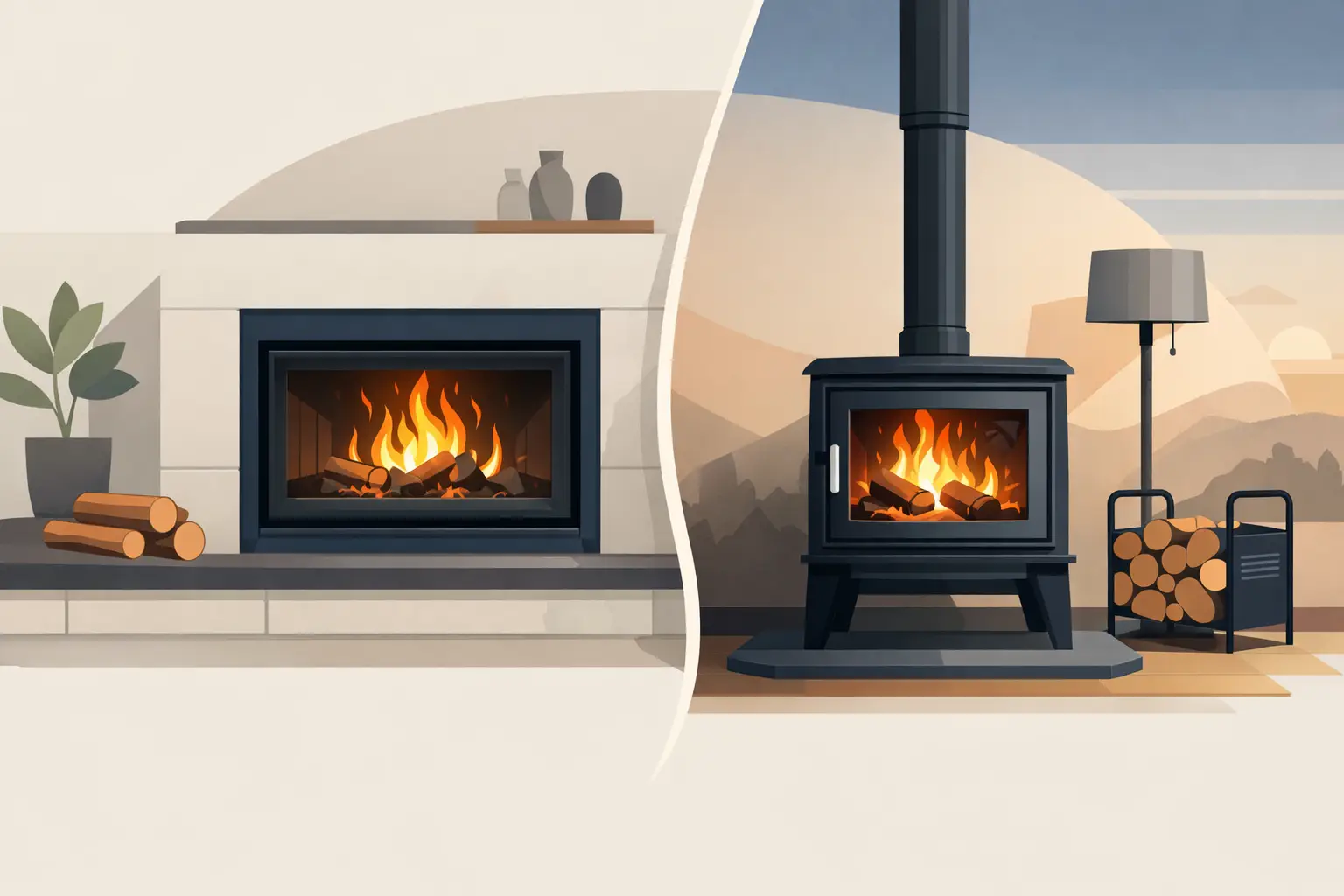
A wood-burning stove can change the feel of a room long before it is lit. It creates a proper focal point, gives a living space a more settled feel and provides useful radiant warmth on cold Wirral and Cheshire evenings. But when comparing cassette versus freestanding wood stoves, the best choice is rarely just about which design looks better in a brochure.
Your existing chimney, the layout of the room, the heat output required and the style you want to achieve all play a part. A cassette stove can give a clean, built-in look, while a freestanding stove often makes more of a statement and offers greater flexibility. Both can be excellent choices when specified and installed correctly.
Cassette versus freestanding wood stoves: the key difference
A cassette wood stove, sometimes called an inset or built-in stove, sits within a chimney breast, fireplace opening or purpose-built false wall. The firebox is recessed, leaving the glass door and surrounding frame visible at the front. This creates a neat, integrated appearance that works particularly well in modern renovations and contemporary feature walls.
A freestanding wood stove sits out in the room, usually on a hearth. It may be positioned within an existing fireplace opening, against a chimney breast or, where suitable, elsewhere in the room with an insulated twin-wall flue system. Its body remains on show, which gives it the familiar character many homeowners associate with a traditional stove.
Neither type is automatically warmer, easier or better value for every property. The right answer depends on what is behind your wall, how the room is used and how much of a visual presence you want the stove to have.
The look you want to create
For homeowners planning a streamlined fireplace wall, a cassette stove is often the natural fit. Its recessed design keeps the front face close to the wall, so it does not project into the room to the same degree as a conventional stove. Wide landscape models can suit a low, contemporary chimney breast, while square formats can provide a crisp focal point in a more compact space.
A freestanding model tends to bring more depth and texture to the room. The visible stove body, flue pipe and hearth can become part of the design rather than something to conceal. This is particularly appealing in period properties, cottages, barn conversions and rooms where a more traditional fireplace feel is wanted. There are also sleek, modern freestanding designs, so choosing this route does not mean compromising on a contemporary interior.
Think about the view of the fire from where you sit. A larger glass window may be more important than the shape of the stove itself if the appliance will be the centrepiece of your main living room.
Heat performance is about the room, not just the stove type
Cassette and freestanding wood stoves can both heat a room very effectively. What matters most is selecting an appropriate output for the space and ensuring the installation allows the appliance to perform as intended.
An oversized stove can make a room uncomfortably hot, encouraging you to turn it down too far. Running a wood stove at a very low setting for long periods can lead to dirtier glass, more deposits in the flue and less efficient combustion. An undersized stove, on the other hand, may struggle to deliver the warmth you expect on the coldest days.
Freestanding stoves radiate heat from more of their surface area because the sides and top are exposed. A cassette stove transfers heat through its front and convection system, with some models using vents or fans to circulate warm air into the room. In a well-designed installation, both can feel impressively effective.
The room itself matters just as much. Ceiling height, insulation, open-plan layouts, large glazed areas and adjoining spaces can all affect the output required. This is why a proper conversation before choosing a model is far more useful than selecting a stove based on its appearance alone.
A note on wood fuel
Whichever stove you choose, dry wood is essential. Burning properly seasoned or kiln-dried logs with a moisture content below 20% helps the stove burn more cleanly, protects the flue and keeps the glass clearer. In smoke control areas, you will also need an appliance approved for the intended use and to follow local requirements on fuel.
What your chimney and flue can accommodate
The condition and position of your chimney often guide the decision. If you have a suitable existing fireplace opening, either a cassette stove or a freestanding stove may be possible. The opening may need altering, and a chimney liner is commonly required to create a safe, correctly sized flue for the new appliance.
A cassette stove needs sufficient depth within the chimney breast or a purpose-built enclosure. It also requires the right clearances around the appliance so heat can dissipate safely. This makes the finished result look simple, but the work behind it needs careful planning.
A freestanding stove can be more adaptable. It can sit in front of a fireplace opening with the flue rising into the chimney, or it may be installed with a new insulated flue route where there is no usable chimney. That flexibility can open up options for extensions, kitchens, garden rooms and larger open-plan spaces, subject to a full site survey and building requirements.
It is not advisable to assume an old chimney is ready for a stove simply because it once served an open fire. Its condition, draught, internal size and route all need to be assessed. A professional survey identifies any issues before installation work begins, rather than after a stove has been chosen.
Hearths, clearances and ventilation
A wood stove installation is not complete when the appliance is in position. The hearth beneath it, the distances to combustible materials, the flue arrangement and the ventilation provision all matter for safety and compliance.
A freestanding stove normally needs a visible hearth that extends around the appliance. This can be a design feature in its own right, with a finish that complements the flooring, surround or stove colour. A cassette stove may need less projecting hearth space, depending on its design and installation, which can help maintain a cleaner floor line in a smaller room.
Modern homes are often more airtight than older properties. Depending on the stove output and the property, dedicated ventilation may be necessary. Extractor fans, air vents and other fuel-burning appliances should also be considered as part of the overall assessment. These are not details to leave until fitting day.
Day-to-day use and maintenance
Both types need the same sensible routine: remove ash when required, use suitable dry fuel, keep the air controls clean and arrange regular sweeping by a qualified chimney sweep. The flue should be swept at appropriate intervals based on how often the stove is used and the fuel burned.
A freestanding stove can be easier to access around the sides and top during cleaning or servicing, particularly where it is installed in open space. With a cassette stove, access arrangements should be considered from the start. A well-planned installation allows the appliance and flue connection to be inspected and maintained without unnecessary disruption.
Glass cleaning is also influenced more by how the stove is operated than by whether it is inset or freestanding. Good quality dry logs, adequate airflow during lighting and avoiding long periods of slumbering will make a noticeable difference.
Which option suits your home?
Choose a cassette wood stove if you want a built-in, space-conscious focal point and have a suitable chimney breast or are creating a new fireplace wall. It is a strong option for rooms where clean lines matter and where you would prefer the fire to sit within the architecture of the room.
A freestanding wood stove may be the better choice if you want a more traditional stove presence, greater positioning flexibility or the character of a visible hearth and flue. It can also be particularly practical where an existing fireplace opening is generous or where a twin-wall flue makes a stove possible without a conventional chimney.
For many households, the deciding factor is a combination of style and site practicality. A showroom visit can help you compare the proportions of different appliances in person, but a home survey is what confirms whether your preferred design is suitable. At Wirral Fires, the aim is always to offer clear, no-pressure advice so the finished stove looks right, heats well and is installed to a high standard.
Before settling on a style, take a few photographs of the room and chimney breast, note the room dimensions and think about how you use the space on a typical winter evening. Those small details make it much easier to choose a stove that feels like it has always belonged there.