

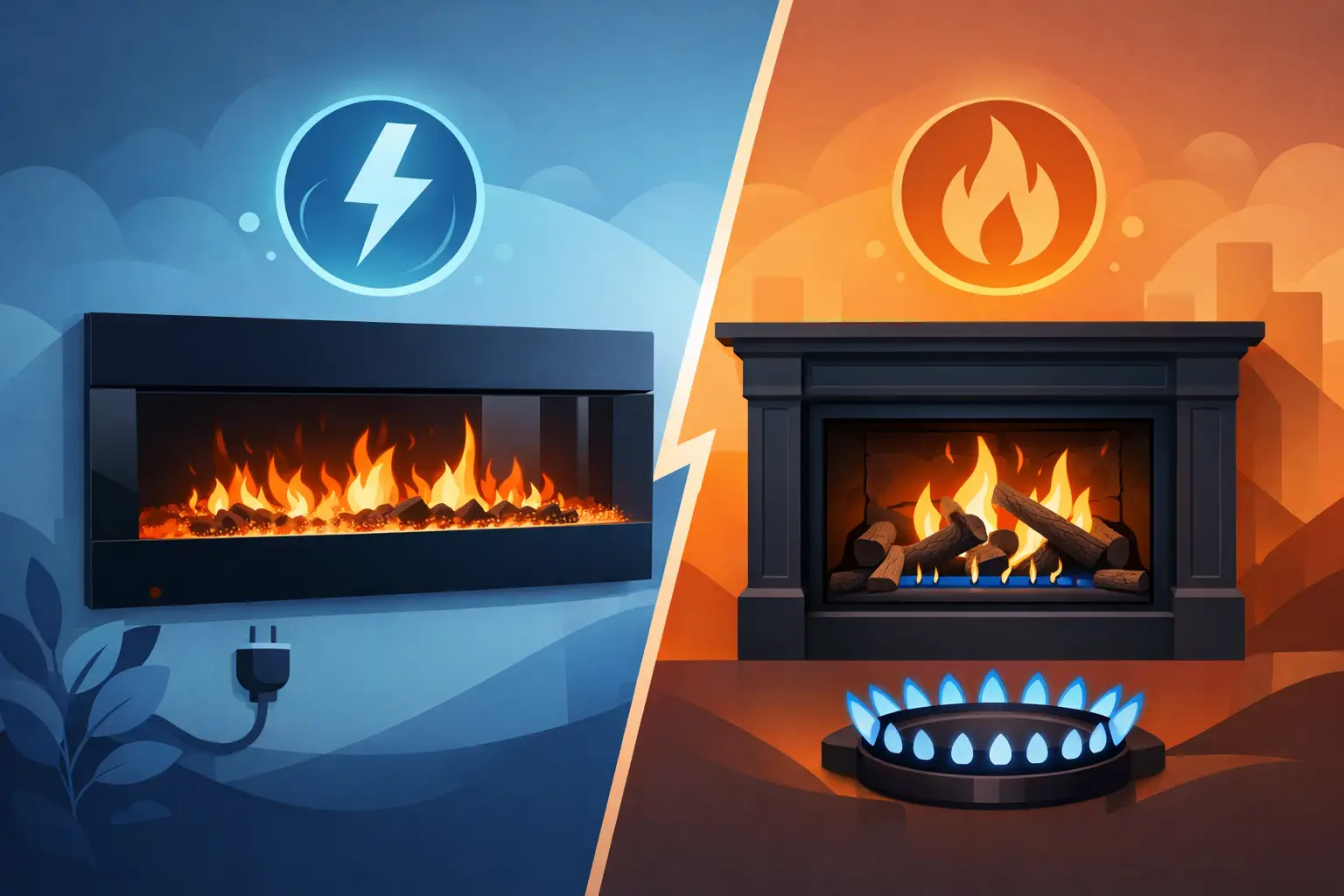
If you are stood between a gas fire and an electric model, you are not just picking a heat source. You are choosing how you want a room to feel, how much installation work you are prepared for, and what matters most day to day – convenience, running costs, flame effect or heat output. So, are electric fires better than gas? For some homes, absolutely. For others, gas is still the better fit.
The honest answer is that it depends on your property, your priorities and how you actually use the room. A fire that looks perfect in a brochure can be the wrong choice if it does not suit your chimney, your heating habits or the level of warmth you want on a cold evening.
Are electric fires better than gas for everyday use?
For ease and flexibility, electric fires often come out on top. They are simple to operate, usually need very little maintenance, and can be fitted in many homes without the structural considerations that come with gas. If you want the look of a fire without worrying about a chimney, flue or gas connection, electric is often the most straightforward route.
That convenience matters more than people sometimes expect. Many homeowners want a focal point in the lounge or dining room, but they do not want a complicated installation or the disruption of major building work. In those cases, electric fires can be an excellent solution. They are especially popular in newer properties, flats and renovated rooms where a traditional chimney breast is not part of the layout.
Gas fires, though, still have a strong case. If your main priority is stronger room heating and the look and feel of a real flame, gas can be very hard to beat. A good gas fire can deliver reliable warmth quickly, and many people still prefer the authenticity of its flame picture.
So if by “better” you mean easier to live with, electric often wins. If by “better” you mean more powerful and more traditional in character, gas often has the edge.
Heat output and room warmth
This is one of the biggest deciding factors. Electric fires are typically designed more as room features with supportive heat rather than as serious primary heaters. They usually offer around 1kW to 2kW of heat, which is enough for many standard living spaces, especially in well-insulated homes. They are ideal for taking the chill off a room and creating a cosy atmosphere.
Gas fires generally produce more heat and can be a better choice if the fire needs to do more of the heavy lifting. In larger rooms, older properties or homes where you really feel the cold, a gas fire can provide a deeper, more substantial warmth. That can make a noticeable difference in winter, particularly in rooms with high ceilings or draught-prone areas.
This is where expert advice matters. A fire should suit the room, not just the style board. Too little heat and it feels disappointing. Too much heat and the room quickly becomes uncomfortable. The right appliance depends on room size, insulation levels, ventilation and how often you use the space.
Running costs – not always as simple as they seem
People often assume electric fires are cheaper because they are simpler to install. Installation can certainly be lower in many cases, but running costs are a separate question.
Electric fires are effectively 100 per cent efficient at the point of use because the electricity they draw is converted into heat in the room. That sounds impressive, but electricity is usually more expensive per unit than gas. So although the appliance itself is efficient, the actual cost of running it can still be higher, especially if you use it for long periods.
Gas fires can be cheaper to run hour for hour, depending on current energy prices and the model you choose. If you regularly rely on your fire for meaningful heat, gas may work out better over time. If you mainly want the visual effect and only use the heater occasionally, electric can still make very good sense.
There is no one-size-fits-all answer here because fuel prices change. The better question is how often the fire will be on, and whether it is there for atmosphere, warmth, or both.
Installation requirements and disruption
This is one area where electric fires are often clearly better than gas.
An electric fire can usually be fitted with far fewer installation demands. In many cases there is no chimney or flue requirement, and the process is quicker and cleaner. That makes electric a strong option for straightforward home improvements, media walls, feature suites and rooms where you want a neat finished look without extensive alteration.
Gas fires need more planning. Depending on the appliance, you may need a suitable chimney, flue liner, balanced flue arrangement or other ventilation considerations. Installation must be carried out properly by a Gas Safe registered engineer, and the fire has to be suitable for the property. None of that is a reason to avoid gas, but it does mean the process is more involved.
For many homeowners, the decision comes down to how much work they are prepared to do. If you are already renovating and want a proper fitted fireplace with strong heat performance, gas may be worth it. If you want a simpler upgrade with less disruption, electric is often the practical choice.
Style, flame effects and the finished look
Electric fires have improved enormously in recent years. Modern flame effects are far more convincing than older models, and there is now a wide choice of contemporary inset fires, wall-mounted designs, suites and hole-in-the-wall styles. Many electric models also let you enjoy the flame effect without the heat, which is useful if you want the ambience all year round.
Gas fires still appeal to homeowners who want a more natural-looking flame. For some, that remains the deciding factor. The movement and depth of a gas flame can feel more authentic, especially in traditional fireplaces or high-end contemporary installations.
This part is personal. Some customers walk into a showroom convinced they want gas, then see how realistic newer electric fires look and change their mind. Others are set on electric until they see the warmth and flame picture of a gas model in person. Photographs help, but seeing both working side by side usually makes the decision much easier.
Maintenance, servicing and peace of mind
Electric fires are generally low maintenance. There is no fuel combustion, no chimney concerns and no annual gas servicing requirement. That appeals to homeowners who want a simple, tidy appliance with minimal upkeep.
Gas fires need regular servicing to keep them operating safely and efficiently. This is not a drawback so much as a responsibility. A properly installed and serviced gas fire is a dependable heating appliance, but it does need ongoing professional attention.
For some households, that extra maintenance is a fair trade for stronger heat and a real flame. For others, the simplicity of electric is more attractive. If ease of ownership is high on your list, electric is often the more convenient option.
Are electric fires better than gas in modern homes?
In many modern homes, yes, they can be. New-build properties and renovated living spaces often suit electric fires particularly well because the layout may not include a chimney breast or practical flue route. Electric designs also work neatly in media walls and minimalist interiors, where clean lines matter.
That said, gas is still an excellent option in many detached and semi-detached homes, especially where there is existing infrastructure in place or where the room needs stronger heating performance. If your property already lends itself to gas, it should not be ruled out just because electric is easier.
What matters most is suitability. The best choice is the one that works properly in your room, fits your budget and gives you the look and comfort you want.
Which should you choose?
Choose electric if you want a simpler installation, lower maintenance, flexible placement and a straightforward way to add ambience and supplementary heat. It is often the right answer for homes without chimneys, for quick room updates, and for people who value convenience.
Choose gas if you want stronger heat output, lower running costs in many situations, and a more natural flame effect. It is often the better option when the fire will be used regularly for warmth and when the property is suitable for installation.
At Wirral Fires, this is the sort of decision we help homeowners make every day. The right fire is not just the one with the nicest fascia or the latest flame effect. It is the one that suits your home properly and still feels right after the installation is finished.
If you are weighing up electric against gas, it helps to step back from the sales language and think about how you want the room to work on an ordinary Tuesday evening. That is usually where the right answer becomes clear.