

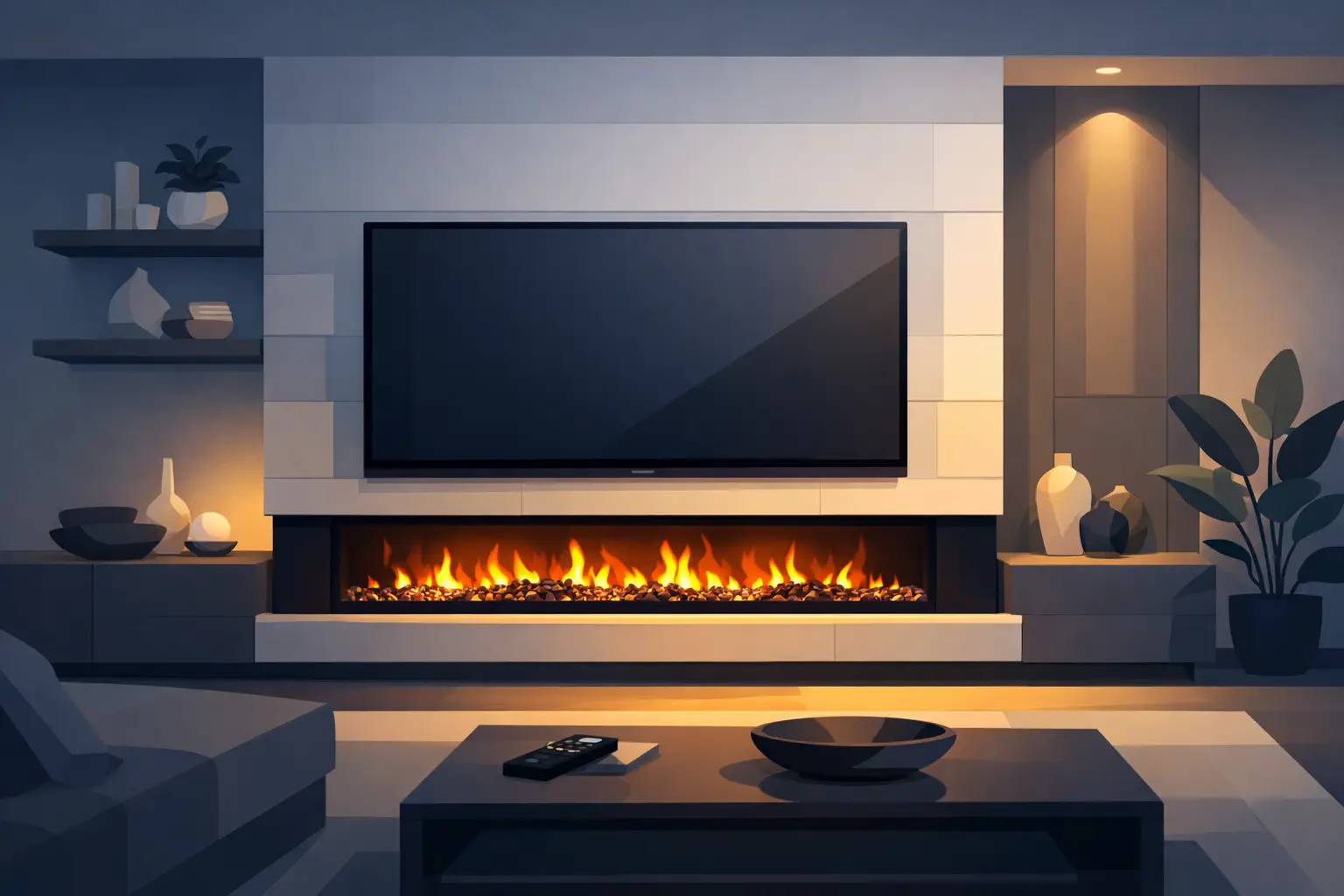
A media wall can look superb when it is done properly, but the fire is usually the part that makes or breaks the finished result. Get the proportions wrong, choose a poor flame picture or fit a model that is not suited to the room, and the whole feature can feel disappointing. When customers ask us about the best electric fires for media walls, they are usually looking for more than a stylish front – they want something that looks right, heats well if needed, and works reliably day to day.
That is why this choice is rarely about one single “best” model. It depends on the width of your wall, the size of your television, how much heat you actually want, and whether the room is a main living space or more of a snug, lounge or open-plan family area. The right answer is the fire that suits your room and the way you live in it.
What makes the best electric fires for media walls?
For most homeowners, the best media wall fires combine three things – a convincing flame effect, the right proportions, and simple installation requirements. Electric fires are a popular option because they do not need a chimney or flue, and that gives you more freedom when designing a feature wall around a television.
The visual side matters more than many people expect. On a media wall, the fire is not tucked away in a traditional fireplace opening. It is on show all the time, often at eye level when seated, so poor flame quality stands out straight away. A realistic flame picture, decent fuel bed lighting and good glass presentation all make a big difference.
Size is just as important. A fire that is too small can look lost beneath a large television, while one that is too wide can dominate the wall and leave little room for balanced cabinetry or shelving. In many homes, a wide landscape electric fire gives the most contemporary finish, but the exact dimensions should always be planned around the full wall rather than picked in isolation.
Then there is heat output. Some buyers want the fire mainly for ambience and occasional top-up warmth. Others want it to take the chill off a room regularly in the evenings. Electric media wall fires often offer around 1kW to 2kW of heat, which is fine for supplementary heating, but they are not always intended to replace a primary heating system. That is not a drawback if your expectations are realistic.
Choosing the right size and layout
The most successful media walls tend to feel balanced rather than crowded. A common mistake is starting with the television and then squeezing a fire into whatever space is left underneath. In practice, the fire should be part of the plan from the beginning.
If you want a strong contemporary look, a longer fire usually works well because it gives a cleaner horizontal line across the wall. It can also help the feature feel more premium. That said, bigger is not automatically better. In a modest lounge, an oversized appliance can make the whole installation feel too dominant.
Viewing height matters too. The flame effect should sit comfortably within sight when you are seated, and the television should not end up mounted excessively high just to fit everything in. Good design is about getting both elements to work together. This is where showroom advice can be especially useful, because dimensions on paper do not always translate neatly into a finished room.
One-sided, two-sided or three-sided?
Most media wall electric fires are front-facing, and for many homes that remains the most practical choice. They are straightforward, stylish and usually easier to incorporate into a clean chimney breast style build.
Two-sided corner models and three-sided panoramic fires can look striking, particularly in larger open-plan rooms, but they need more careful planning. The extra glass can create a lighter, more architectural appearance, though it also means more of the internal fire is visible from different angles. If the surrounding wall design is simple and spacious, this can work brilliantly. In a smaller room, it can sometimes feel a little busy.
Flame effects matter more than heat on a media wall
With a standard living room fire, buyers often begin by asking about heat. With media walls, the look usually comes first. That makes sense because the fire is acting as both a heating appliance and a design feature.
The best models offer adjustable flame effects, ember bed colours and brightness settings, so the fire can suit the room at different times of day. Some homeowners like a natural amber glow, while others prefer a cooler, modern look with changing LED colours. Neither is right or wrong – it comes down to the style of the room and personal taste.
It is worth being slightly cautious with features that sound impressive on paper but are rarely used in real life. Smartphone control, multiple colour modes and sound effects can all appeal initially, but many people simply want a fire that looks attractive, is easy to operate and gives reliable performance. Sometimes the best choice is the model with the strongest flame picture and simplest controls, not the longest specification list.
Installation considerations before you buy
One reason electric fires are so popular for media walls is that installation is generally more flexible than gas or solid fuel. Even so, a media wall still needs careful planning. Clearances, ventilation requirements, recess depth and the position of the television all need to be considered properly.
Heat management is an area where it pays not to guess. Although electric fires do not produce the same type of installation demands as a stove or gas appliance, they still require manufacturer guidance to be followed. The television above should be positioned with suitable spacing, and the wall construction should be designed around the fire being used rather than a generic template.
Cable management also deserves attention early on. A neat media wall relies on hidden wiring for the fire, television and any sound system or lighting. If that side of the job is left until late in the build, the end result can be far less tidy than expected.
For local homeowners around the Wirral and Cheshire, this is often where proper advice saves time and money. Seeing fires in person and speaking to someone who understands both product choice and fitting tends to produce a much better result than ordering a model online and hoping it suits the build.
Best electric fires for media walls in real homes
What counts as one of the best electric fires for media walls will vary from home to home. In a new-build living room, a slim inset model with a clean black glass front may be ideal. In a larger period property that is being modernised, a wider landscape fire with a deeper fuel bed can help bridge the gap between contemporary styling and a room that still needs warmth and presence.
For family homes, ease of use is often near the top of the list. A good remote control, dependable flame-only setting and low day-to-day maintenance usually matter more than novelty features. If the fire will be used regularly, quiet fan operation can also be important, especially in rooms where people are watching television in the evening.
There is also the question of finish. Some fires create a crisp, minimal look, while others have more visual detail in the fuel bed and interior. If your media wall includes shelving, slatted panels or decorative finishes, a simpler fire may help avoid the whole feature looking overdesigned. If the wall itself is quite plain, a more visually detailed fire can provide the focal point.
Should you choose heat or flame-only use?
For many buyers, flame-only operation is one of the most useful features. It lets you enjoy the look of the fire throughout the year, including spring and summer, without adding heat to the room. That flexibility is a big part of the appeal.
When heat is needed, electric fires are very handy for taking the edge off a chilly room. They are especially useful in evenings when you do not want to heat the whole house just to make one room comfortable. Still, if you expect the fire to be your main heat source in a large open-plan space, you may need to think carefully about whether the output will be enough.
How to choose with confidence
The safest way to narrow down your options is to think in this order: room size, wall dimensions, desired look, then heating needs. That tends to lead to a better choice than starting with brand names or chasing the model with the most features.
It also helps to view fires working before making a final decision. Flame effects, glass reflections and overall scale are difficult to judge from photographs alone. A model that looks excellent online can appear underwhelming in person, while another may surprise you once you see the quality of the flame and fuel bed up close.
A no-pressure showroom visit is often the easiest way to compare styles properly and talk through what will work in your home. At Wirral Fires, that is often where customers become much clearer on what they actually want from a media wall fire rather than what first caught their eye online.
If you are planning a media wall, take your time with the fire choice. The best result is rarely the flashiest model or the cheapest one – it is the fire that fits the room, suits your lifestyle and still looks right long after the building work is finished.